
How to Care for Living Stones
Master the strict wet-dry cycle Lithops need: bright sun, gritty soil, and long dry rests keep these pebble-like succulents thriving.
Read the full Living Stones encyclopedia entry →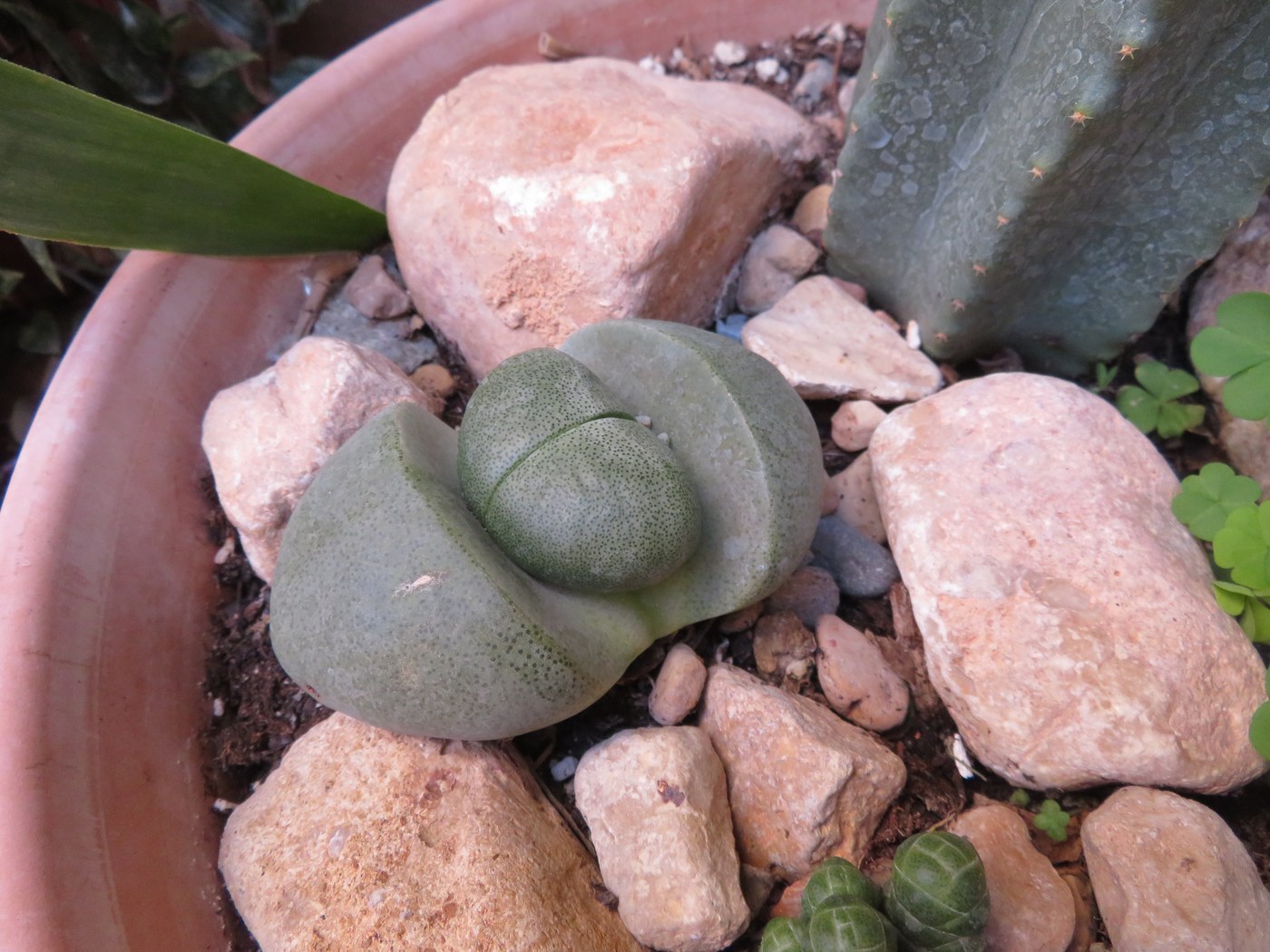
Living Stones (Lithops) are remarkable southern African succulents that mimic pebbles, each plant consisting of a pair of fused, water-storing leaves. They are moderate to grow because their watering must follow a seasonal rhythm rather than a routine.
Light
Give Lithops very bright light with several hours of direct sun, ideally a south-facing window or a bright greenhouse spot. Insufficient light causes stretching, loss of pattern, and elongated, unstable bodies. Acclimate gradually to strong sun to avoid scorching.
Water
Water very sparingly and follow the natural cycle. In active growth (typically fall and spring) water thoroughly, then let the soil dry completely before the next drink. Withhold water almost entirely during summer dormancy and during the winter leaf-renewal period, when the old leaves feed the new pair. Overwatering, especially at the wrong season, is the fastest way to lose them.
Soil & Potting
Use an extremely gritty, fast-draining mineral mix; a blend of standard succulent soil cut heavily with pumice, coarse sand, or grit works well. A deep pot suits their long taproot, and a top dressing of gravel keeps the body dry and mimics their habitat.
Humidity & Temperature
Lithops thrive in dry air and warm temperatures during growth, tolerating high summer heat if kept dry. Keep them cool and completely dry in winter, protecting from frost. Avoid stuffy, humid conditions that promote rot.
Feeding
Feeding is largely unnecessary. If desired, apply a very dilute low-nitrogen succulent fertilizer once during the active growth period. Excess nutrients cause bloated, split-prone bodies.
Propagation
Propagate mainly from seed, sown on a gritty surface and kept lightly moist until germination, then grown slowly over years. Established clumps can sometimes be divided when they naturally offset into multiple heads.
Repotting / Pruning
Repot infrequently, only every few years, ideally at the start of the growth season. No pruning is needed. During annual renewal, do not pull off the shriveling old leaf pair; let it dry up naturally as the new pair emerges through it.
Common Problems & Pests
Rot from overwatering or watering during dormancy is the chief danger. Etiolation (stretching) signals too little light. Mealybugs and root mealybugs can hide in the soil and crevices. Scale and fungus gnats appear in overly moist mixes. Keep it lean, bright, and dry.
Seasonal Care Tips
Resume watering in fall as new growth and flowers appear, water lightly through the cooler growing months, then stop as the old leaves begin to dry in late winter. Keep bone-dry through summer dormancy, resuming only when temperatures ease and the plant signals growth.
Frequently asked questions
How often do I water Living Stones?
Only during their active growth seasons, and then thoroughly with a full dry-out in between. Withhold water almost entirely during summer dormancy and winter leaf renewal to prevent rot.
Why is my Lithops stretching tall and losing its pattern?
This is etiolation from too little light. Living Stones need very bright light with direct sun. Increase light gradually to keep the body compact and its markings crisp.
The old leaves are shriveling around a new pair. Should I remove them?
No. During annual renewal the old leaf pair naturally dries up to feed the emerging new pair. Let it wither completely on its own rather than pulling it off.
What soil is best for Living Stones?
A very gritty, fast-draining mineral mix. Cut succulent soil heavily with pumice or coarse sand, use a deep pot for the taproot, and top-dress with gravel to keep the body dry.