Living Stones
Lithops
Tiny, stem-less succulents that mimic pebbles to avoid being grazed. They split to reveal new leaves and produce daisy-like flowers, but need a strict dry regime.
- Light
- Bright light with direct sun
- Water
- Very sparingly; mostly dry
- Difficulty
- Moderate
Got a plant like this?
Identify any plant from a photo, free.
Overview
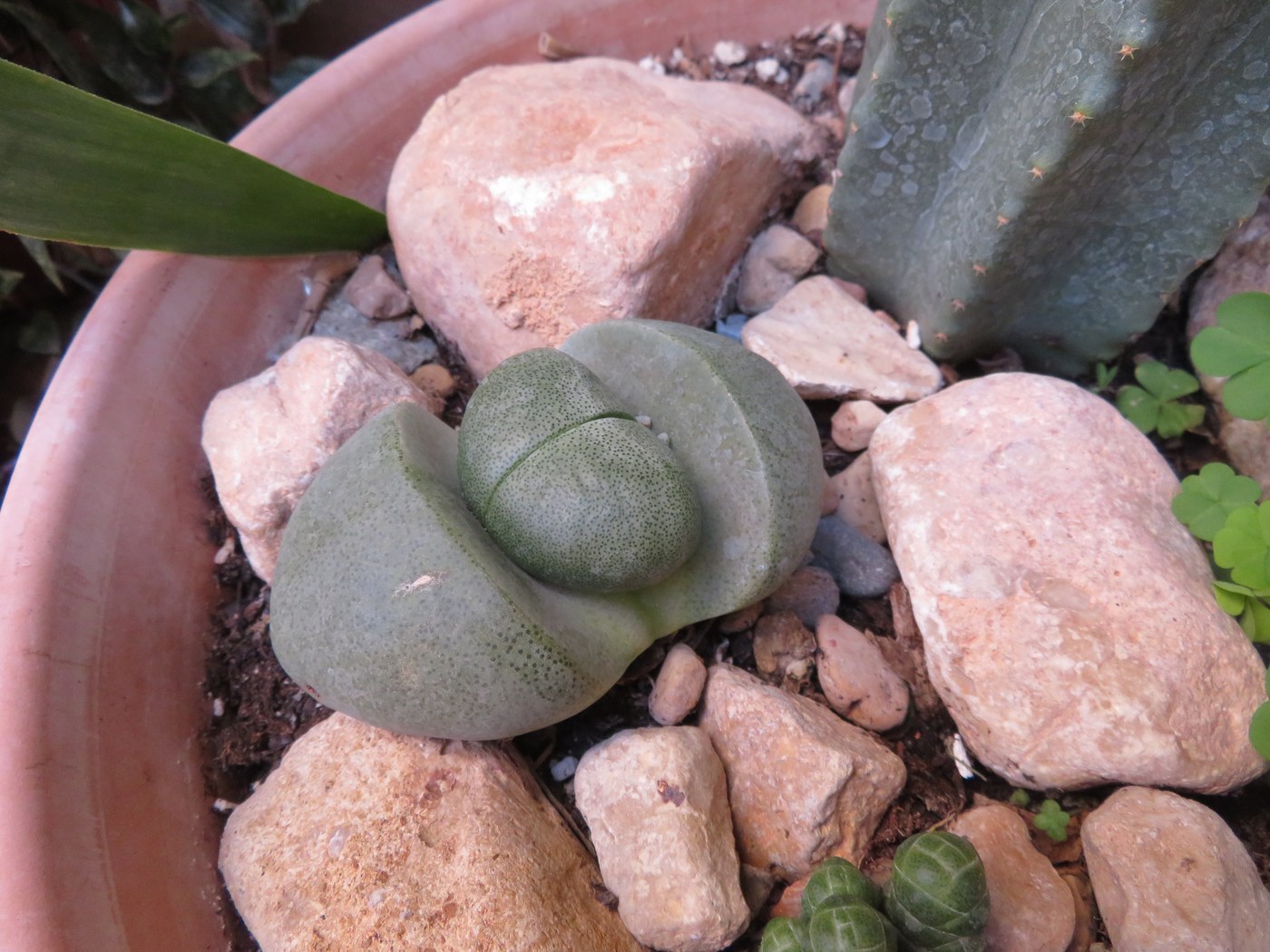
Living Stones are remarkable miniature succulents that have evolved to look like the rocks and pebbles among which they grow, a camouflage that protects them from grazing animals. Each plant consists of a single pair of thick, fused leaves with a fissure across the top.
Native to southern Africa's deserts, they are masters of water storage and require an unusually strict watering schedule that follows their natural growth cycle. In autumn they produce surprisingly large daisy-like yellow or white flowers from the central fissure.
How to identify it
Identify them by:
- Form: a single pair of fused, swollen leaves forming a stone-like body with a slit across the top
- Appearance: flat or domed top patterned and colored to mimic surrounding pebbles (gray, brown, green, pink, with mottling or windows)
- Size: very small, often 1-2 in across
- Flowers: daisy-like yellow or white blooms emerge from the central fissure in fall
- Growth: new leaf pair emerges from the fissure as the old pair shrivels (the annual leaf-renewal cycle)
Care & growing
Light: Very bright light with several hours of direct sun; insufficient light causes elongation and weak coloring.
Water: The critical factor. Water sparingly and only at the right times: typically in spring and fall growth periods, keeping them bone dry while the old leaves are being absorbed (late winter/early spring) and during summer dormancy. Overwatering quickly causes rot or splitting.
Soil: Extremely gritty, fast-draining mineral mix.
Temperature: Warm; tolerates heat well and must be protected from frost.
Feeding: Generally unnecessary; minimal if any.
Propagation: Mainly from seed; division of clusters is possible but slow.
Habitat & origin
Lithops are native to the arid regions of South Africa and Namibia, growing in deserts, dry grasslands, and rocky ground where they nestle among stones with only their leaf tops exposed.
They are grown by succulent enthusiasts worldwide as curiosity and collector's plants, kept in pots indoors or in protected, sunny, dry conditions.
Frequently asked questions
Why is my Lithops shriveling?
Some shriveling is normal as the old leaf pair is absorbed to feed new growth in late winter and spring; do not water during this phase. Persistent shriveling otherwise can mean it needs water during an active growth period.
When should I water Living Stones?
Only during their active growth periods (typically spring and autumn) and keep them dry during summer dormancy and while the old leaves are being reabsorbed. Overwatering at the wrong time causes rot.
Why does my Lithops have two sets of leaves?
Each year a new leaf pair grows from the fissure and the old pair shrivels and is absorbed. Seeing both at once is part of the normal renewal cycle.
How do I recognize Living Stones?
Look for tiny, stem-less plants formed of a single pair of fused, swollen leaves with a slit across the top, patterned and colored to mimic surrounding pebbles.
Living Stones guides
In-depth guides for identifying, growing, and caring for Living Stones.
How to Care for Living Stones
Master the strict wet-dry cycle Lithops need: bright sun, gritty soil, and long dry rests keep these pebble-like succulents thriving.
Living Stones Identification Guide
Recognize Lithops by their paired, stone-mimicking fleshy leaves with a top fissure and patterned 'window' surface, and the daisy-like flowers that emerge from the slit.