
How to Care for Loblolly Pine
Grow the loblolly pine (Pinus taeda), a fast-growing southern evergreen with long needles, ideal for sun and adaptable soils.
Read the full Loblolly Pine encyclopedia entry →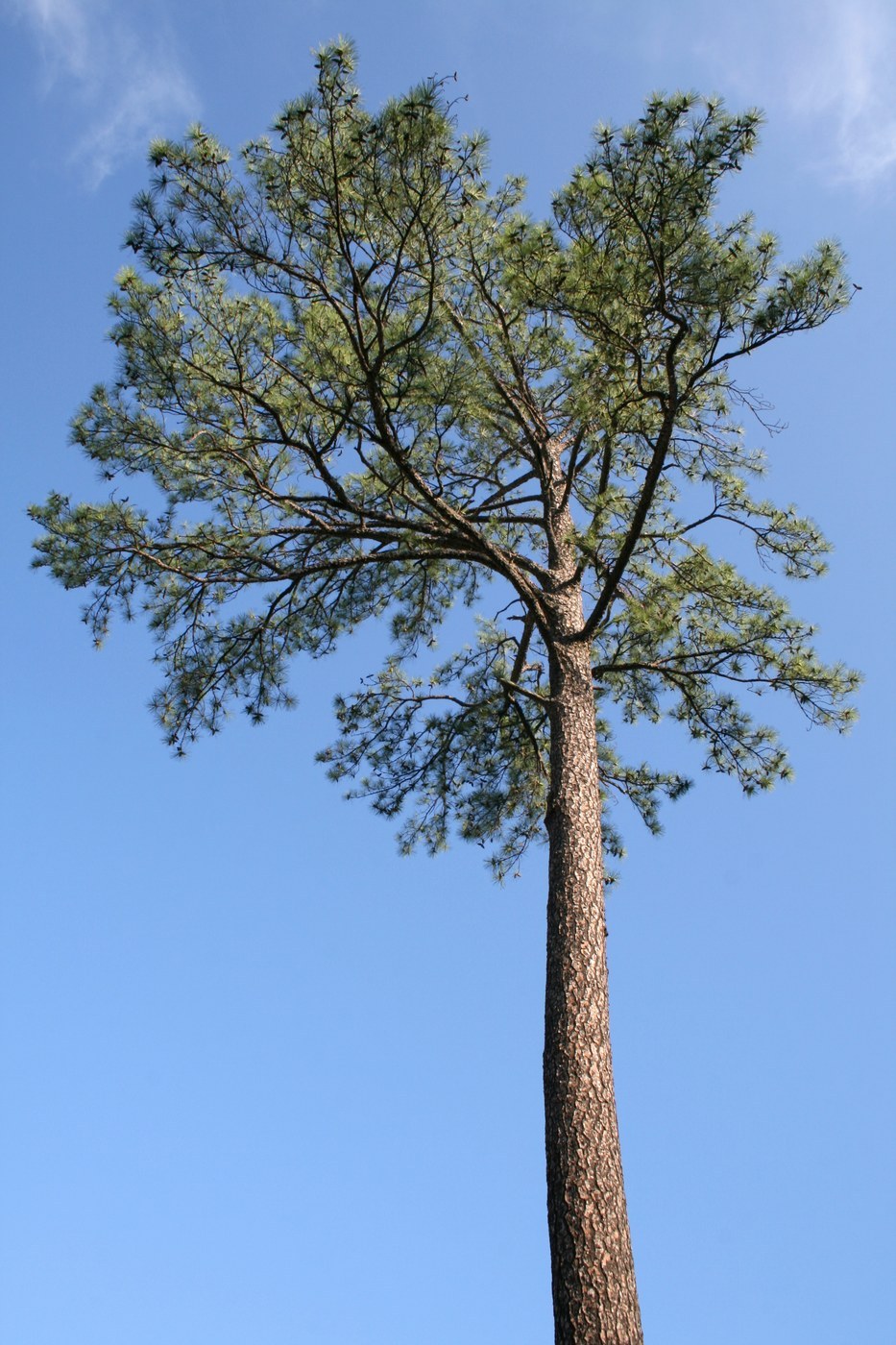
The loblolly pine (Pinus taeda) is a fast-growing, straight-trunked evergreen conifer native to the American Southeast, with long needles in bundles of three and a tall, open crown. It is an easy, adaptable tree for large landscapes, windbreaks, and reforestation.
Light
Loblolly pine demands full sun. It is a pioneer species that races upward in open ground and will not thrive in shade, where seedlings languish and lower branches thin out. Give it an unobstructed, sunny site with room to reach its considerable mature height.
Water
This pine is highly adaptable to moisture and tolerates both damp bottomland and dry upland soils once established. Water young trees regularly through their first couple of seasons to settle the roots. After that they are largely self-sufficient, drawing on deep roots and needing supplemental water only during severe drought.
Soil & Potting
One of its great strengths is soil tolerance: it grows in poor, acidic, sandy, clay, and even periodically wet soils that defeat fussier trees. It favors slightly acidic ground and does not need rich soil. Plant it in open earth rather than containers; if starting seedlings in pots, use deep tree pots to accommodate the taproot and transplant while young.
Humidity & Temperature
Adapted to the warm, humid Southeast, loblolly pine handles heat and humidity effortlessly and is hardy through moderate winters. It withstands ice and cold better as a mature tree; young stems can be damaged by hard freezes at the northern edge of its range. It appreciates the long, warm growing season of its native region.
Feeding
In natural settings this pine needs no feeding. In poor sites, a light application of balanced or slightly acidic tree fertilizer in early spring can boost young trees, but mature specimens rarely require it. Avoid overfeeding, which encourages weak, fast growth prone to wind damage.
Propagation
Loblolly pine is grown from seed, which is abundant from its cones. Collect ripe cones, extract the winged seeds, and sow in well-drained media; some cold stratification improves and evens out germination. Seedlings grow quickly and are transplanted while small so the developing taproot is not disturbed.
Repotting / Pruning
Little pruning is needed for a landscape tree beyond removing dead, damaged, or crossing branches; do structural pruning while the tree is young to establish a strong central leader. The tree self-prunes lower limbs as it matures. Container-raised seedlings should be planted out early rather than repotted repeatedly, since the taproot resents confinement.
Common Problems & Pests
Bark beetles, particularly southern pine beetle, are the most serious threat and are best managed by keeping trees vigorous and not stressed. Sawflies can defoliate young growth, and fungal issues such as fusiform rust cause galls on stems and branches. Prune out affected wood, maintain good spacing and air movement, and keep trees healthy to limit problems.
Seasonal Care Tips
Plant in fall or early spring so roots establish before summer heat. Water new trees through their first dry summers. Expect a strong flush of vertical growth in spring and early summer. In fall, older interior needles naturally yellow and shed, which is normal seasonal renewal rather than a sign of trouble.
Frequently asked questions
How fast does a loblolly pine grow?
Very fast. It is one of the quickest-growing pines, often adding two feet or more of height per year when young in full sun and open ground, which is why it is widely used for screens and reforestation.
What kind of soil does loblolly pine need?
It is remarkably adaptable, thriving in sandy, clay, acidic, poor, and even periodically wet soils. It prefers slightly acidic ground and does not need rich soil to do well.
Why are the inner needles turning brown and dropping?
Seasonal shedding of older interior needles, usually in fall, is normal for evergreen pines. As long as the newest needles at the branch tips stay green, the tree is healthy.
Does loblolly pine tolerate wet ground?
Yes. It naturally grows in low, moist bottomlands as well as dry uplands, making it one of the more flood-tolerant pines once established.