
Lodgepole Pine Identification Guide
Identify Lodgepole Pine (Pinus contorta) by its needles in bundles of two, small prickly often-closed cones, and tall slender straight trunk.
Read the full Lodgepole Pine encyclopedia entry →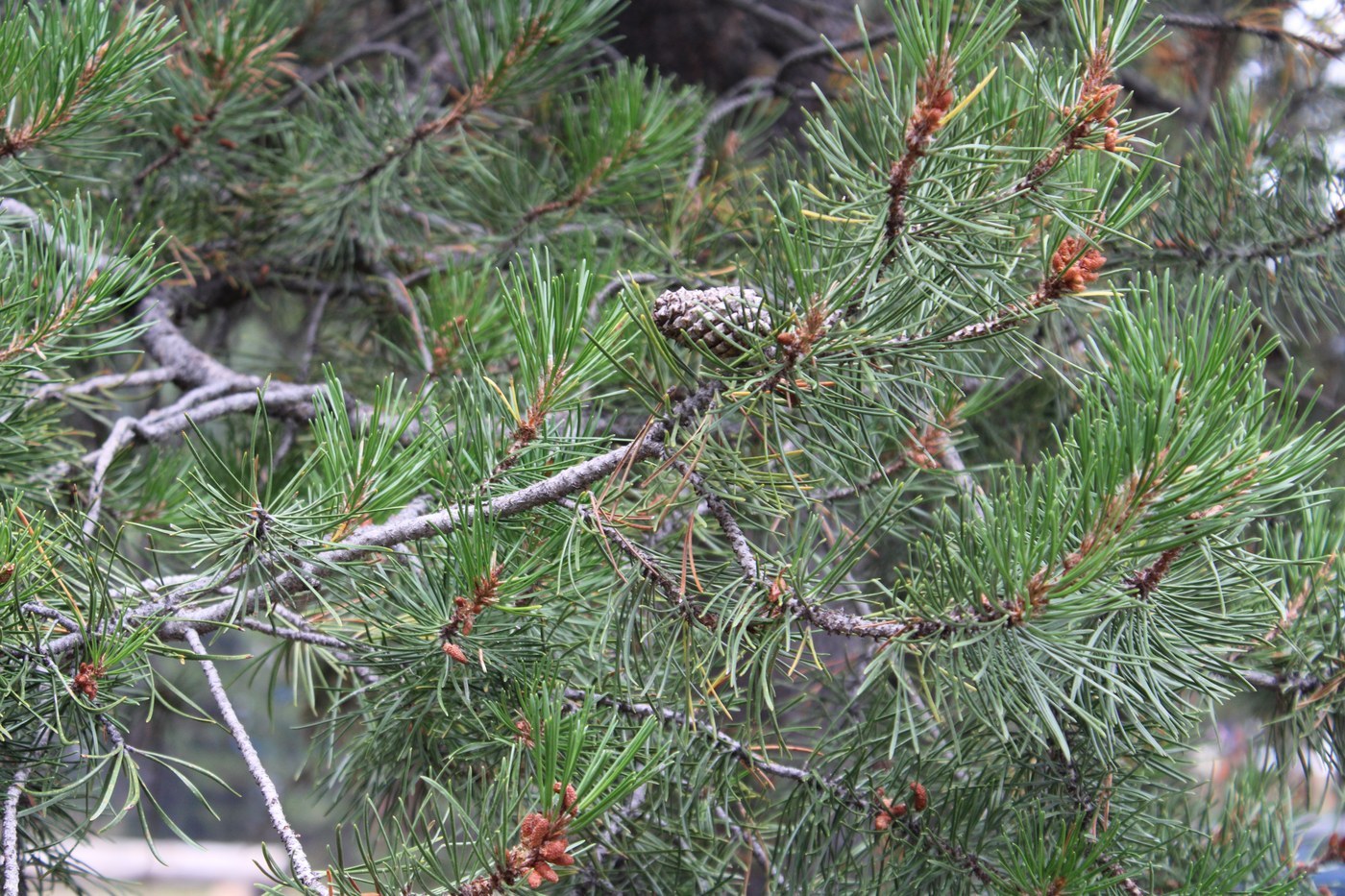
Key Identifying Features
Lodgepole Pine (Pinus contorta) is a widespread western North American pine known for forming dense, even-aged stands after fire. Identify it by short needles in bundles of two, small egg-shaped prickly cones that often stay closed on the tree, and a characteristically tall, slender, straight trunk (the inland var. latifolia).
- Needles in fascicles (bundles) of two
- Small, asymmetrical cones with a sharp prickle on each scale
- Thin, flaky orange-brown to gray bark
- Narrow, straight trunk (inland form) or twisted shrubby coastal form
Leaves & Stems
Needles are 1-3 inches long, stiff, often slightly twisted (hence contorta), and bound two per bundle in a short papery sheath. They are yellow-green to dark green and tend to crowd the branch ends. The two-needle bundle and relatively short length separate it from most western pines, which carry three or five needles. Bark is thin, scaly, and orange-brown to gray — much thinner than that of Ponderosa Pine.
Flowers & Fruit
Lodgepole bears small pollen cones in spring and woody seed cones 1-2 inches long, egg-shaped and lopsided (asymmetrical) at the base. Each cone scale tips with a slender, sharp prickle. A hallmark of the inland variety is serotiny: many cones are sealed shut with resin and only open after the heat of a fire, then release seed onto bare burned ground, explaining the dense post-fire stands.
How to Tell It Apart from Look-Alikes
- Ponderosa / Jeffrey Pine: long needles in bundles of three and much larger cones and thick plated bark.
- Jack Pine (Pinus banksiana): also two short needles and serotinous cones, but cones curve and lack a strong prickle; ranges barely overlap.
- Shore Pine (coastal P. contorta var. contorta): same species but shrubby and twisted along the Pacific coast.
- Whitebark / Limber Pine: five needles per bundle.
Two short twisted needles plus small lopsided prickly cones on a slender western pine confirm Lodgepole.
Where You'll Find It
Ranges from Alaska and the Yukon south through the Rocky Mountains, Cascades, and Sierra Nevada to California and Baja, and along the Pacific coast. It grows from sea level to subalpine elevations, often forming pure dense forests after fire on a wide range of soils, including poor and sandy sites.
Quick ID Checklist
- Needles in bundles of two, short and often twisted
- Small egg-shaped, lopsided cones with sharp prickles
- Many cones stay closed (serotinous) until fire
- Thin scaly orange-brown bark
- Slender straight trunk (inland) or twisted coastal shrub
Two short needles and small prickly closed cones on a slim western pine point to Lodgepole Pine.
Frequently asked questions
How many needles per bundle does Lodgepole Pine have?
Two. The short, often slightly twisted needles come in bundles of two, which separates it from western three-needle pines like Ponderosa.
Why do some cones stay closed on the tree?
Inland Lodgepole Pine is often serotinous: its cones are sealed with resin and open only when heated by fire, releasing seed onto freshly burned, open ground.
Why is it called 'contorta'?
The name refers to the twisted needles and the contorted, shrubby growth form of the coastal 'shore pine' variety; the inland variety, by contrast, grows tall and straight.
How do I tell it from Ponderosa Pine?
Lodgepole has two short needles and small prickly cones with thin bark, while Ponderosa has long needles in bundles of three, large cones, and thick orange plated bark.