London Plane Tree Identification Guide
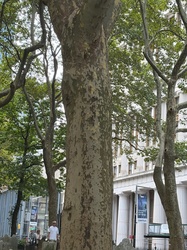
Identify the London plane by its camouflage-patch flaking bark, large maple-like leaves, and bristly round seed balls hanging in pairs.
Read the full London Plane Tree encyclopedia entry →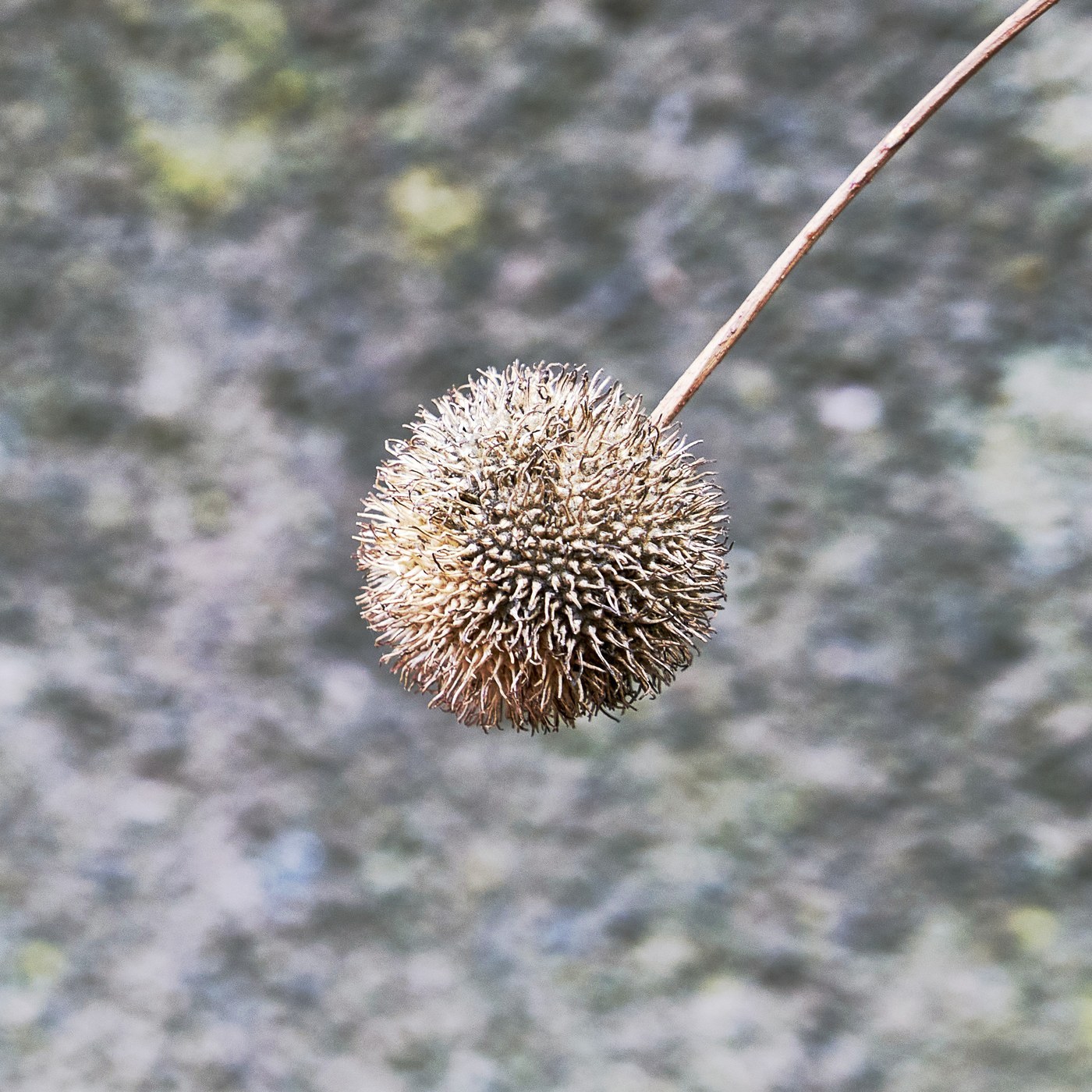
Key Identifying Features
London plane (Platanus x acerifolia, often x hispanica) is a hybrid of American sycamore and Oriental plane, prized as a tough, pollution-tolerant city street tree across the world.
- Mottled, flaking bark in patches of cream, olive, and gray (camouflage look)
- Large, maple-like palmate leaves with 3-5 lobes
- Round, bristly seed balls, usually hanging two (sometimes one or three) per stalk
- Broad, spreading crown often heavily pruned (pollarded) in cities
Leaves & Stems
Leaves are large (10-25 cm wide), palmately lobed with 3-5 pointed, coarsely toothed lobes, broadly resembling a maple but arranged alternately (maples are opposite). They are bright to mid-green, smooth above and slightly hairy below when young. The base of each leaf stalk is hollow and encloses the next year's bud (the swollen stalk base hides the bud) and leaves a circular scar around the twig.
The most striking feature is the bark: it continually flakes off in irregular plates to reveal patches of cream, yellow-green, olive, and gray, giving a distinctive dappled, camouflaged trunk. Twigs are zigzag with cone-shaped buds.
Flowers & Fruit
Small flowers appear in spring in dense spherical heads. The fruit is a bristly, brown, ball-shaped cluster (achene head) about 2.5-3.5 cm across, typically borne two per dangling stalk (the American sycamore parent usually has one ball per stalk; Oriental plane often three or more). The balls persist through winter and break apart into fluffy seeds in spring.
How to Tell It Apart from Look-Alikes
- American sycamore: Whiter bark, usually a single seed ball per stalk, leaves with shallower lobes.
- Maples: Opposite leaves and paired winged samaras instead of seed balls; bark not camouflage-flaking.
- Oriental plane: Deeper, narrower leaf lobes and typically three or more seed balls per stalk.
Two bristly balls per stalk plus camouflage bark on a street tree almost always means London plane.
Where You'll Find It
Not a wild species but a hybrid planted extensively along streets, in plazas, and in parks in temperate cities worldwide because it tolerates compacted soil, drought, root confinement, and air pollution. Rarely escapes into the wild.
Quick ID Checklist
- Camouflage bark flaking in cream/olive/gray patches
- Large alternate maple-like 3-5 lobed leaves
- Bristly round seed balls, usually two per stalk
- Leaf stalk base enclosing the bud, circular leaf scar
- Spreading street tree, often pollarded
Frequently asked questions
How do I tell London plane from American sycamore?
Count the seed balls per stalk. London plane usually has two, while American sycamore typically has one. London plane bark also shows more olive and cream tones.
Is it a kind of maple?
No. The leaves look maple-like but they are arranged alternately, not opposite, and it produces bristly seed balls instead of winged samaras.
Why is the bark so patchy?
The bark sheds in plates as the trunk expands, exposing fresh layers in different colors and creating the signature camouflage pattern.
Why is it planted in so many cities?
It tolerates pollution, compacted soil, drought, and heavy pruning, making it one of the most reliable urban street trees worldwide.
London Plane Tree identified by the community
Recent London Plane Tree specimens identified with Plant Identifier.