London Plane Tree
Platanus x hispanica
The London plane is a large, pollution-tolerant hybrid shade tree famous for its mottled, peeling camouflage bark and spherical seed balls, making it one of the world's most planted urban street trees.
- Light
- Full sun
- Water
- Moderate; tolerates dry once established
- Difficulty
- Easy
Got a plant like this?
Identify any plant from a photo, free.
Overview
The London plane (Platanus x hispanica) is a hybrid between the American sycamore and the Oriental plane, thought to have arisen in 17th-century Europe. It is one of the most successful and widely planted street trees in the world.
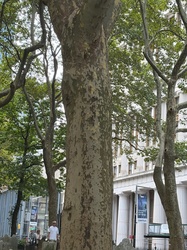
Its fame rests on remarkable tolerance of urban pollution, compacted soil, and heavy pruning, plus its striking flaking bark, which sheds in patches to reveal a camouflage pattern of cream, olive, and gray.
It is the signature tree of cities like London, Paris, and New York, lining streets, squares, and riverbanks.
How to identify it
A large deciduous tree with distinctive bark and ball-shaped fruit.
- Bark: smooth and peeling in irregular plates, creating a mottled patchwork of cream, gray, olive, and brown — its most recognizable feature
- Leaves: large (10-20 cm), maple-like with 3-5 pointed, coarsely toothed lobes; alternate (unlike maples, which are opposite)
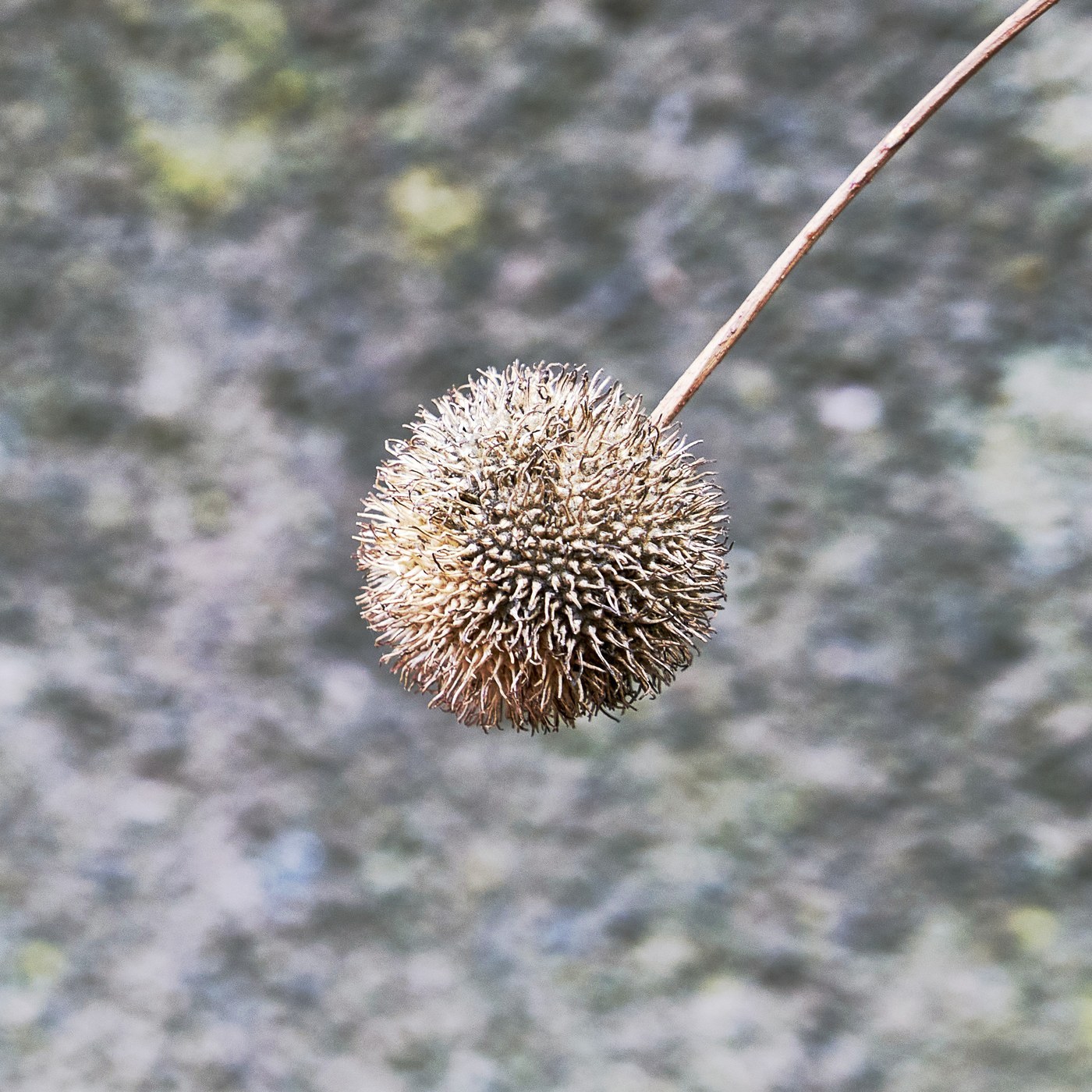
- Fruit: bristly, spherical seed balls about 2.5-3.5 cm across, usually hanging in pairs, persisting into winter
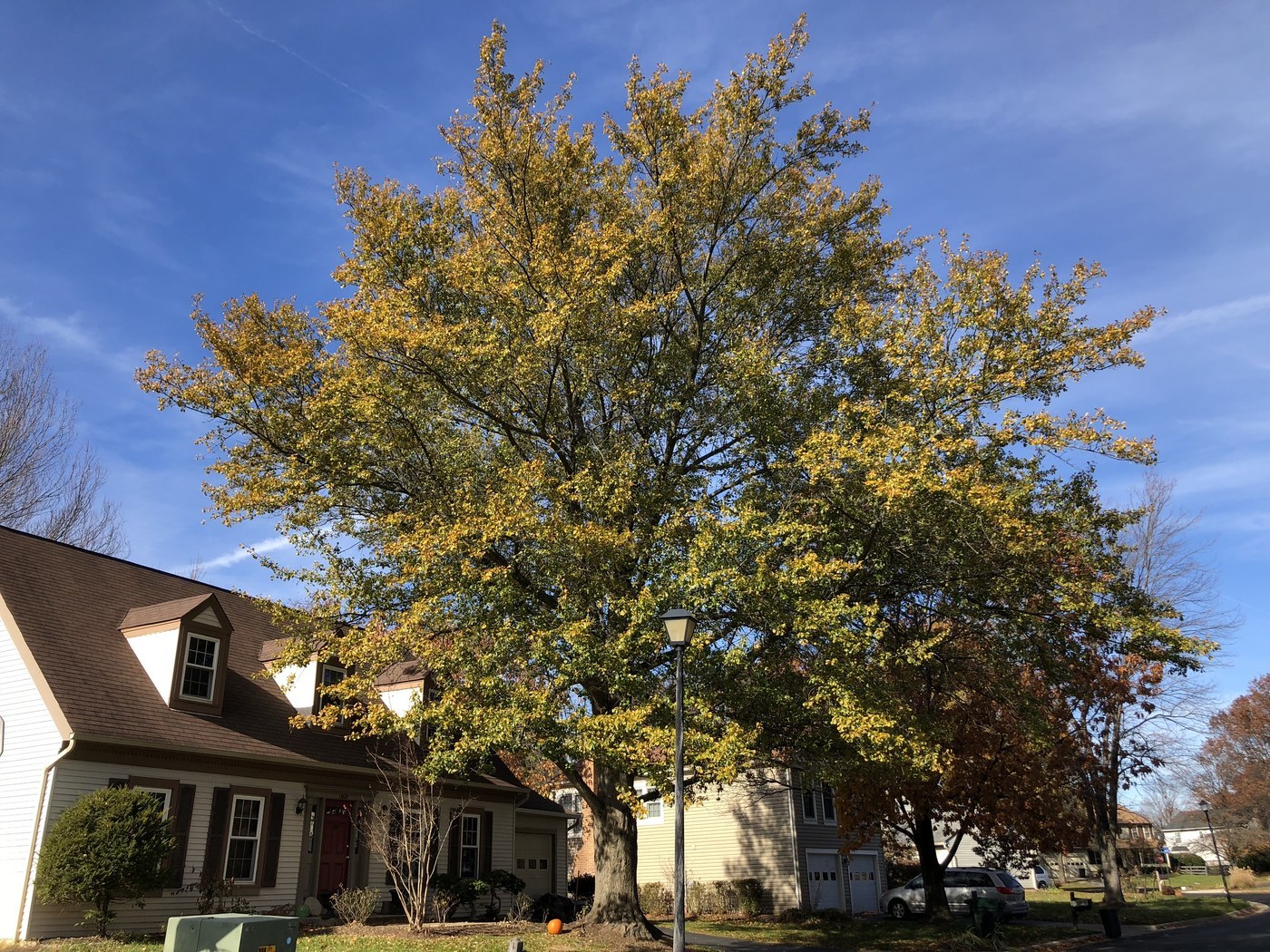
- Habit: broad, open, rounded crown on a straight trunk
- Size: 20-35 m tall
Care & growing
Exceptionally tough and forgiving in difficult sites.
- Light: full sun
- Water: moderate; tolerant of drought once established
- Soil: adaptable to poor, compacted, and urban soils; tolerates a wide pH range
- Temperature: hardy in USDA zones 5-9
- Feeding: rarely needed
- Pruning: withstands hard pruning and is often pollarded into formal shapes
- Propagation: easily from hardwood cuttings
Habitat & origin
A cultivated hybrid with no truly wild native range; its parent species are the American sycamore (eastern North America) and the Oriental plane (southeast Europe to Asia).
It is planted throughout temperate cities worldwide — especially across Europe and North America — as a street, avenue, and park tree, valued for thriving where other trees struggle.
Frequently asked questions
Is the London plane the same as an American sycamore?
No, but it's closely related. The London plane is a hybrid of the American sycamore and the Oriental plane, generally more pollution-tolerant and often bearing seed balls in pairs.
Why does its bark peel like that?
The bark sheds in plates because it cannot stretch with the growing trunk. This shedding also helps the tree slough off pollutants, contributing to its urban hardiness.
Why is it so common in cities?
It tolerates air pollution, compacted soil, drought, and heavy pruning better than almost any other large tree, making it ideal for tough urban conditions.
How can I recognize a London plane tree?
Its most telling features are the mottled, flaking bark in cream, olive and gray, the large maple-like alternate leaves, and the bristly round seed balls that usually hang in pairs into winter.
London Plane Tree guides
In-depth guides for identifying, growing, and caring for London Plane Tree.
How to Care for London Plane Tree
Grow the London plane (Platanus x hispanica), a large, pollution-tolerant shade tree famous for its flaking camouflage bark.
London Plane Tree Identification Guide
Identify the London plane by its camouflage-patch flaking bark, large maple-like leaves, and bristly round seed balls hanging in pairs.
London Plane Tree identified by the community
Real specimens identified with Plant Identifier.