
Longan Tree Identification Guide
Recognize the longan (Dimocarpus longan) by its dense corky-barked crown, leathery compound leaves, and clusters of tan, thin-shelled fruit with translucent flesh and a single dark seed.
Read the full Longan Tree encyclopedia entry →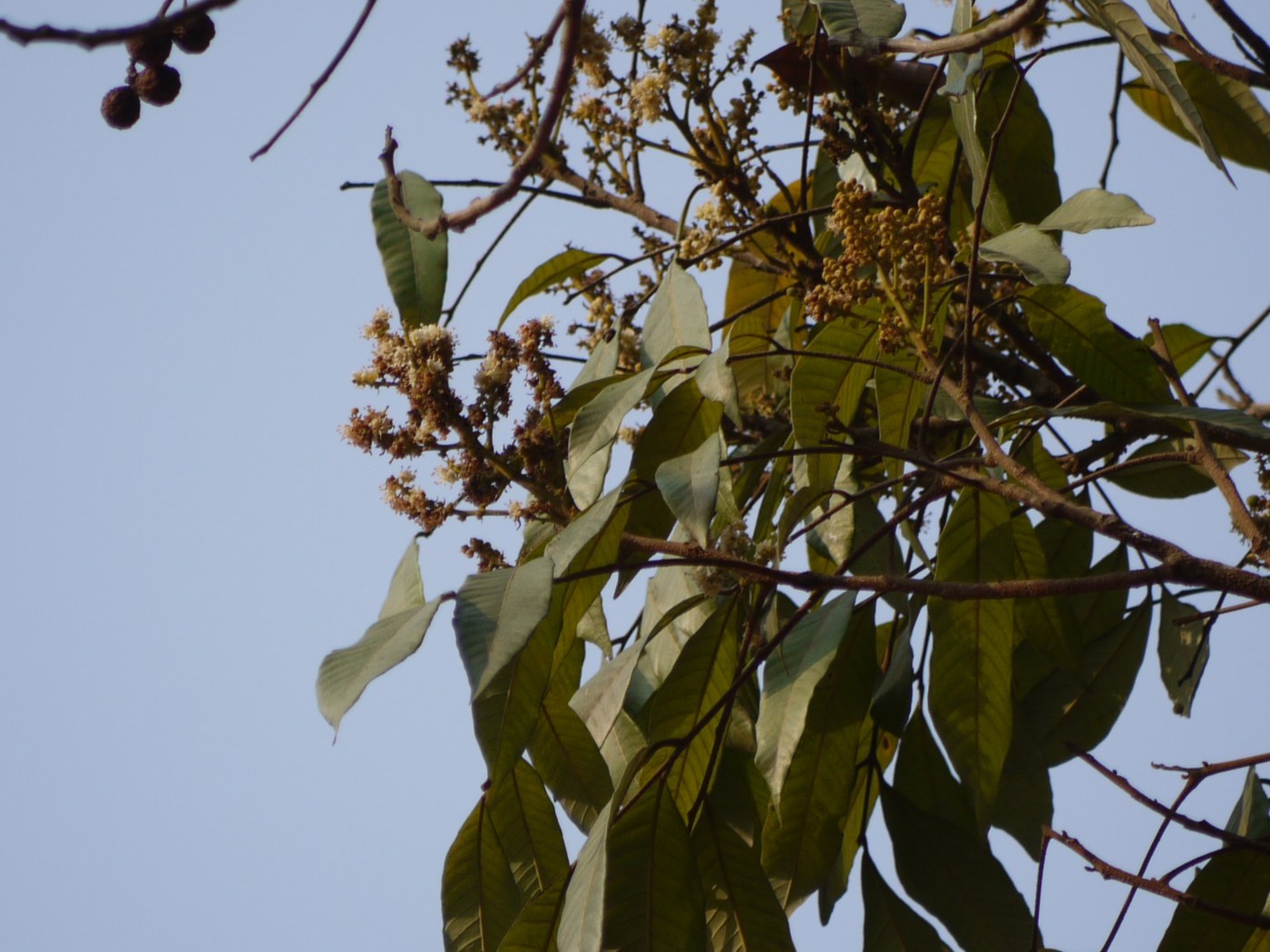
Key Identifying Features
The longan (Dimocarpus longan) is a medium to large evergreen tree in the soapberry family (Sapindaceae), reaching 30–40 feet with a broad, dense, rounded canopy. Its name means "dragon eye," referring to the peeled fruit: translucent flesh around a shiny black seed that resembles an eyeball. Key clues are pinnately compound leaves, rough corky bark, and drooping clusters of smooth tan-brown round fruit.
- Broad, dense, dark green canopy
- Compound leaves with several leathery leaflets
- Hanging panicles of small round tan fruit the size of a large marble
Leaves & Stems
Leaves are alternate and pinnately compound, with 6–9 (sometimes up to 10) leaflets arranged along the leaf stalk. Each leaflet is elliptic to lance-shaped, 4–8 inches long, leathery, dark glossy green above and duller beneath, with a wavy margin and an asymmetrical base. New growth flushes a reddish to bronze color. The bark is rough, corky, and grayish-brown, often flaking, which helps separate it from smoother-barked relatives. Branches are brittle and form a wide, spreading framework.
Flowers & Fruit
Longan blooms in large, branched terminal panicles of tiny brownish-yellow flowers, each only a few millimeters across and covered in fine hairs; the trees are an excellent bee forage. The fruit hangs in heavy drooping clusters: each is a round, 0.5–1 inch globe with a thin, brittle, tan to yellow-brown leathery shell that is smooth or slightly pebbled (not spiny). Peeling it reveals translucent, whitish flesh surrounding one glossy round black-brown seed with a pale circular scar—the "dragon eye."
How to Tell It Apart from Look-Alikes
- Lychee (Litchi chinensis) is the closest relative; its fruit has bumpy, often pink-red, knobby skin, whereas longan skin is smooth and tan-brown.
- Rambutan is unmistakable with soft hairy spines covering the red fruit.
- Other Sapindaceae trees may have similar compound leaves, but the combination of corky bark and tan thin-shelled "eyeball" fruit is specific to longan.
When fruit is absent, the even-pinnate leaves with a few large leathery leaflets plus rough corky bark are good distinguishing marks.
Where You'll Find It
Longan is subtropical to tropical and slightly more cold-tolerant than lychee, surviving brief light frost once mature. Native to southern Asia, it is grown across China, Thailand, Vietnam, India, Australia, and in Florida and Hawaii. Look for it in orchards, dooryard plantings, and warm lowland gardens, often near lychee trees.
Quick ID Checklist
- Large evergreen tree, dense rounded crown
- Pinnately compound leaves, 6–9 leathery leaflets
- Rough, corky gray-brown bark
- Drooping clusters of smooth tan-brown round fruit
- Translucent flesh + single shiny black seed ("dragon eye")
- Warm subtropical/tropical setting
Frequently asked questions
How is longan different from lychee?
Longan fruit has smooth tan-brown skin, while lychee has bumpy, often pinkish-red knobby skin. Both have translucent flesh and a single dark seed, but longan flesh is firmer.
What does the name 'dragon eye' refer to?
When peeled, the translucent flesh surrounds a round black-brown seed with a pale circular scar, resembling an eyeball—hence 'dragon eye' (long-yan in Chinese).
Can I identify a longan tree without fruit?
Yes—look for pinnately compound leaves with 6–9 leathery, glossy leaflets and distinctly rough, corky gray-brown bark on a broad dense evergreen crown.
What kind of bark does a longan tree have?
Rough, corky, grayish-brown bark that often flakes, which together with the pinnately compound leathery leaves helps identify the tree even when no fruit is present.