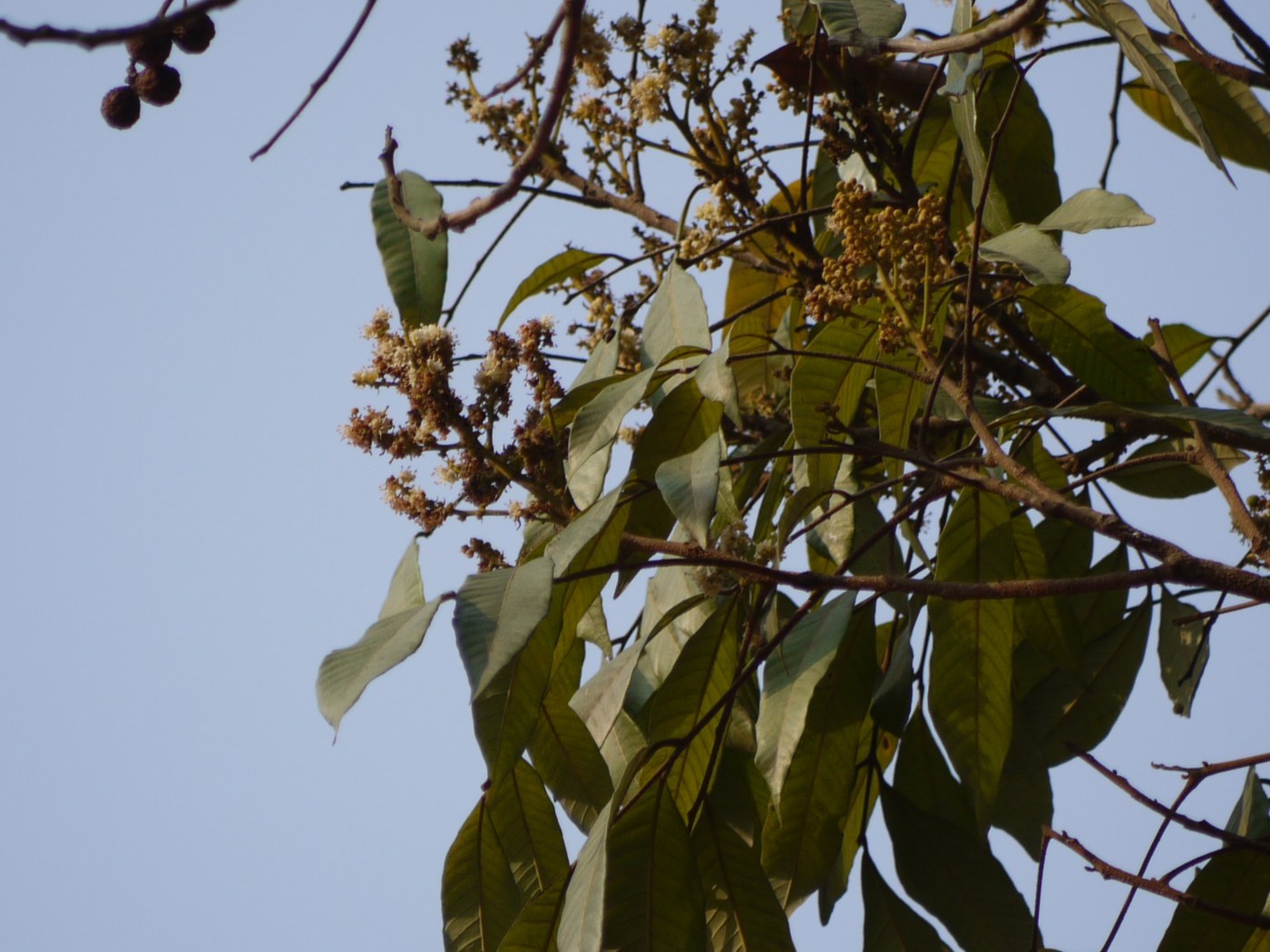
Longan Tree
Dimocarpus longan
A subtropical evergreen relative of the lychee, bearing clusters of small brown-skinned fruits with translucent flesh around a single dark seed. The seed peeking through the flesh gives it the name dragon eye.
- Light
- Full sun
- Water
- Moderate; deep, occasional watering
- Difficulty
- Moderate
Got a plant like this?
Identify any plant from a photo, free.
Overview
Longan is a large evergreen fruit tree in the soapberry family (Sapindaceae), closely related to the lychee and rambutan. Its name means "dragon eye" in Chinese, referring to the peeled fruit's resemblance to an eyeball, with the dark seed showing through the translucent flesh.
The fruit ripens later in the season than lychee. Trees are long-lived and can become quite large with broad, dense canopies.
Longan is hardier than many tropical fruit trees and is grown across subtropical Asia, Florida, and parts of Australia.
How to identify it
- Large, densely branched evergreen reaching 30 to 40 ft (9 to 12 m) or more
- Pinnately compound leaves with 6 to 9 leaflets, glossy and leathery, often with a corrugated surface
- Small, pale yellowish-brown flowers in large terminal panicles
- Round fruit 1.5 to 2.5 cm across in drooping clusters, with tan to light-brown, thin, brittle skin
- Translucent, whitish flesh surrounding a single shiny black seed with a white basal spot (the "eye")
Care & growing
Light: Full sun for vigorous growth and fruiting.
Water: Deep, regular watering during flowering and fruiting; tolerates short dry spells once established but a dry season can help trigger flowering.
Soil: Adaptable; prefers well-drained sandy loam but grows in a range including oolitic limestone; pH 5.5 to 7.0.
Temperature: Subtropical; mature trees tolerate brief frost to around 28 F (-2 C), but young trees are frost-tender. A cool, dry winter spell encourages flowering.
Feeding: Regular balanced fertilizer through the growing season.
Propagation: Usually by air layering (marcotting) or grafting to keep cultivar quality; seedlings are slow and variable.
Habitat & origin
Native to southern China and mainland Southeast Asia, with a long history of cultivation in China, Thailand, and Vietnam.
It grows in subtropical lowland and lower montane regions with warm summers and a cooler, drier winter. Major production today is in China, Thailand, and Vietnam, with smaller industries in Taiwan, Australia, and Florida.
Frequently asked questions
How is longan different from lychee?
They are close relatives, but longan has smoother tan skin and ripens later in the season than the bumpy red-skinned lychee.
Why is it called dragon eye?
When peeled, the translucent flesh around the dark seed with its white spot looks like an eyeball, which the Chinese name long yan, or dragon eye, describes.
Can longan be grown in containers?
Young trees can be kept in large pots for some years, but they ultimately become large trees and grow best when planted in the ground in a warm climate.
Does longan need a cold period to fruit?
A cool, dry winter spell helps induce flowering. In very warm, wet climates flowering can be erratic, and growers sometimes use cultural techniques to encourage it.
Longan Tree guides
In-depth guides for identifying, growing, and caring for Longan Tree.
How to Care for Longan Tree
The tropical Longan Tree needs full sun, deep occasional watering, and warmth. Learn to grow this evergreen for healthy canopy and bloom.
Longan Tree Identification Guide
Recognize the longan (Dimocarpus longan) by its dense corky-barked crown, leathery compound leaves, and clusters of tan, thin-shelled fruit with translucent flesh and a single dark seed.