
How to Care for Longleaf Pine
Grow Longleaf Pine (Pinus palustris), the stately southeastern conifer with long needles and a slow, grassy juvenile stage.
Read the full Longleaf Pine encyclopedia entry →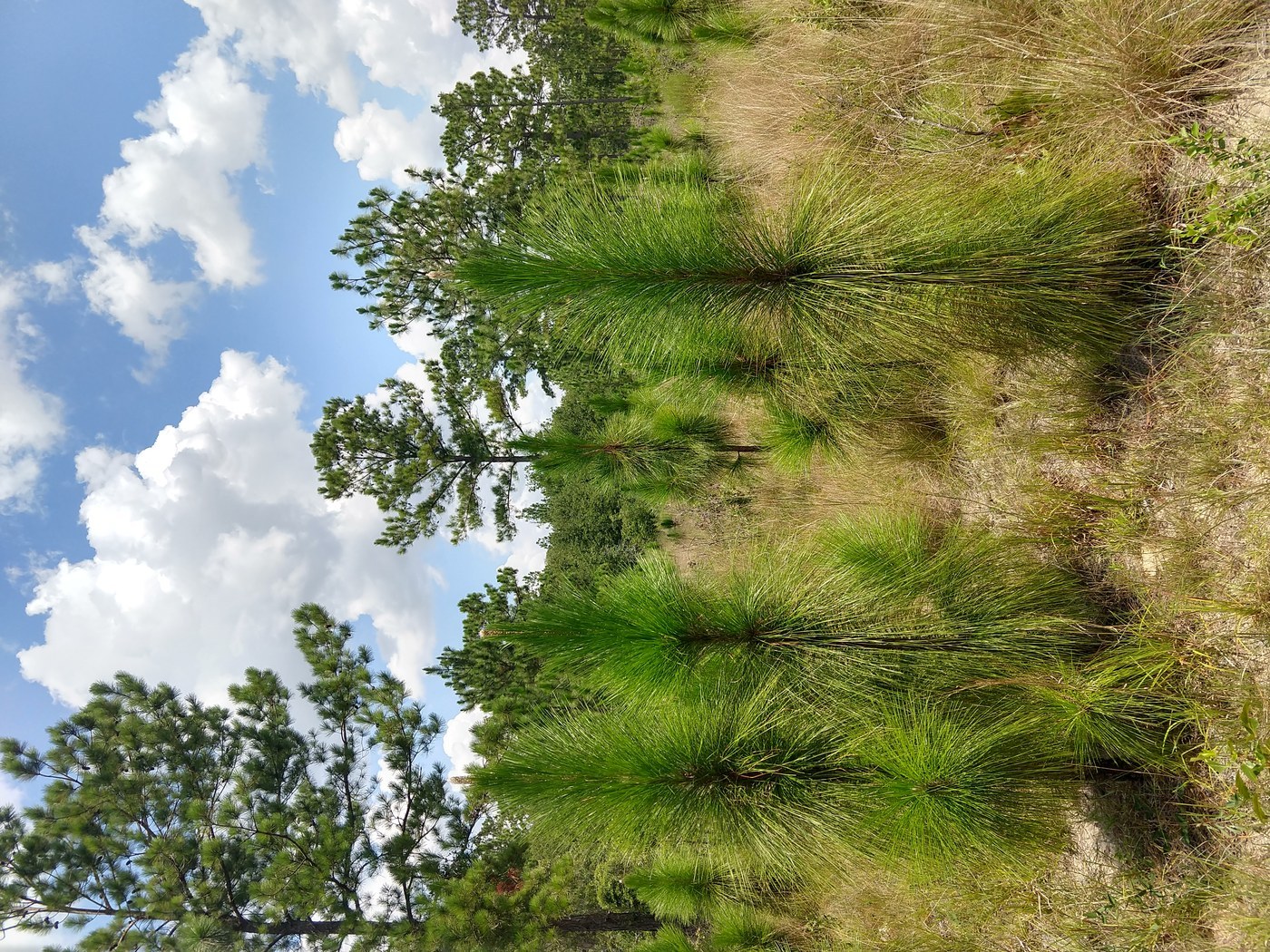
Longleaf Pine (Pinus palustris) is a majestic, long-lived southeastern conifer prized for its dramatic 8-18 inch needles, tall straight trunk, and open architectural canopy. It is a moderate-effort landscape tree that rewards patience through its unusual grass-stage youth.
Light
Longleaf Pine demands full sun. It is intolerant of shade at every stage and grows best with unobstructed sunlight all day. Seedlings shaded by faster-growing plants stall and decline, so keep the surrounding area open and remove competing overhead canopy.
Water
This pine is drought-tolerant once established, matching its native fire-swept sandhill and flatwoods habitats. Water young trees deeply about once a week through the first two growing seasons to build a strong taproot. After establishment, natural rainfall is usually sufficient; supplement only during extended drought. Avoid waterlogged soil, which the species will not tolerate.
Soil & Potting
Plant in well-drained, sandy or sandy-loam soil with an acidic pH (roughly 4.5-6.0). Longleaf Pine thrives in the lean, low-fertility soils many other trees dislike. Heavy clay or poorly draining sites cause root problems, so amend with sand or coarse organic matter and plant on a slight mound where drainage is marginal. Container-grown seedlings transplant more reliably than bare-root stock because of the deep taproot.
Humidity & Temperature
Well adapted to the warm, humid climate of the U.S. Southeast (USDA zones 7-10). It handles high summer heat and humidity with ease and tolerates brief cold snaps once established. In its native range it co-evolved with periodic ground fire; in managed landscapes, keeping the base clear of heavy leaf litter reduces disease pressure.
Feeding
Longleaf Pine needs very little supplemental feeding and is adapted to nutrient-poor soils. Avoid heavy nitrogen fertilizer, which can push weak growth. If growth is clearly stunted on very poor sites, a light application of a balanced acid-forming tree fertilizer in early spring is sufficient.
Propagation
Propagation is by seed. Collect mature cones in fall, dry them to release the winged seeds, and sow fresh in a sandy, well-drained medium. Seeds germinate readily without long stratification. Seedlings enter a distinctive multi-year "grass stage," resembling a clump of green needles while building root reserves before shooting upward.
Repotting / Pruning
Longleaf Pine needs minimal pruning; its natural form is its beauty. Remove only dead, damaged, or crossing branches, and lift the lower canopy gradually as the tree matures for a clean trunk. Transplant seedlings to their permanent spot early because the deep taproot makes older specimens very difficult to move.
Common Problems & Pests
Generally tough and pest-resistant. Brown spot needle disease can affect seedlings in the grass stage, causing needle browning; good air circulation and open planting reduce it. Bark beetles may attack stressed or drought-weakened trees, so keep specimens vigorous. Root rot appears only in poorly drained, overwatered situations.
Seasonal Care Tips
- Spring: Best planting window; apply any light feeding now if needed.
- Summer: Water young trees during dry spells; established trees rarely need help.
- Fall: Collect cones for seed; clear excess litter from the base.
- Winter: Little care needed; the evergreen canopy holds through the cold season.
Frequently asked questions
Why is my Longleaf Pine seedling not growing taller?
This is normal. Longleaf Pine spends several years in a grass-like juvenile stage, building root reserves before it bolts upward. Keep it in full sun and free of competing shade, and it will eventually shoot up.
How much sun does Longleaf Pine need?
Full, all-day sun at every stage. It is highly shade-intolerant, and seedlings shaded by other plants stall and decline.
Does Longleaf Pine need a lot of watering?
Only while young. Water deeply weekly for the first two seasons to establish the taproot, then rely mostly on rainfall since mature trees are drought-tolerant.
What soil is best for Longleaf Pine?
Well-drained sandy or sandy-loam soil with an acidic pH around 4.5-6.0. It thrives in lean soils and dislikes heavy, wet clay.