
How to Care for Loquat Tree
Grow the handsome evergreen loquat in full sun with moderate water; it is easy and drought-tolerant once established.
Read the full Loquat Tree encyclopedia entry →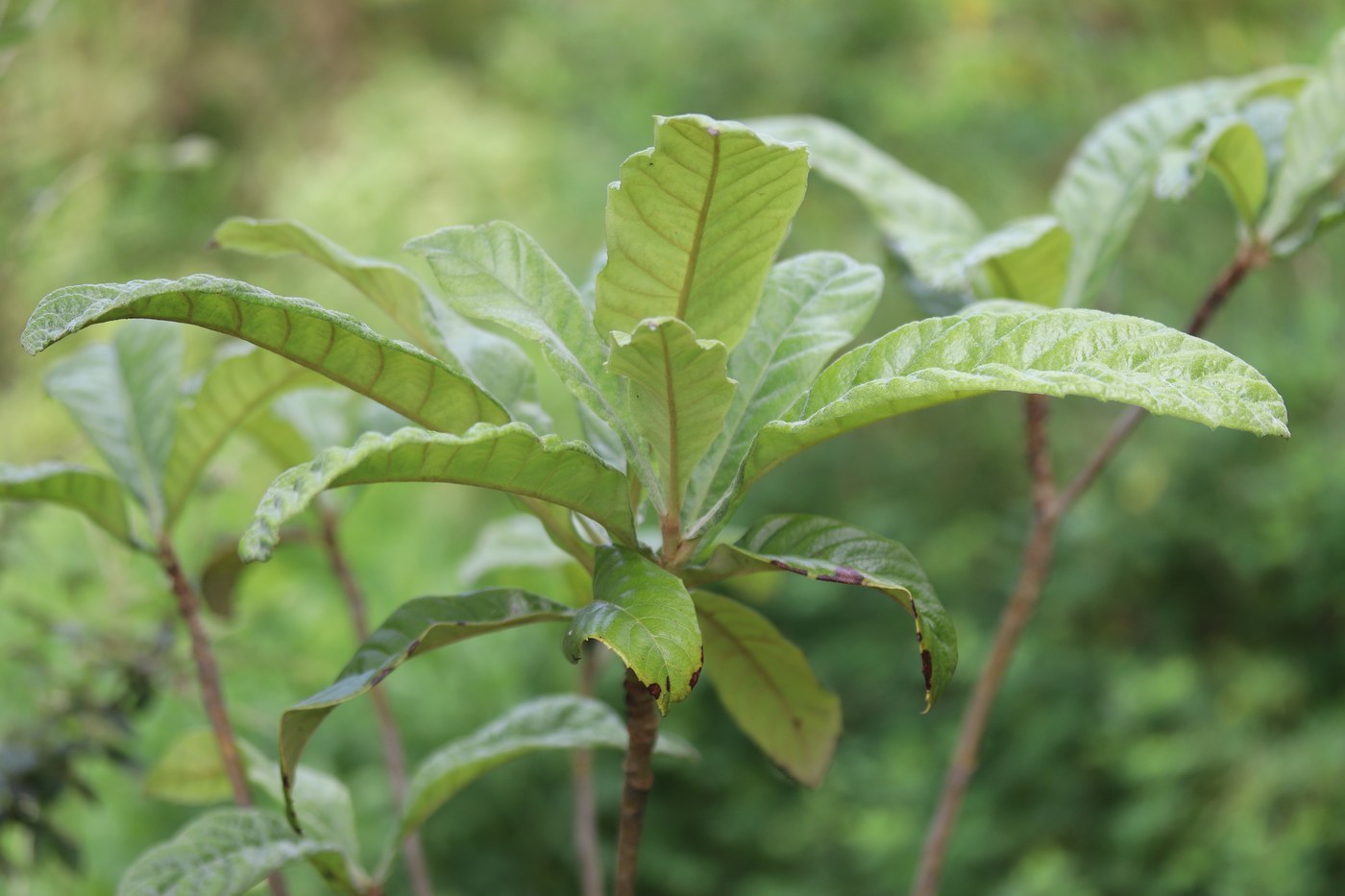
The loquat (Eriobotrya japonica) is a handsome evergreen tree with large, deeply veined, leathery leaves and a rounded canopy. It is an easy, adaptable, and drought-tolerant tree once established, valued as much for its bold ornamental foliage as for its productive habit.
Light
Loquat grows best in full sun, which produces a dense, well-shaped canopy and strong flowering. It will tolerate part shade but with less vigor. Give it an open position with at least 6 hours of direct sun daily for the best form.
Water
Water moderately. Young trees need regular watering to establish, but a mature loquat is notably drought-tolerant and gets by on much less. Water deeply during dry spells and while flowers and fruit are developing, then let the soil dry somewhat between waterings. Avoid constantly wet soil, which the tree dislikes.
Soil & Potting
Loquat is adaptable to a wide range of soils as long as drainage is good. It prefers a fertile loam with a pH between about 5.5 and 7.5 but tolerates sandy or clay soils that drain freely. Improve poor soils with organic matter. Young trees can be grown in large containers with free-draining potting mix before being planted out.
Humidity & Temperature
Loquat is a subtropical to warm-temperate evergreen that thrives in mild climates. The tree itself is fairly cold-hardy and tolerates brief frosts, but its flowers and young fruit, which form in autumn and winter, are damaged by hard freezes. It tolerates heat and coastal conditions well and accepts a range of humidity.
Feeding
Feed lightly two or three times through the growing season with a balanced fertilizer to support steady growth and flowering. Avoid heavy nitrogen, which pushes leafy growth at the expense of flowers and can make the tree more disease-prone. An annual mulch of compost supplies gentle background nutrition.
Propagation
Loquat grows readily from seed, and seedlings sprout quickly, though they do not reliably reproduce the parent tree and take several years to mature. Named varieties are propagated by grafting onto seedling rootstock or by air layering. For a predictable tree, choose a grafted specimen.
Repotting / Pruning
Prune after the fruiting period to shape the canopy, remove crowded or crossing branches, and control size, since loquats can grow into sizable trees. Thinning the canopy improves light and airflow. Thinning clusters of developing fruit yields larger remaining fruit. Container-grown young trees should be repotted every year or two until planted out.
Common Problems & Pests
Loquat is generally robust. Fireblight is the most serious concern, causing blackened, scorched-looking shoots; prune out and destroy affected wood well below the damage and disinfect tools between cuts. Watch for scale, aphids, and fruit flies. Ensure good drainage to prevent root rot, and provide airflow to limit leaf-spot fungi in humid weather.
Seasonal Care Tips
Loquat has an unusual cycle, flowering in autumn and ripening fruit in late winter to spring. Protect blossoms and young fruit from hard frosts in marginal climates. Feed in spring and again through summer, water deeply during fruit development, and prune after fruiting. Mulch to conserve moisture and keep the root zone stable through summer heat.
Frequently asked questions
When does a loquat tree flower and fruit?
Loquat has an unusual cycle, flowering in autumn and ripening its fruit in late winter to spring. This means blossoms and young fruit can be vulnerable to hard frosts.
How much water does a loquat need?
Young trees need regular watering to establish, but mature loquats are drought-tolerant. Water deeply during dry spells and fruit development, then let the soil dry between waterings.
What is the black, scorched growth on my loquat?
That is likely fireblight. Prune out affected shoots well below the damage, destroy the prunings, and disinfect your tools between every cut to prevent spread.
Can I grow a loquat from seed?
Seeds germinate easily, but seedlings do not come true to the parent and take several years to mature. For predictable results, choose a grafted named variety.