Loquat Tree
Eriobotrya japonica
An evergreen subtropical fruit tree bearing clusters of orange fruit in late winter and spring. Ornamental and easy to grow, it offers lush foliage and unusually timed blossoms.
- Light
- Full sun
- Water
- Moderate; drought-tolerant once established
- Difficulty
- Easy
Got a plant like this?
Identify any plant from a photo, free.
Overview
The loquat is an evergreen tree or large shrub in the rose family, grown for its orange fruit and handsome foliage. Despite the names Japanese plum or medlar, it is native to south-central China.
Unusually, it flowers in autumn or winter and ripens fruit in late winter to spring, when little else is fruiting. The small fruits each contain one to several large brown seeds.
Widely planted as an ornamental and fruit tree in warm regions, the loquat is prized for its bold evergreen leaves and fragrant blossoms.
How to identify it
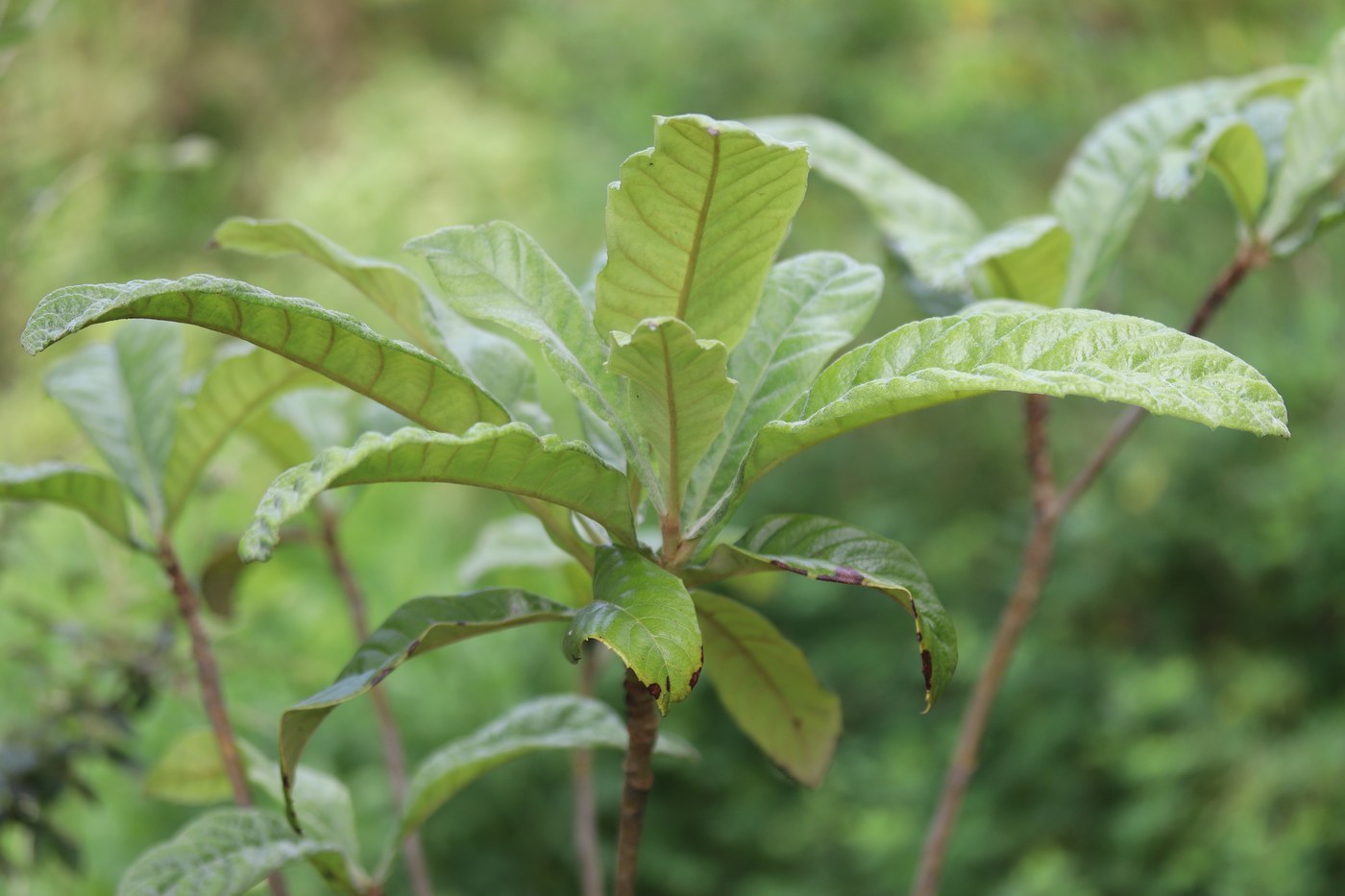
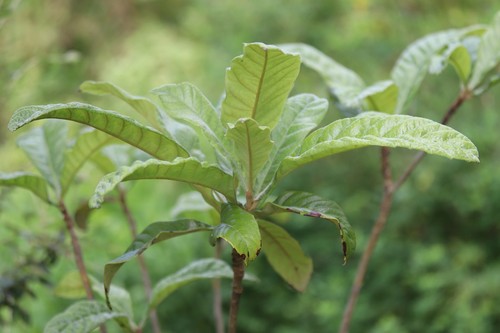
An evergreen tree with large, ribbed leaves and clusters of orange fruit.
- Leaves: Large, leathery, dark green, glossy above and woolly beneath, 15-30 cm, with prominent veins and toothed edges
- Bark: Gray-brown
- Flowers: Small, white, fragrant, in woolly terminal clusters in autumn to winter
- Fruit: Oval to round, 3-5 cm, yellow to orange, in clusters, each with one to several large seeds
- Size: Usually 5-10 m tall
Care & growing
An easygoing tree for warm climates.
- Light: Full sun for best fruiting; tolerates light shade
- Water: Moderate watering; drought-tolerant once established but fruits better with regular moisture
- Soil: Adaptable, but prefers well-drained, fertile soil
- Temperature: Subtropical; hardy to about -10C as a tree, but flowers and young fruit are damaged by frost
- Feeding: Light feeding two or three times in the growing season
- Propagation: Seed (variable) or grafting for named cultivars; thin fruit clusters for larger fruit
Habitat & origin
Eriobotrya japonica is native to the cool, humid hill forests of south-central China and was cultivated in Japan for over a thousand years.
It is now grown throughout subtropical and warm-temperate regions worldwide, including the Mediterranean, the southern US, South America and Asia. It thrives where winters are mild enough to protect its early flowers from frost.
Frequently asked questions
When do loquats ripen?
They flower in autumn or winter and ripen in late winter through spring, an unusually early season for tree fruit.
Why does my loquat flower but not fruit?
Frost often kills the early winter flowers or young fruit. In marginal climates a sheltered, warm site improves fruit set.
Are loquats grown from seed true to type?
Not reliably. Seedlings are variable, so named fruiting cultivars are usually grafted.
How can I recognize a loquat tree?
Look for its large, leathery, deeply veined dark green leaves that are woolly beneath, fragrant white winter flowers in woolly clusters, and clusters of small oval orange fruit.
Loquat Tree guides
In-depth guides for identifying, growing, and caring for Loquat Tree.
How to Care for Loquat Tree
Grow the handsome evergreen loquat in full sun with moderate water; it is easy and drought-tolerant once established.
Loquat Tree Identification Guide
Identify the loquat tree (Eriobotrya japonica) by its large leathery deeply-veined evergreen leaves, fragrant winter flowers, and clusters of orange spring fruit.