
How to Care for Lovage
Grow lovage (Levisticum officinale), a tall, hardy perennial with celery-like foliage that thrives in sun to part shade and moist soil.
Read the full Lovage encyclopedia entry →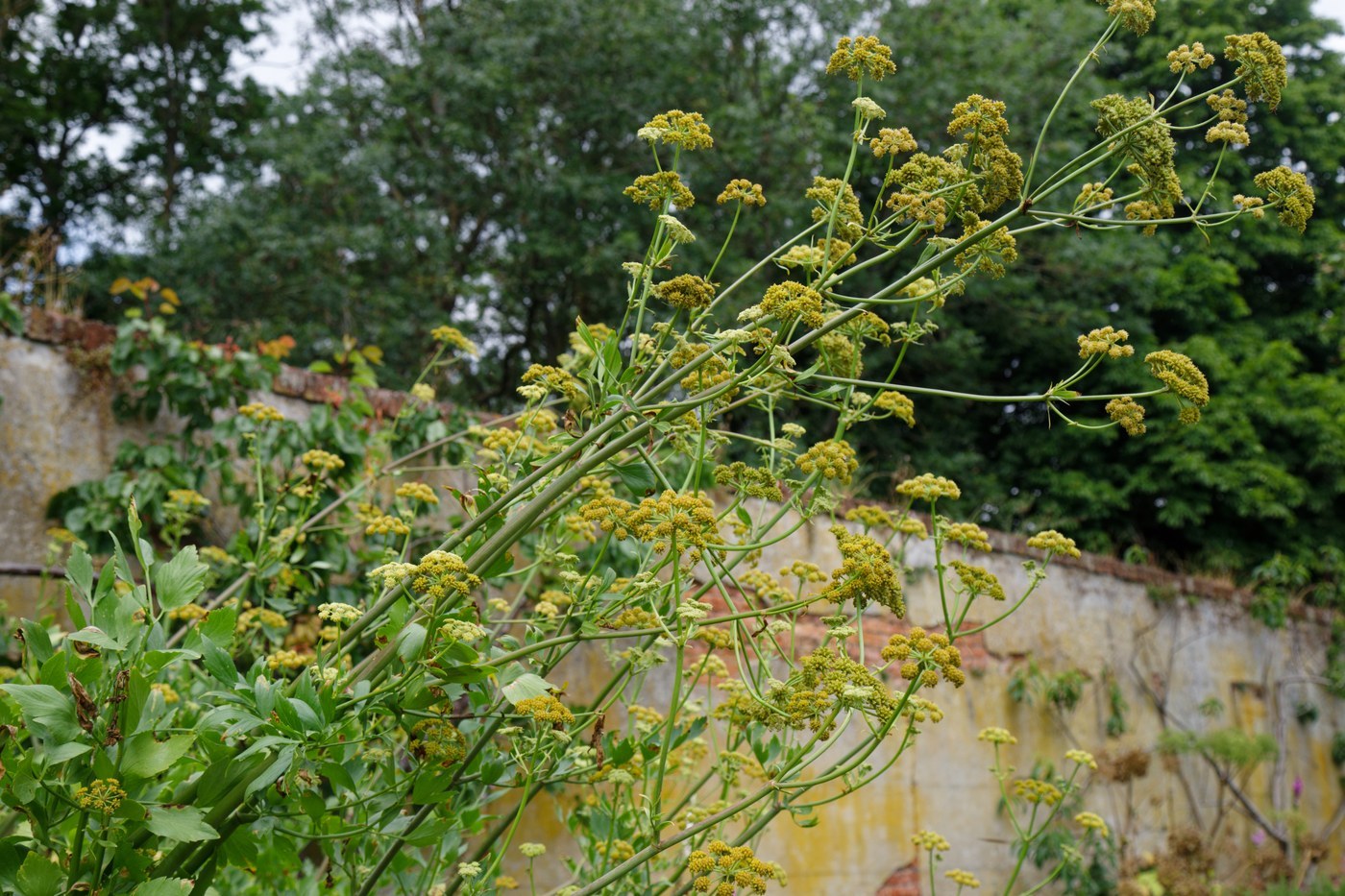
Lovage is a robust, long-lived perennial that forms a towering clump of glossy, celery-like leaves topped by airy umbels of yellow-green flowers. It is an easy, forgiving plant that returns bigger each year once established.
Light
Lovage grows best in full sun to part shade. In cooler climates give it as much sun as possible for the fullest, most upright growth. In hot-summer regions a spot with afternoon shade keeps the foliage lush and prevents the tall stems from scorching or wilting during heat spells.
Water
Keep the soil evenly moist through the growing season. Lovage is a thirsty plant, and consistent moisture produces the largest, most tender leaves. Water deeply once or twice a week, more in hot or windy weather, and mulch around the crown to conserve moisture. Avoid letting the soil dry out completely, which causes stems to toughen and the plant to bolt early.
Soil & Potting
Provide a deep, fertile, well-drained soil rich in organic matter. Lovage develops a substantial taproot, so loosen and amend the bed with compost before planting. A near-neutral pH (around 6.0 to 7.0) is ideal. In containers choose a pot at least 30 cm deep and wide to accommodate the root system, using a rich, moisture-retentive potting mix.
Humidity & Temperature
Lovage is very cold-hardy and tolerates hard frosts, dying back to the ground in winter and resprouting in spring. It prefers cool to moderate temperatures and can struggle in prolonged extreme heat. Average outdoor humidity suits it well; good air circulation helps keep the dense foliage healthy.
Feeding
Because it produces so much leafy growth, lovage appreciates rich soil. Work in plenty of compost or well-rotted manure at planting, then top-dress with compost each spring. A balanced, nitrogen-leaning fertilizer early in the season supports vigorous foliage. Avoid over-feeding late in the year.
Propagation
Propagate lovage from seed or by division. Sow fresh seed in late summer or early autumn, or start indoors in early spring; seed germinates best when fresh. Established clumps can be divided in early spring, ensuring each division has a piece of crown and healthy roots. Divisions establish quickly in moist, fertile ground.
Repotting / Pruning
Cut plants back to encourage a flush of new foliage, and remove flower stalks if you want to keep the plant leafy and compact rather than letting it set seed and grow towards two metres. Divide container plants every couple of years when they outgrow their pots. Clear away dead stems in late autumn or early spring.
Common Problems & Pests
Lovage is generally trouble-free. Aphids may cluster on new shoots and flower stems; dislodge them with a strong jet of water. Leaf miners can tunnel through foliage, so remove and discard affected leaves. In wet, crowded conditions watch for leaf spot and powdery mildew, and improve spacing and air flow to prevent them. Slugs and snails may nibble young spring growth.
Seasonal Care Tips
In spring, top-dress with compost and thin or divide crowded clumps. Through summer keep the soil moist and cut back stems periodically for fresh growth. In autumn let the foliage die down naturally and apply a protective mulch over the crown in colder zones. The plant needs little winter attention and will re-emerge vigorously the following spring.
Frequently asked questions
How big does lovage get?
A mature, happy lovage plant can reach 1.5 to 2 metres tall when it sends up its flowering stems, forming a wide leafy clump. Cutting off flower stalks keeps it lower and bushier.
Does lovage come back every year?
Yes. Lovage is a hardy perennial that dies back to the ground in winter and resprouts from the crown each spring, growing larger and more productive over several years.
Can I grow lovage in a container?
Yes, but use a large, deep pot at least 30 cm across to accommodate its taproot, keep the mix consistently moist, and feed regularly since containers dry out and deplete faster than open ground.
Why is my lovage flopping over?
Tall flower stems can flop in wind or rich soil. Stake the stems, site the plant in a sheltered spot, or cut back flowering stalks to keep growth compact and leafy.