Lovage
Levisticum officinale
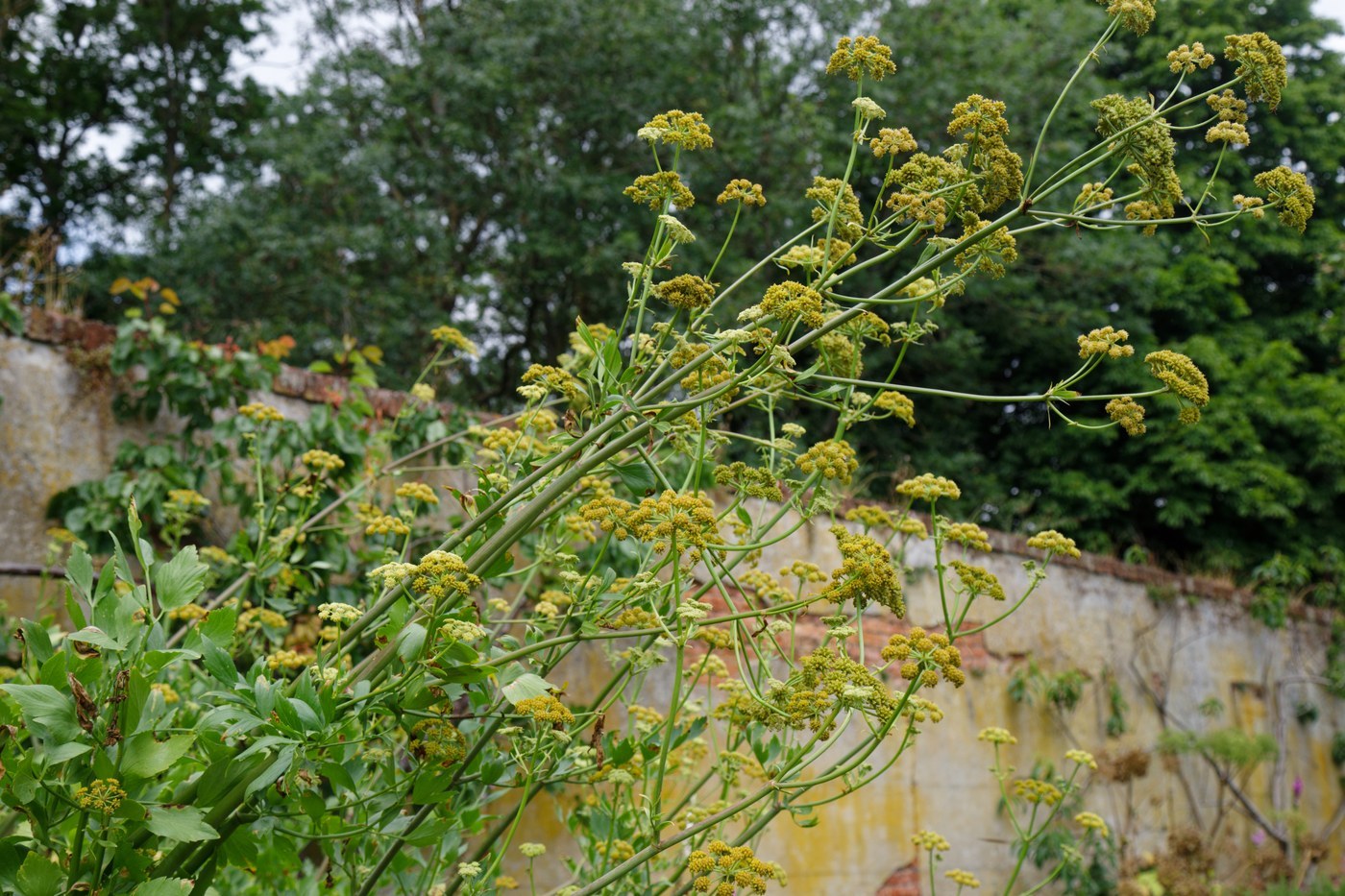
Lovage is a tall, robust perennial herb with bold, celery-scented foliage and an architectural form. Long-lived, a single plant makes a striking back-of-border specimen.
- Light
- Full sun to part shade
- Water
- Regular; keep evenly moist
- Difficulty
- Easy
Got a plant like this?
Identify any plant from a photo, free.
Overview
Lovage (Levisticum officinale) is a hardy perennial herb in the carrot family (Apiaceae) and an aromatic culinary herb long grown in kitchen gardens. Native to the Mediterranean and parts of southwest Asia, it has been cultivated in European gardens for centuries.
Every part of the plant carries a strong, celery-like scent, which earns it the nickname "Maggi plant."
Long-lived and architecturally bold, a mature lovage can tower to 2 metres, making it a striking back-of-border perennial.
How to identify it
- Leaves: large, glossy, dark green, divided into wedge-shaped, toothed leaflets resembling oversized celery or flat-leaf parsley
- Flowers: small greenish-yellow blooms in flat-topped umbels in summer
- Stems: thick, hollow, ribbed, celery-like
- Height: a robust clump reaching 1.5-2.5 m when flowering
- Seeds: small ribbed brown seeds with a strong aromatic, celery-like scent
- Scent: whole plant smells intensely of celery
Care & growing
Light: Full sun to partial shade.
Water: Keep soil evenly moist for lush leaf growth; tolerates occasional dryness once deep-rooted.
Soil: Deep, rich, well-drained loam high in organic matter.
Temperature: Very cold-hardy, through about USDA zones 3-7; dies back in winter and resprouts in spring.
Feeding: Apply compost or a balanced feed in spring; responds well to fertile soil.
Propagation: Sow fresh seed in autumn or spring, or divide established crowns; one or two plants are usually plenty.
Habitat & origin
Lovage is thought to originate in the Mediterranean region and southwest Asia, and has naturalized in parts of Europe and North America after long cultivation.
It grows readily in temperate herb and kitchen gardens, preferring cool, moist conditions and rich soil, and persists for many years once established.
Frequently asked questions
How big does lovage get?
A mature flowering plant can reach 1.5 to 2.5 metres tall, so give it space at the back of a bed.
Is lovage perennial?
Yes, it is a long-lived hardy perennial that dies back in winter and returns each spring, often persisting for a decade or more.
What do lovage leaves look like?
They are large, glossy, dark green, and divided into wedge-shaped, toothed leaflets that resemble oversized celery or flat-leaf parsley, on thick, hollow, ribbed stems.
Where is lovage native to?
It is thought to originate in the Mediterranean region and southwest Asia and has naturalized in parts of Europe and North America after long cultivation.
Lovage guides
In-depth guides for identifying, growing, and caring for Lovage.
How to Care for Lovage
Grow lovage (Levisticum officinale), a tall, hardy perennial with celery-like foliage that thrives in sun to part shade and moist soil.
Lovage Identification Guide
Identify lovage (Levisticum officinale) by its tall hollow stems, glossy celery-scented leaves, and yellow-green umbrella flower clusters.