
Love-Lies-Bleeding Identification Guide
Identify love-lies-bleeding by its dramatic long, drooping crimson tassels of tiny flowers and large oval leaves. This guide covers features and amaranth look-alikes.
Read the full Love-Lies-Bleeding encyclopedia entry →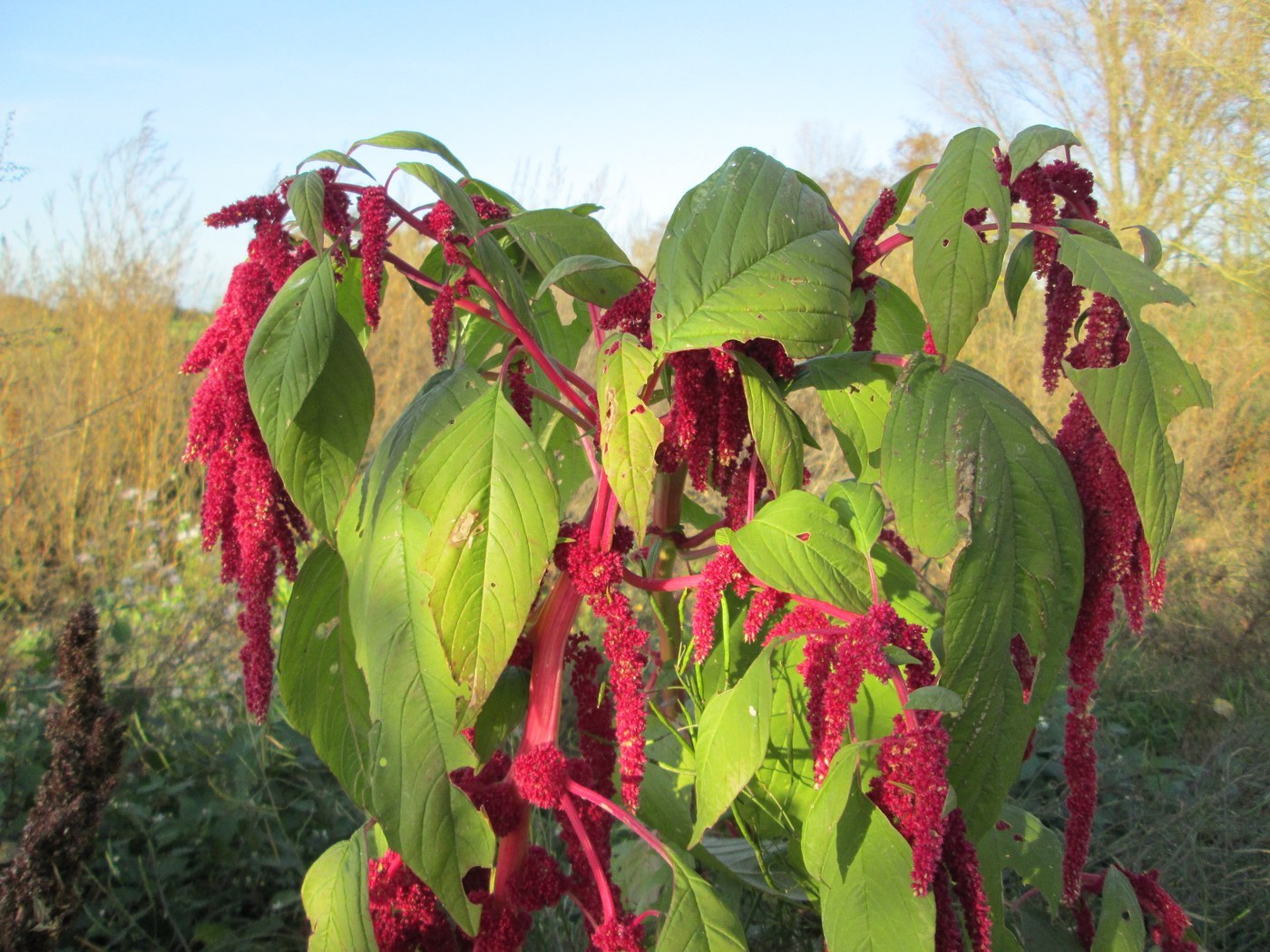
Key Identifying Features
Love-lies-bleeding (Amaranthus caudatus) is a tall, bold annual grown for its long, rope-like, hanging flower tassels in deep crimson-red.
- Flowers: thousands of tiny flowers packed into long, drooping, tassel-like spikes (panicles) that can hang 30-60 cm
- Color: typically blood-red to purple-red; some forms are green or golden
- Texture: the tassels feel soft, chenille-like and slightly bristly
- Height: robust, 1-2.5 m tall
- Stems: stout, often reddish-tinged, branching
Leaves & Stems
Leaves are large, alternate, broadly oval to diamond-shaped (rhombic), with a pointed tip and entire (untoothed) wavy margins, often 10-20 cm long. They are usually green, sometimes flushed with red or purple, on long stalks. Veins are prominent below. Stems are thick, fleshy, ridged and frequently red-tinted, supporting the heavy flower tassels.
Flowers & Fruit
Individual flowers are minute, lacking showy petals; the color comes from tiny bracts and tepals densely massed along the drooping spikes. The plant is monoecious (separate male and female flowers on the same plant). After flowering it sets enormous numbers of small, shiny, lens-shaped seeds (pale to dark). The dramatic weeping form of the inflorescence is the signature feature.
How to Tell It Apart from Look-Alikes
- Prince's feather (Amaranthus cruentus / hypochondriacus): has upright (erect) plume-like spikes, not drooping tassels
- Pigweed / redroot amaranth (Amaranthus retroflexus): weedy, with shorter stiff greenish spikes and a hairy stem
- Celosia (cockscomb): related, but flowers form crested or feathery plumes that are stiff and brightly colored
- Coleus / red foliage plants: grown for leaf color, lack the tassel inflorescence
The key is the long, soft, pendulous crimson tassels drooping from a tall leafy plant, which distinguishes love-lies-bleeding from its upright amaranth relatives.
Where You'll Find It
Native to the Andes and Central America, love-lies-bleeding is grown worldwide as an ornamental in gardens, borders and cut-flower beds. It thrives in full sun and warm summers, flowering from mid-summer to autumn, and can self-seed into disturbed ground.
Quick ID Checklist
- Long, drooping, rope-like crimson flower tassels
- Tiny petalless flowers massed on the spikes
- Large oval to diamond-shaped alternate leaves
- Stout, often red-tinged branching stems
- Tall habit, 1-2.5 m
- Abundant small shiny seeds
Frequently asked questions
What makes love-lies-bleeding distinctive?
Its long, soft, rope-like crimson flower tassels that droop dramatically from a tall leafy plant are unmistakable and set it apart from upright amaranth relatives.
How is it different from prince's feather?
Both are amaranths, but prince's feather has erect upright plumes while love-lies-bleeding has pendulous, hanging tassels.
Why are the flowers so small yet so colorful?
The individual flowers lack showy petals; the intense red color comes from masses of tiny bracts and tepals packed densely along the drooping spikes.