Love-Lies-Bleeding
Amaranthus caudatus
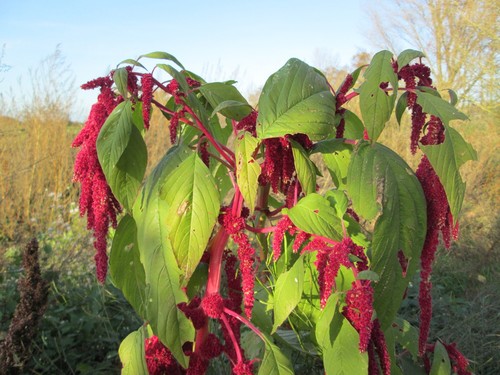
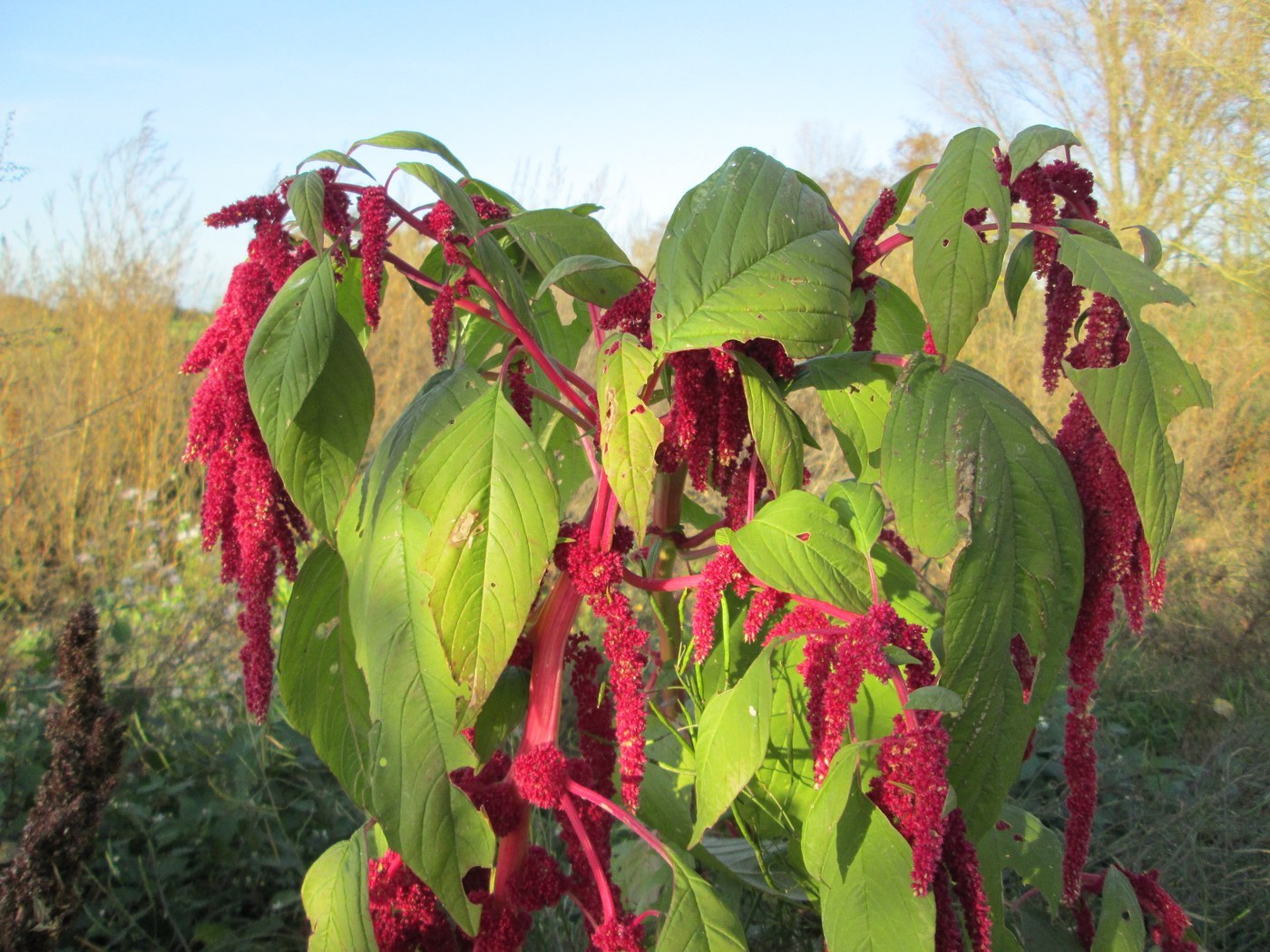
A dramatic annual amaranth grown for its long, ropelike crimson flower tassels that drape downward in bold cascades.
- Light
- Full sun
- Water
- Moderate; drought tolerant once established
- Difficulty
- Easy
Got a plant like this?
Identify any plant from a photo, free.
Overview
Love-lies-bleeding is a striking annual amaranth long cultivated in the Andes both as a grain crop and an ornamental. Its signature feature is the cascade of deep red, tail-like flower spikes that hang from the plant in late summer and fall.
Vigorous and easy to grow, it adds bold vertical and trailing drama to borders and containers. The plant belongs to the ancient amaranth family.
How to identify it
A tall, robust annual with arching, drooping flower tassels.
- Flowers: dense, ropelike pendulous tassels, usually crimson to deep red, sometimes green or golden, up to 60 cm long
- Leaves: large, oval, light to bronze-green, often with prominent veins
- Stems: stout, upright, and often tinged red
- Height: 1-1.5 m tall with a bushy frame
- Seeds: tiny, pale, and numerous, produced abundantly in the tassels
Care & growing
- Light: full sun for the deepest color and strongest growth
- Water: moderate; established plants tolerate some drought but flower best with steady moisture
- Soil: average, well-drained soil; tolerates poor ground
- Temperature: a warm-season annual that thrives in summer heat and is frost-tender
- Feeding: moderate; overly rich soil produces foliage over color
- Propagation: sow seed directly after frost or start indoors; it self-seeds readily
Habitat & origin
Amaranthus caudatus is believed to have originated in the Andean region of South America, where it was domesticated by ancient cultures as a grain crop.
It is now grown around the world as both an ornamental and a grain crop, and has naturalized in many warm temperate and tropical regions. In gardens it is planted in borders, cottage gardens, and large containers for its bold form.
Frequently asked questions
Why do the flower tassels hang down?
It is the plant's natural growth habit; the long inflorescences are pendulous, which gives the species its evocative common name.
Will it come back next year?
It is a frost-tender annual, but it self-seeds freely and often reappears from dropped seed.
Can I grow it in a container?
Yes, though it gets large; use a big pot and place it where the trailing tassels can drape over the edge.
How can I identify love-lies-bleeding?
Look for a tall, bushy annual 1-1.5 m high with stout, often red-tinged stems, large oval bronze-green leaves, and unmistakable dense, ropelike crimson tassels that drape downward.
Love-Lies-Bleeding guides
In-depth guides for identifying, growing, and caring for Love-Lies-Bleeding.