
Lupin Identification Guide
Recognize lupin by its tall dense spikes of pea-like flowers and distinctive palmate, hand-shaped leaves.
Read the full Lupin encyclopedia entry →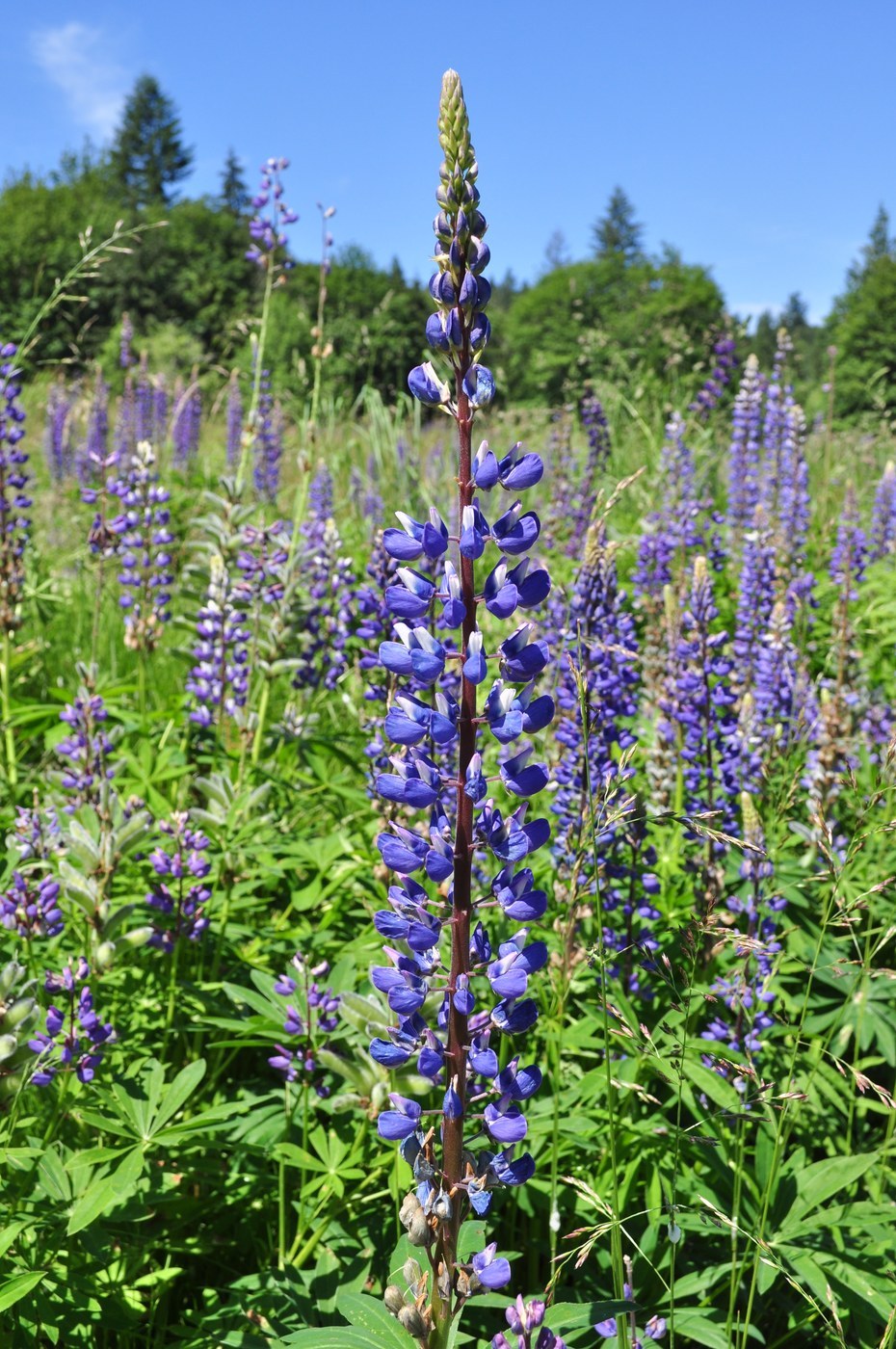
Key Identifying Features
Lupin (also spelled lupine, Lupinus) is identified by its tall, dense vertical spike of pea-like flowers rising above striking palmate leaves whose leaflets radiate from a single point like fingers of a hand. As a legume, its flowers have the typical pea-flower structure of a banner, two wings, and a keel.
- Erect, crowded flower spike (raceme)
- Pea-shaped flowers stacked up the stem
- Palmate leaves with leaflets spreading from one central point
- Seed pods are hairy pea-pods
Leaves & Stems
The leaves are the most reliable cue: each is palmately compound, with typically 7–15 narrow, oblong leaflets arranged in a circle around the top of a long leaf stalk, like a green starburst or open hand. Leaflets often hold tiny water droplets or dew at the center and may have fine silky hairs. Stems are upright, somewhat hollow, and slightly hairy. Garden lupins form a mounded clump of these radial leaves topped by the flower spikes; the plant ranges from low wild annuals to large 1 m+ perennials.
Flowers & Fruit
Flowers crowd densely around the spike, often whorled in rings, opening bottom to top. Each bloom is a classic legume flower with an upright banner petal, two side wings, and a fused keel. Wild lupins are commonly blue to violet; garden Russell hybrids come in blue, purple, pink, red, yellow, white, and bicolors. Flowering is late spring to midsummer. The fruit is a flattened, hairy pod that, when ripe, dries, twists, and splits to fling out the seeds — like a typical pea or bean pod.
How to Tell It Apart from Look-Alikes
- Foxglove / Delphinium: Also tall spikes, but their leaves are lobed or divided differently and flowers are not pea-shaped — no banner/wings/keel.
- Other legumes (vetch, clover): Share pea flowers but have pinnate or trifoliate leaves, never the radiating palmate hand of lupin.
- Baptisia (false indigo): Similar pea spikes, but leaves are trifoliate (three leaflets), not many-fingered.
The palmate finger-like leaves + pea-flower spike + hairy pod uniquely confirm lupin.
Where You'll Find It
Wild lupins carpet meadows, prairies, roadsides, and mountain slopes, and some species (like Texas bluebonnet) form famous spring displays. Garden lupins are border favorites in cool-summer climates, preferring full sun and well-drained, slightly acidic soil. As nitrogen-fixing legumes, they thrive even in poor soils.
Quick ID Checklist
- Tall dense spike of pea-shaped flowers
- Flowers with banner, wings, and keel
- Palmate leaves — leaflets radiating from one point
- Often dew/water droplet held at leaf center
- Hairy pea-like seed pods
- Mounded clump habit
Frequently asked questions
What's the single best way to identify a lupin?
The palmate leaves — leaflets radiating from a central point like fingers of a hand — combined with a tall spike of pea-shaped flowers. No common look-alike has both features together.
Are bluebonnets the same as garden lupins?
Yes, Texas bluebonnets are wild Lupinus species in the same genus as garden lupins. They share the palmate leaves and pea-flower spikes, just on a smaller, low-growing annual.
How can I tell lupin from foxglove or delphinium when both make tall spikes?
Check the individual flowers and leaves. Lupin flowers are pea-shaped (banner, wings, keel) and leaves are hand-shaped palmate; foxglove has tubular bells and delphinium has spurred flowers, both with very different foliage.
Are the seed pods useful for ID?
Yes. Lupins form flattened, hairy pea-pods that dry and twist open to eject seeds, a useful confirming feature once flowering has finished.