
Lupine Identification Guide
Identify lupines (Lupinus) by their palmate, hand-shaped leaves and tall, dense spikes of pea-like flowers, followed by hairy seed pods.
Read the full Lupine encyclopedia entry →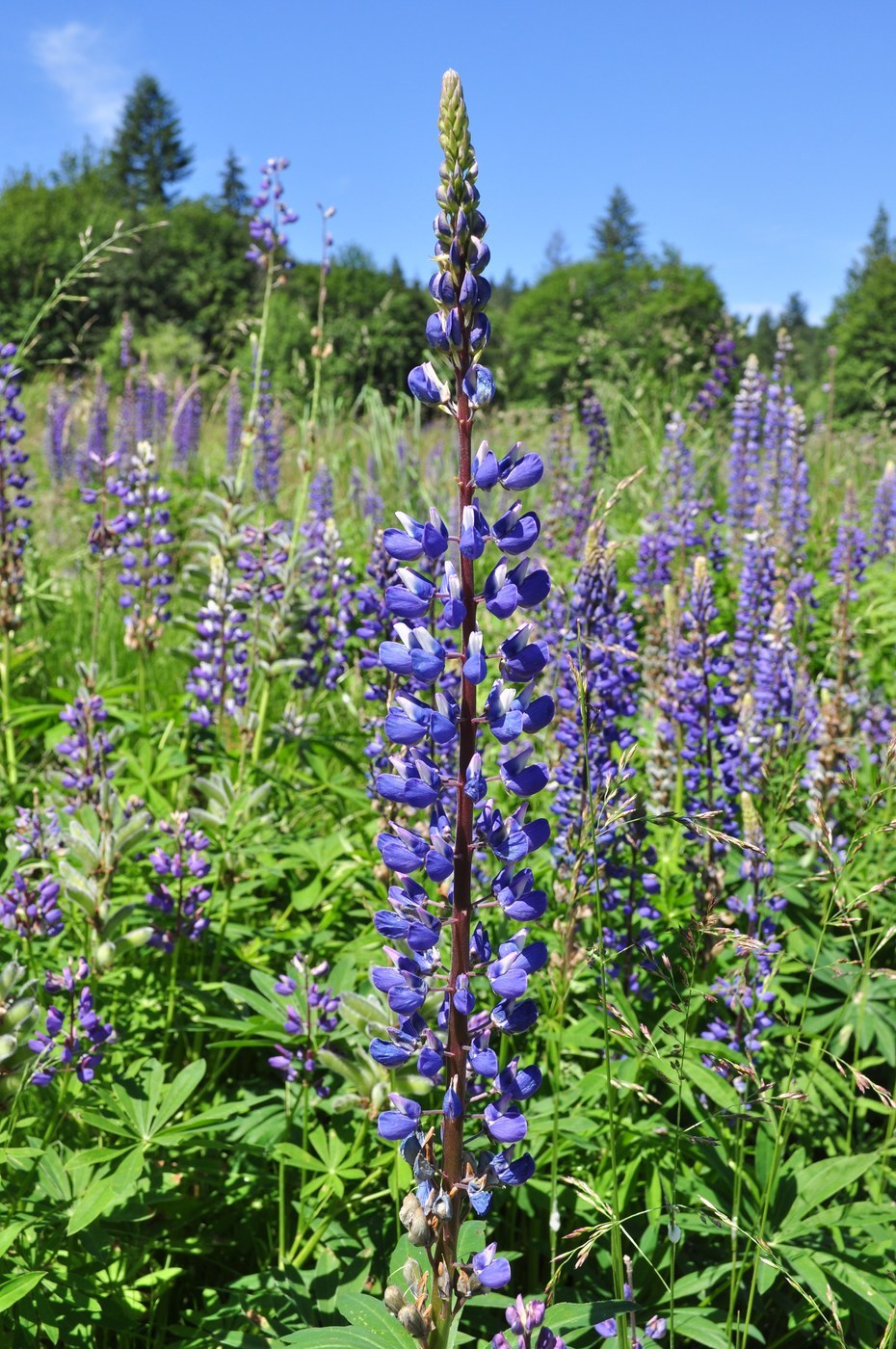
Key Identifying Features
Lupines (genus Lupinus) are legumes recognized by their distinctive palmately compound leaves — leaflets radiating like fingers from a central point — and their tall, showy spikes of pea-like flowers.
- Leaves: palmate (hand-shaped), with 5-17 radiating leaflets
- Flowers: pea-shaped (banner/wings/keel) in dense vertical spikes
- Colors: blue, purple, pink, white, yellow, bicolor
- Fruit: hairy, pea-like pods
Leaves & Stems
The leaves are the strongest ID feature: each leaf is divided into several narrow leaflets arranged in a circle (palmate), like spokes of a wheel or fingers of a hand, on a long stalk. Leaflets are often finely hairy and may hold a sparkling drop of water at the center (they fold and catch dew). Stems are upright and sometimes hairy; in garden hybrids they are stout and unbranched. As legumes, lupines fix nitrogen via root nodules.
Flowers & Fruit
Flowers crowd into dense, elongated, conical spikes (racemes) at the stem tips, each flower pea-shaped with an upright banner, two side wings, and a fused keel. Wild blue lupine (Lupinus perennis) and the Texas bluebonnet (Lupinus texensis) are blue; garden Russell hybrids span the rainbow and bicolors. After bloom they form flattened, hairy seed pods that twist open to fling seeds.
How to Tell It Apart from Look-Alikes
- Other legumes (vetch, clover, pea): pea flowers too, but clover has three leaflets and vetch has pinnate (feather-arranged) leaflets with tendrils, not palmate.
- Delphinium / larkspur: tall blue flower spikes, but flowers are spurred, not pea-shaped, and leaves are deeply lobed, not palmately compound with distinct leaflets.
- Foxglove: tubular flowers and simple toothed leaves, not pea flowers or palmate leaves.
- Baptisia (false indigo): related pea flowers but leaves are three-parted (trifoliate), not many-fingered.
The defining combo is hand-shaped palmate leaves + dense spike of pea flowers + hairy pods.
Where You'll Find It
Lupines grow wild in meadows, prairies, open woods, and roadsides (bluebonnets carpet Texas roadsides in spring); garden hybrids fill cottage and perennial borders. They prefer full sun and well-drained, slightly acidic soil. The palmate leaf rosette is recognizable even before bloom.
Quick ID Checklist
- Palmate, hand-shaped leaves with radiating leaflets
- Tall, dense spikes of pea-shaped flowers
- Often hairy leaflets that catch dew
- Hairy, flattened seed pods
- Upright legume with nitrogen-fixing roots
- Sunny meadows, prairies, roadsides, or borders
Frequently asked questions
What makes lupine leaves so recognizable?
Lupine leaves are palmately compound, meaning the narrow leaflets radiate from a single point like the fingers of a hand or spokes of a wheel. This pattern is distinctive even when the plant isn't flowering.
Are bluebonnets a type of lupine?
Yes. The Texas bluebonnet (Lupinus texensis) and several related species are lupines, with the same palmate leaves and pea-flower spikes, that famously carpet roadsides in spring.
How is lupine different from delphinium?
Both have tall blue spikes, but lupine flowers are pea-shaped with a banner and keel and its leaves are palmately compound, while delphinium has spurred flowers and deeply lobed (not compound) leaves.