Magnolia Identification Guide
Identify magnolias by their large goblet- or star-shaped flowers, thick simple leaves, cone-like fruit clusters with red seeds, and stout twigs.
Read the full Magnolia encyclopedia entry →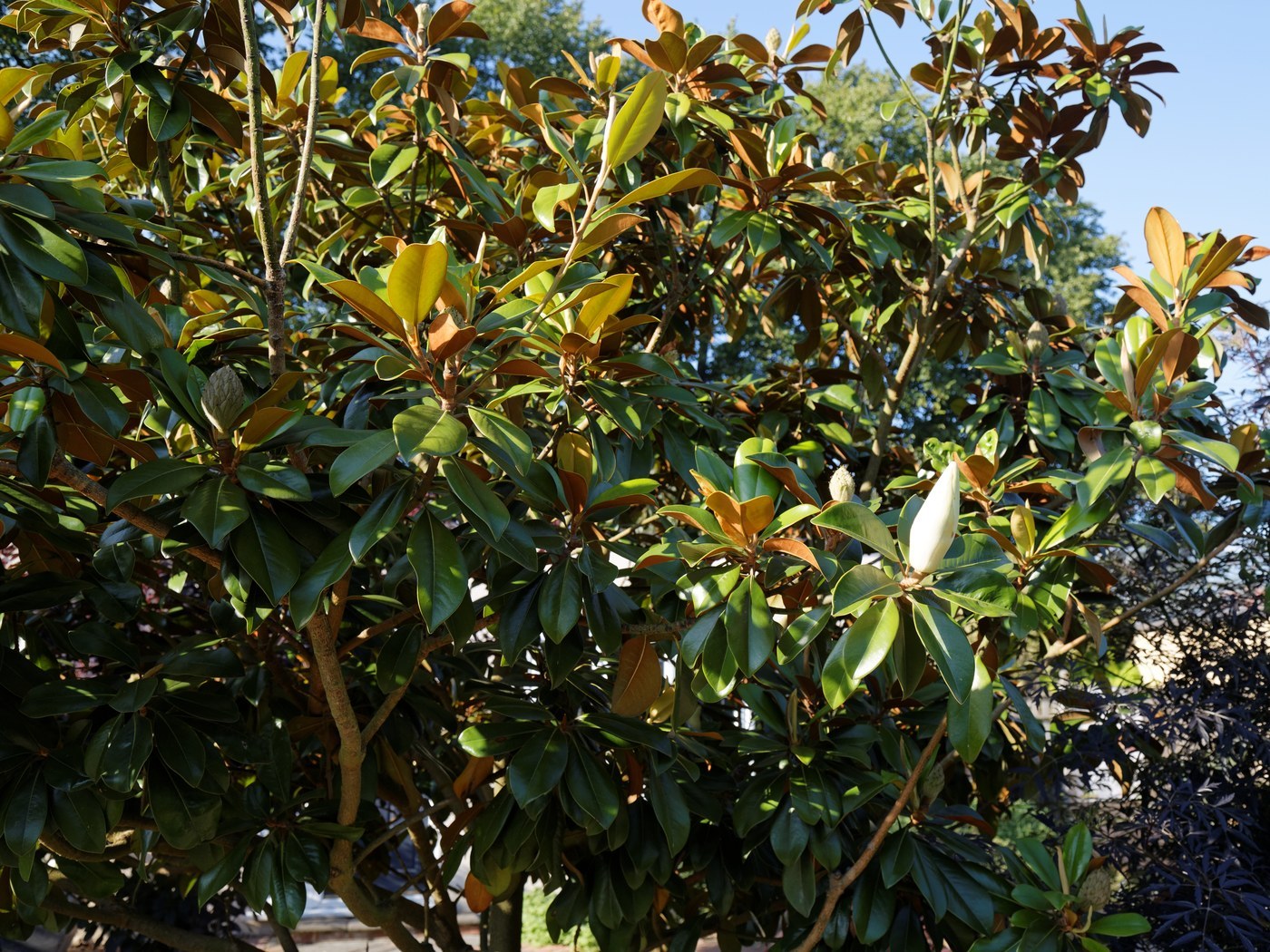
Key Identifying Features
Magnolias (genus Magnolia) are ancient flowering trees and shrubs in the family Magnoliaceae. Their flowers and fruit are unusually primitive and distinctive. Look for:
- Large, showy, cup/goblet- or star-shaped flowers with thick, fleshy petal-like tepals.
- Cone-like aggregate fruit that splits to dangle bright red-orange seeds.
- Simple, smooth-edged leaves and stout twigs with a ring scar at each node.
Leaves & Stems
Magnolia leaves are simple, alternate, and untoothed (entire), oval to elliptic, often thick and leathery. Evergreen types like Southern magnolia (M. grandiflora) have glossy dark green leaves with rusty-felted undersides; deciduous types (saucer, star magnolia) have softer green leaves turning yellow-brown in fall. A key trait: stipule scars encircle the twig as a ring at each leaf node. Twigs are stout and buds are often covered by a single silky hairy scale. Plants range from small shrubs to large trees.
Flowers & Fruit
Flowers are large and solitary at branch tips, made of 6–many thick tepals (petals and sepals look alike). Forms include the goblet/saucer shape of M. × soulangeana (white-pink-purple), the many-strapped star of M. stellata (white), and the huge creamy fragrant cups of evergreen M. grandiflora. Many bloom in early spring before the leaves. The fruit is a distinctive cone-like aggregate that opens to reveal fleshy bright red or orange seeds hanging on thin threads — a dead giveaway. Flowers often carry a lemony fragrance.
How to Tell It Apart from Look-Alikes
- Tulip tree (Liriodendron): Same family but has distinctly four-lobed leaves and tulip-shaped green-orange flowers high in the canopy.
- Dogwood: Showy spring "flowers" are bracts around tiny true flowers, with opposite leaves and red berry clusters — not cone fruit.
- Rhododendron: Evergreen leaves can resemble Southern magnolia, but flowers are clustered bells, not solitary large cups, and lack the cone fruit.
The large solitary tepal flower + cone-like fruit with red seeds + ring twig scars is unmistakably magnolia.
Where You'll Find It
Magnolias are widely planted specimen and shade trees in parks, lawns, and gardens. Deciduous spring-flowering types suit temperate gardens; Southern magnolia is an iconic evergreen of warm southern landscapes. Wild magnolias grow in moist woodlands and stream valleys. They prefer rich, moist, well-drained soil in sun to part shade.
Quick ID Checklist
- Large goblet/saucer or star-shaped flower with thick tepals
- Cone-like fruit dangling red-orange seeds
- Simple, smooth-edged leaves (glossy with rusty underside in evergreens)
- Ring scar encircling the twig at each node
- Stout twigs, silky-haired single-scale buds
- Often blooms before leaves in spring
Frequently asked questions
What are the petal-like parts of a magnolia flower called?
They are called tepals, because magnolia petals and sepals look identical. This primitive flower structure, with many thick tepals, is one of the features that makes magnolias easy to recognize.
How can I identify a magnolia by its fruit?
Magnolias form a distinctive cone-like aggregate fruit that splits open to reveal fleshy bright red or orange seeds dangling on thin threads. No common look-alike produces this, so it is a reliable clue.
How do I tell evergreen from deciduous magnolias?
Evergreen Southern magnolia has thick glossy leaves with a rusty-felted underside and blooms in summer. Deciduous types like saucer and star magnolia drop their leaves and usually bloom in early spring before leafing out.
What is the ring mark on magnolia twigs?
It is a stipule scar that encircles the twig at each leaf node. This complete ring around the stem is a characteristic feature of the magnolia family and helps with winter identification.
Magnolia identified by the community
Recent Magnolia specimens identified with Plant Identifier.