
Majesty Palm Identification Guide
Identify Ravenea rivularis by its tall, upright feathery fronds, soft green leaflets, and single trunk, and learn how it differs from areca and kentia palms.
Read the full Majesty Palm encyclopedia entry →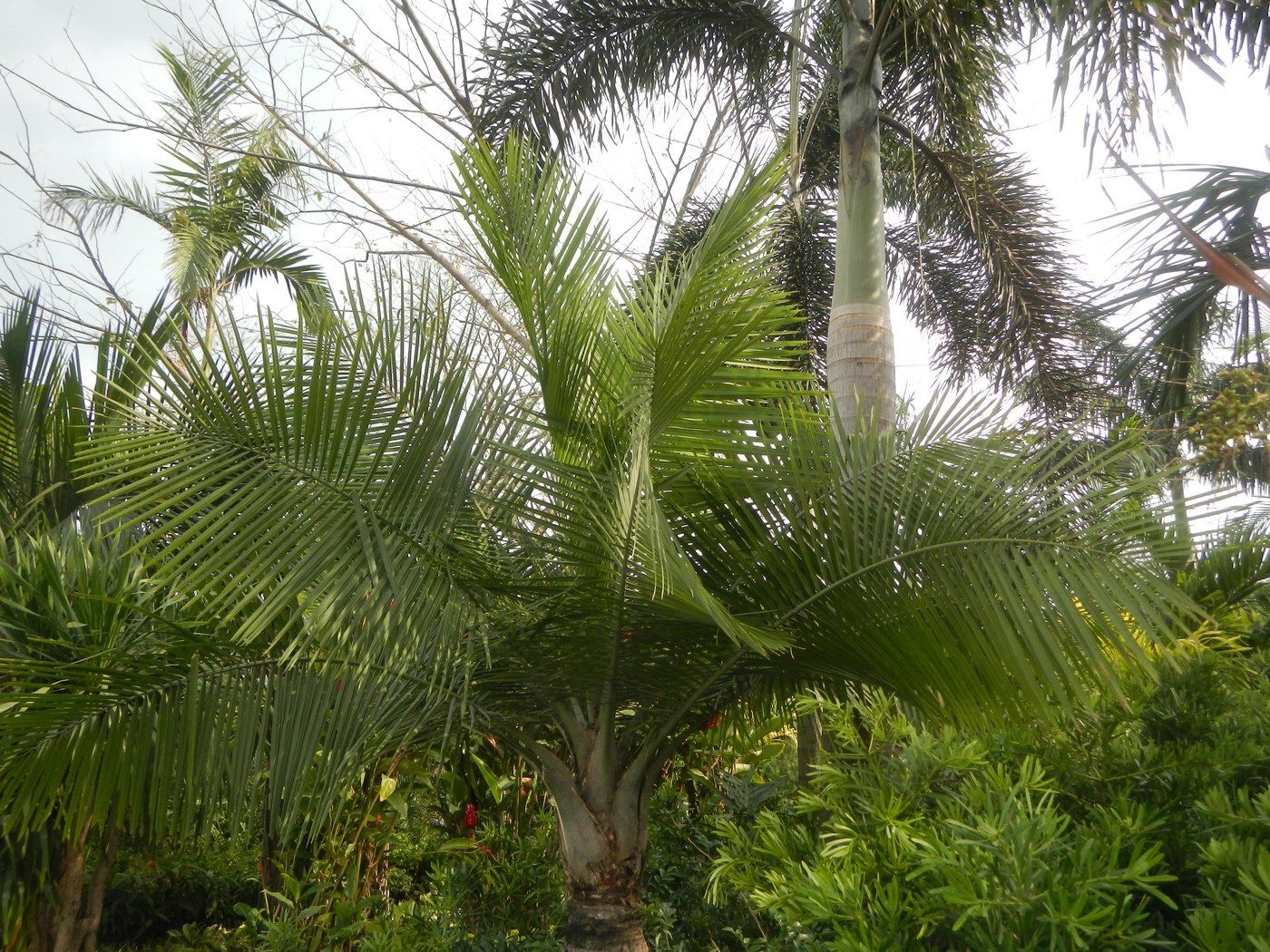
Key Identifying Features
The Majesty Palm (Ravenea rivularis) is a popular indoor palm with long, upright-arching, feather-shaped (pinnate) fronds of soft, narrow green leaflets, rising in a graceful crown from a single trunk.
- Feather (pinnate) fronds with many narrow leaflets along a central rib
- Leaflets soft, medium-green, fairly stiff but fine, held in a flat plane
- Single, stout trunk (solitary, not clumping) that widens toward the base
- Overall upright, full, symmetrical silhouette
Leaves & Stems
Each frond is long and arching, carrying many evenly spaced, narrow lance-shaped leaflets that taper to a point. The leaflets sit in a relatively flat, two-ranked arrangement along the rachis, giving a tidy, combed look. New fronds emerge from the central crown. The petioles are short and the leaf bases sheath the trunk.
The trunk is single and grey-brown, notably swollen and wider at the base in mature plants, narrowing upward, marked with old leaf-base rings. Indoors, store-bought specimens are usually several seedlings potted together to look full, but each is a solitary-trunked palm.
Flowers & Fruit
Indoors the majesty palm almost never flowers. In the wild in Madagascar, mature trees produce branched flower clusters and small red rounded fruits about 1 cm wide. Ravenea is dioecious (separate male and female trees). For identification you will rely on the foliage and trunk, not flowers.
How to Tell It Apart from Look-Alikes
- Areca/butterfly palm (Dypsis lutescens) is clumping with many yellow-green bamboo-like canes and arching fronds; majesty palm has a single, thicker trunk and darker, straighter fronds.
- Kentia palm (Howea) has broader, drooping dark-green leaflets and a thinner solitary trunk.
- Parlor palm (Chamaedorea) is much smaller and finer.
- The single swollen-based trunk plus stiff, flat, dark-green feather fronds distinguishes majesty palm.
Where You'll Find It
Native to Madagascar, where it grows along riverbanks and in wet soils (hence rivularis, "of streams"). Sold worldwide as an affordable indoor floor palm; it craves bright light, high humidity, and consistently moist soil, and struggles in dry indoor air.
Quick ID Checklist
- Upright, arching feather (pinnate) fronds
- Many narrow, soft green leaflets in a flat plane
- Single trunk, swollen and wider at the base
- Symmetrical, full crown
- No flowers indoors; red fruit only on wild trees
Frequently asked questions
How is a majesty palm different from an areca palm?
Majesty palm grows from a single thicker trunk with darker, stiffer fronds, while areca palm forms a clump of many slender yellow-green bamboo-like canes with softer, more arching fronds.
Why does my majesty palm have many trunks?
Nurseries plant several seedlings together in one pot to create a fuller look. Each is actually a solitary-trunked palm, unlike the truly clumping areca palm.
Will my indoor majesty palm flower?
Almost never. It needs mature size and outdoor conditions to bloom and fruit, so indoors you identify it by its fronds and trunk rather than flowers.
Why are the leaf tips turning brown?
Majesty palms are riverside plants that need high humidity and consistently moist soil. Dry indoor air, underwatering, or low light commonly cause browning tips.