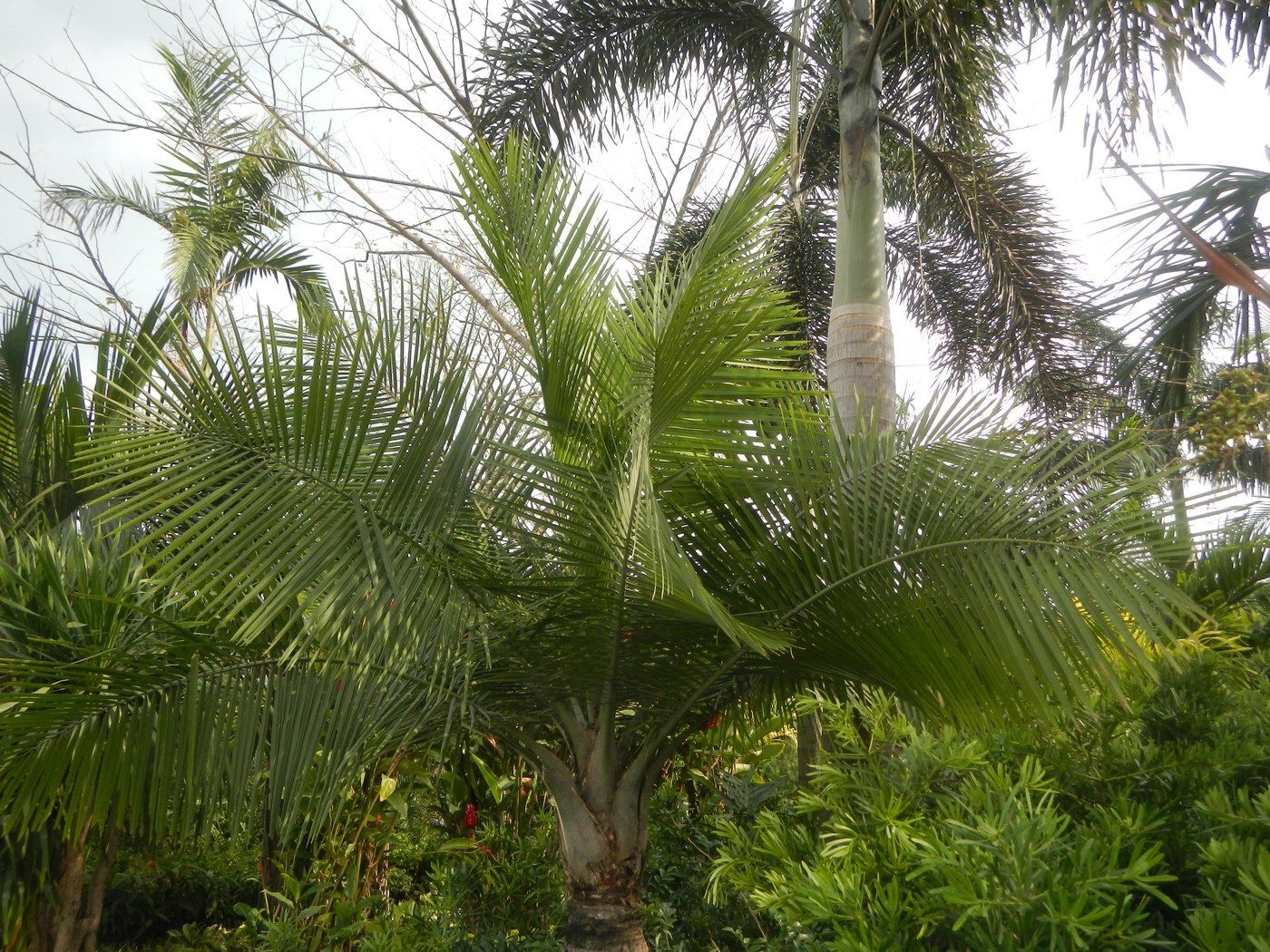
Majesty Palm
Ravenea rivularis
A graceful feather palm with arching fronds, popular as a large indoor floor plant. It demands plenty of light, moisture, and humidity to look its best.
- Light
- Bright indirect to some direct light
- Water
- Keep consistently moist
- Difficulty
- Moderate
Got a plant like this?
Identify any plant from a photo, free.
Overview
Majesty Palm is a tropical feather palm grown for its full, arching fronds and elegant, tree-like form. Indoors it is sold as an affordable large floor plant that brings a lush, tropical feel to a room.
Despite its popularity, it can be tricky in average home conditions because it craves more light, water, and humidity than most homes provide. Given the right conditions it grows into a tall, graceful specimen; in the wild it can exceed 30 ft.
How to identify it
Identify it by:
- Fronds: long, pinnate (feather-shaped), gently arching, with many narrow green leaflets along each rib
- Habit: upright, multiple fronds rising from a central crown, tree-like with age
- Trunk: single, slender gray trunk that swells slightly at the base in mature plants
- Size: commonly 4-10 ft indoors; much taller in the wild
- Growth: relatively fast in good conditions
Care & growing
Light: As much bright light as possible, including some direct sun; insufficient light is a common cause of decline indoors.
Water: Keep the soil consistently moist but not waterlogged; it is thirstier than most palms and dislikes drying out.
Soil: Rich, well-draining mix that retains some moisture.
Temperature: 65-80F (18-27C); protect from cold drafts.
Humidity: High; mist or use a humidifier to prevent brown tips.
Feeding: Palm fertilizer (with micronutrients like magnesium) during the growing season to prevent yellowing.
Propagation: From seed only; not practical at home.
Habitat & origin
Native to Madagascar, where it grows along riverbanks and in moist, sunny lowland areas, hence its preference for steady water and bright light.
It is grown as an indoor floor plant worldwide and, in tropical and subtropical climates, as a landscape palm near water features and in moist soils.
Frequently asked questions
Why are my Majesty Palm's fronds turning brown?
Brown tips and fronds usually point to low humidity, underwatering, or insufficient light. Increase moisture and humidity and give it the brightest spot possible.
How much light does a Majesty Palm need?
A lot. It does best with bright light and some direct sun. Most indoor failures come from placing it in too dim a location.
Why is my palm yellowing overall?
Generalized yellowing often signals a nutrient deficiency (especially magnesium or potassium). Use a palm-specific fertilizer with micronutrients.
Majesty Palm guides
In-depth guides for identifying, growing, and caring for Majesty Palm.
How to Care for Majesty Palm
Grow a lush Majesty Palm indoors with bright light, steady moisture, and high humidity to keep its feathery fronds full and green.
Majesty Palm Identification Guide
Identify Ravenea rivularis by its tall, upright feathery fronds, soft green leaflets, and single trunk, and learn how it differs from areca and kentia palms.