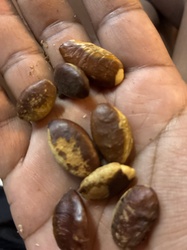
Mango Tree Identification Guide
Identify the mango tree (Mangifera indica) by its large evergreen canopy, long leathery lance-shaped leaves with reddish new growth, big sprays of tiny pinkish flowers, and large kidney-shaped fruit.
Read the full Mango Tree encyclopedia entry →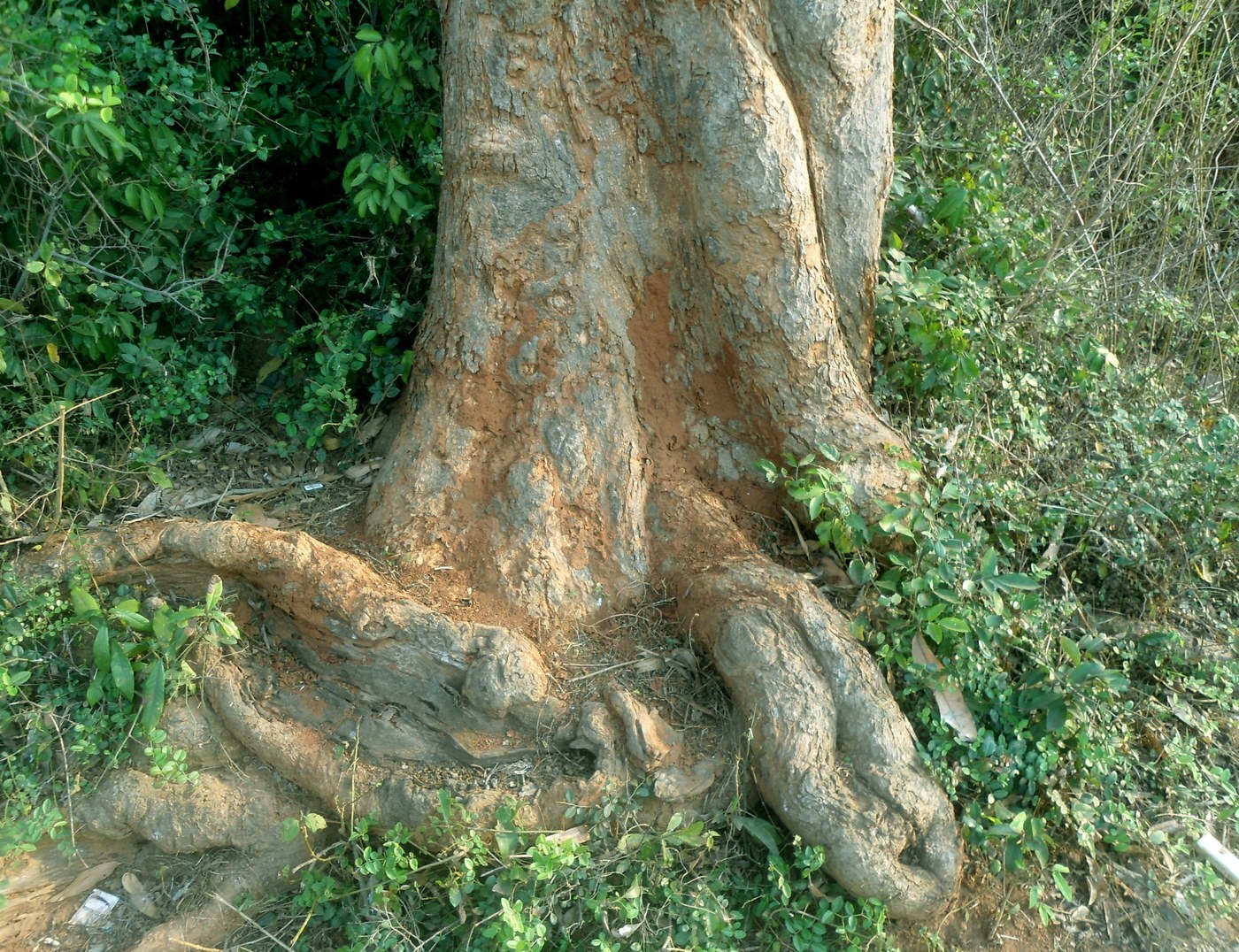
Key Identifying Features
The mango tree (Mangifera indica) is a large evergreen tropical tree, often 10-30 m tall, with a dense, dome-shaped, deep-green canopy and a stout trunk. Identify it by its long, leathery, lance-shaped leaves, the flush of coppery-red to pinkish new leaves, huge terminal sprays of hundreds of tiny flowers, and the unmistakable large, kidney-shaped fruit hanging on long stalks. Cut twigs and leaves exude an aromatic resinous sap (in the cashew family, Anacardiaceae).
Leaves & Stems
- Leaves are simple, alternate, narrowly oblong to lance-shaped, 15-35 cm long, clustered toward branch tips.
- Mature leaves are dark green, leathery, glossy, with a prominent midrib and wavy margins.
- New growth emerges drooping and tinted coppery-red, bronze, or pink before turning green — a signature feature.
- Crushed leaves smell resinous/turpentine-like.
- Bark is gray-brown, rough, and fissured on old trees.
Flowers & Fruit
- Flowers form large, branched, upright clusters (panicles) at branch ends, each holding hundreds to thousands of tiny flowers.
- Individual flowers are small (5-8 mm), yellowish to pinkish, with a faint sweet scent.
- Fruit is a large drupe, 8-25 cm, kidney- or oval-shaped, green ripening to yellow, orange, or red, hanging from a long stalk.
- Inside is a single large flat fibrous stone surrounding the seed.
How to Tell It Apart from Look-Alikes
- Avocado (Persea): Evergreen with broad oval leaves, but fruit is pear-shaped with a large round seed and the new growth is not coppery-red.
- Loquat (Eriobotrya): Leaves are broader, deeply veined, and hairy underneath.
- Other Anacardiaceae (cashew, pistachio): Share resinous sap but differ in leaf and fruit form; mango's long simple leaves and big kidney fruit are distinctive.
The drooping coppery-red new growth + long leathery leaves + huge flower panicles + kidney-shaped fruit combination is unique among common trees.
Where You'll Find It
Mango is a tropical and subtropical tree (USDA zones 10-11), grown in orchards, home gardens, and as a shade tree across South Asia, Southeast Asia, Africa, Latin America, and Florida. It needs full sun, heat, and well-drained soil, and cannot tolerate frost. Look for the dense dark canopy and, in season, hanging fruit.
Quick ID Checklist
- Large evergreen tree with dense dome-shaped dark-green canopy
- Long, leathery, lance-shaped leaves clustered at branch tips
- Coppery-red/pink drooping new growth
- Resinous, turpentine-like smell when leaves crushed
- Large upright branched flower panicles of tiny flowers
- Big kidney-shaped fruit on long stalks, single flat stone inside
Frequently asked questions
What is the easiest feature to spot a mango tree by?
The flush of new leaves: young mango foliage hangs limp and is tinted coppery-red, bronze, or pink before maturing to dark glossy green. Combined with long leathery leaves and, in season, large kidney-shaped hanging fruit, it is unmistakable.
Why do mango leaves smell like turpentine when crushed?
Mango is in the cashew family (Anacardiaceae), whose members contain aromatic resins, which give the crushed foliage its turpentine-like scent.
How big do mango flower clusters get?
Very large. The upright branched panicles at branch tips can carry hundreds to thousands of tiny yellowish-pink flowers, though only a small fraction set fruit.
Can a mango tree survive cold climates?
No. Mango is strictly tropical to subtropical (USDA zones 10-11) and is killed or badly damaged by frost, so outside the tropics it is grown only in greenhouses or very warm pockets.
Mango Tree identified by the community
Recent Mango Tree specimens identified with Plant Identifier.