
Bush Mango
Irvingia gabonensis
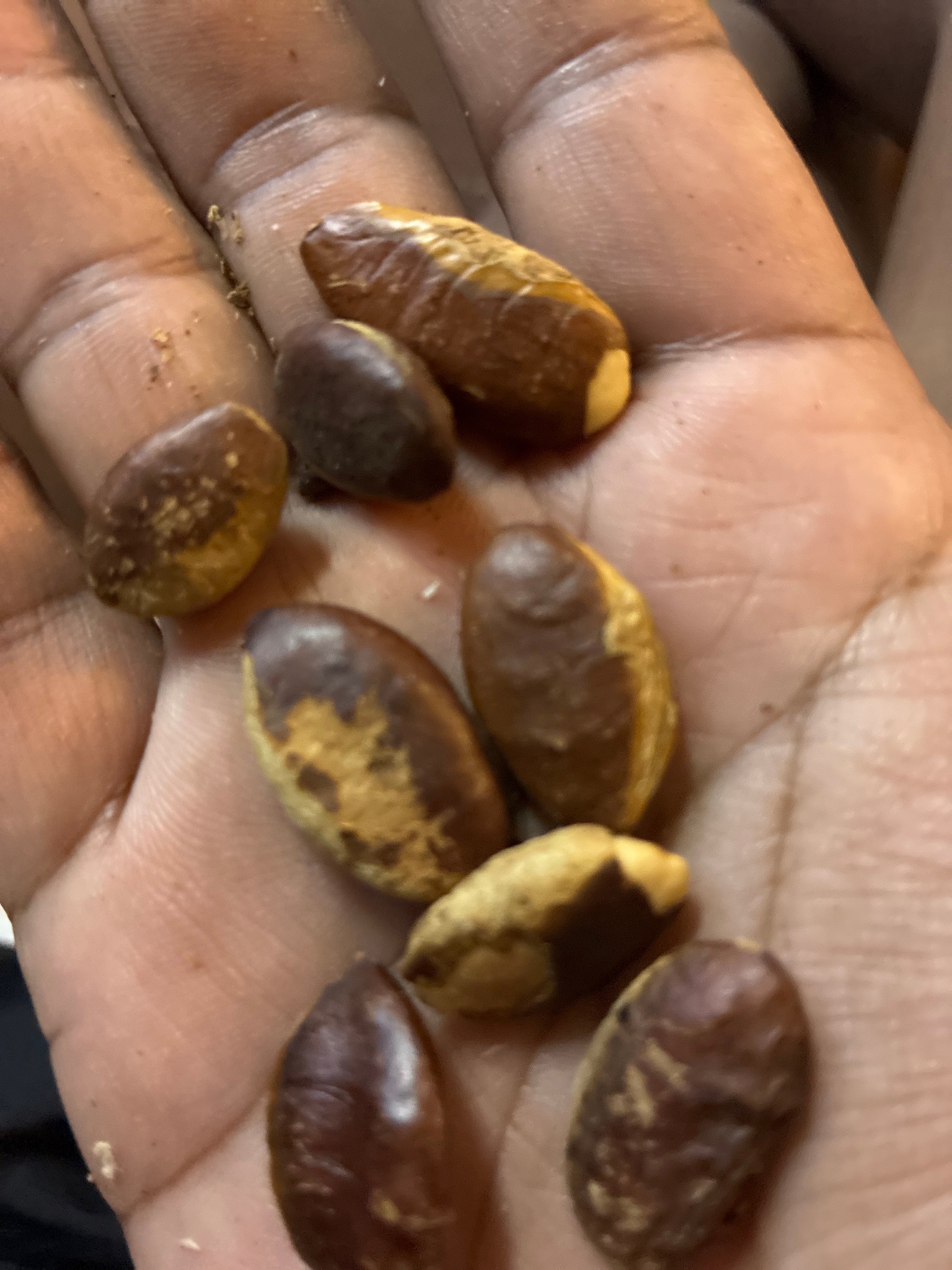
A large, evergreen canopy tree that produces yellowish-green, mango-like drupes. The seeds within the drupe, shown here, are oblong, dark brown, and stony.
- Light
- Full sun, requiring 6 to 8 hours of direct sunlight per day for optimal fruit production.
- Water
- Requires high annual rainfall (over 1500mm). In cultivation, young trees need frequent watering to keep soil moist, while mature trees have deep root systems and are more moisture-resilient but prefer humid conditions.
- Growth
- Perennial evergreen tree; can reach heights of 15 to 40 meters with a dense, spreading crown and a straight trunk often featuring buttress roots.
Care instructions
This tree requires a humid tropical environment. It thrives in full sunlight and deep, fertile soil with high moisture retention. While the tree can tolerate seasonal flooding, it performs best in well-drained but consistently moist locations.
Growing details
Sunlight
Full sun, requiring 6 to 8 hours of direct sunlight per day for optimal fruit production.
Watering
Requires high annual rainfall (over 1500mm). In cultivation, young trees need frequent watering to keep soil moist, while mature trees have deep root systems and are more moisture-resilient but prefer humid conditions.
Soil
Prefers acidic to neutral soils (pH 4.5 to 7.0) that are rich in organic matter and have good drainage despite the tree's high water affinity.
Hardiness zone
USDA zones 10-12; it is highly sensitive to frost and does not tolerate temperatures below 10°C (50°F).
Growth habit
Perennial evergreen tree; can reach heights of 15 to 40 meters with a dense, spreading crown and a straight trunk often featuring buttress roots.
Bloom season
Flowers are small, yellowish-white, and produced in axillary racemes typically during the dry season, with fruiting following in the rainy season.
Propagation
Propagated primarily by seeds, which should be planted fresh as they lose viability quickly. It can also be propagated via grafting or air layering to maintain specific cultivar traits.
Common pests & issues
Susceptible to charcoal rot and various fungal leaf spots. Pests include caterpillars that defoliate the tree and fruit flies that target the drupes.
Similar species
Irvingia wombulu (Bitter Bush Mango) looks nearly identical but is distinguished by the timing of its fruit drop and the inherent bitterness of the kernel compared to the more neutral I. gabonensis.