
Mangosteen Tree Identification Guide
How to recognize the mangosteen tree (Garcinia mangostana) by its dense conical crown, thick leathery leaves, yellow latex, and the unmistakable purple-skinned fruit with a snowy-white interior.
Read the full Mangosteen Tree encyclopedia entry →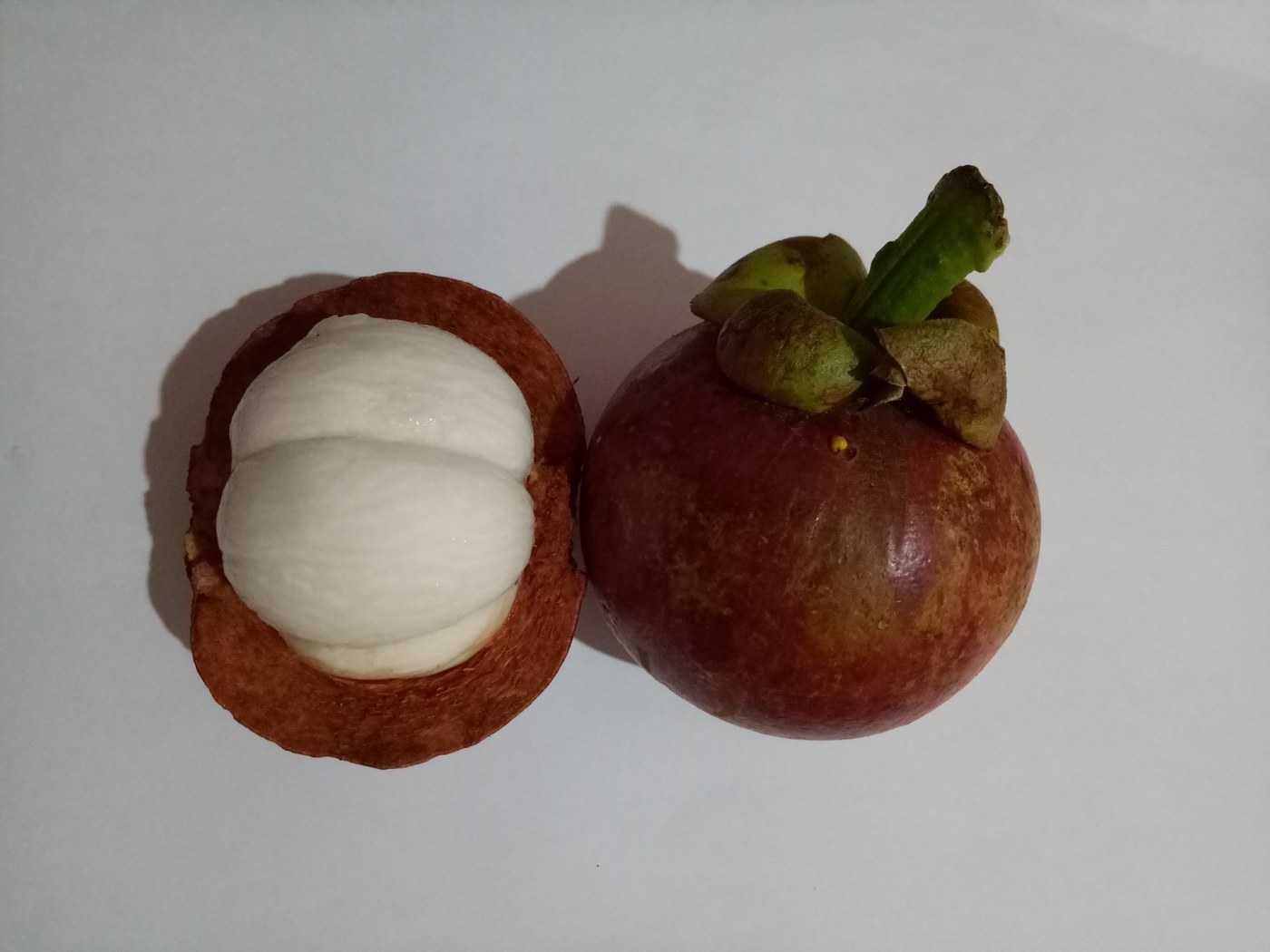
Key Identifying Features
The mangosteen (Garcinia mangostana) is a slow-growing tropical evergreen tree, typically reaching 20–80 feet tall with a distinctly symmetrical, pyramidal to conical crown. The single most reliable clues are: thick glossy leaves arranged in opposite pairs, a yellow latex that bleeds from any cut, and the deep red-purple round fruit topped by a green calyx and bearing a flower-shaped "star" on its base.
- Dense, dark green canopy that casts heavy shade
- Yellow-orange latex (gamboge) oozing from cut bark, leaves, or fruit rind
- Round purple fruit about the size of a small apple, capped with persistent woody sepals
Leaves & Stems
Leaves are opposite, simple, and leathery, measuring roughly 5–10 inches long. The upper surface is dark, glossy green while the underside is paler, often yellowish-green. A prominent pale-yellow midrib runs the length of the leaf, with many fine, closely spaced lateral veins running almost parallel to one another. New flushes of growth emerge a soft pinkish-bronze before hardening to green. Twigs and trunk exude the characteristic sticky yellow sap when wounded; the bark is dark brown to nearly black and flaky on mature trees.
Flowers & Fruit
Flowers are fleshy, about 1.5–2 inches wide, with four green-edged sepals and four thick petals that are yellowish-green flushed red. Mangosteen is largely female and produces fruit without pollination (apomixis), so seedlings come essentially true to type. The fruit is the clincher: a smooth, leathery rind 1.5–3 inches across, ripening from green through mottled pink to a deep red-purple or maroon. The rind is thick (about 1/4 inch) and stains purple. Inside sit 4–8 snowy-white, segmented arils. The number of arils matches the number of stigma lobes (the raised "flower" pattern) on the fruit's bottom—a handy field check.
How to Tell It Apart from Look-Alikes
- Other Garcinia species (e.g., button mangosteen, G. prainiana) also bleed yellow latex but have smaller, yellow or orange fruit rather than purple.
- Sapodilla or longan have similar dense crowns but lack yellow latex and produce brown-skinned, not purple, fruit.
- Star apple (caimito) has purple fruit but its leaves show a striking golden-felted underside, which mangosteen lacks.
When in doubt, nick a leaf: the presence of bright yellow latex plus opposite leathery leaves with a yellow midrib confirms mangosteen.
Where You'll Find It
Mangosteen is strictly tropical and humid-loving, intolerant of frost, drought, and salt. It is native to Southeast Asia and grown in Thailand, Malaysia, Indonesia, India, and small pockets of the Caribbean, Central America, and far south Florida/Hawaii. Look for it in lowland orchards, home gardens, and humid riverbanks below about 1,500 feet elevation.
Quick ID Checklist
- Conical, densely shaded evergreen crown
- Opposite, thick, glossy leaves with pale yellow midrib
- Yellow latex from any cut
- Round purple-maroon fruit with green woody calyx
- Star-shaped stigma pattern on fruit base = number of white arils inside
- Tropical, frost-free setting
Frequently asked questions
What is the easiest way to confirm a tree is mangosteen?
Nick a leaf or twig and look for bright yellow-orange latex, then check for opposite leathery leaves with a pale yellow midrib. Combined with round purple fruit topped by woody sepals, this is conclusive.
How can I judge the fruit's stage from its appearance?
Mature mangosteens turn deep red-purple to maroon with a slightly yielding rind. Count the raised petals of the star pattern on the bottom—that number equals the white segments inside.
Why do mangosteen seedlings look identical to the parent?
Mangosteen reproduces apomictically (seeds form without fertilization), so trees are essentially clones, giving very uniform leaf, crown, and fruit characteristics.