
Marshmallow Identification Guide
Identify marshmallow (Althaea officinalis) by its velvety grey-green soft leaves, pale pink five-petalled mallow flowers, and tall stems in damp salty ground.
Read the full Marshmallow encyclopedia entry →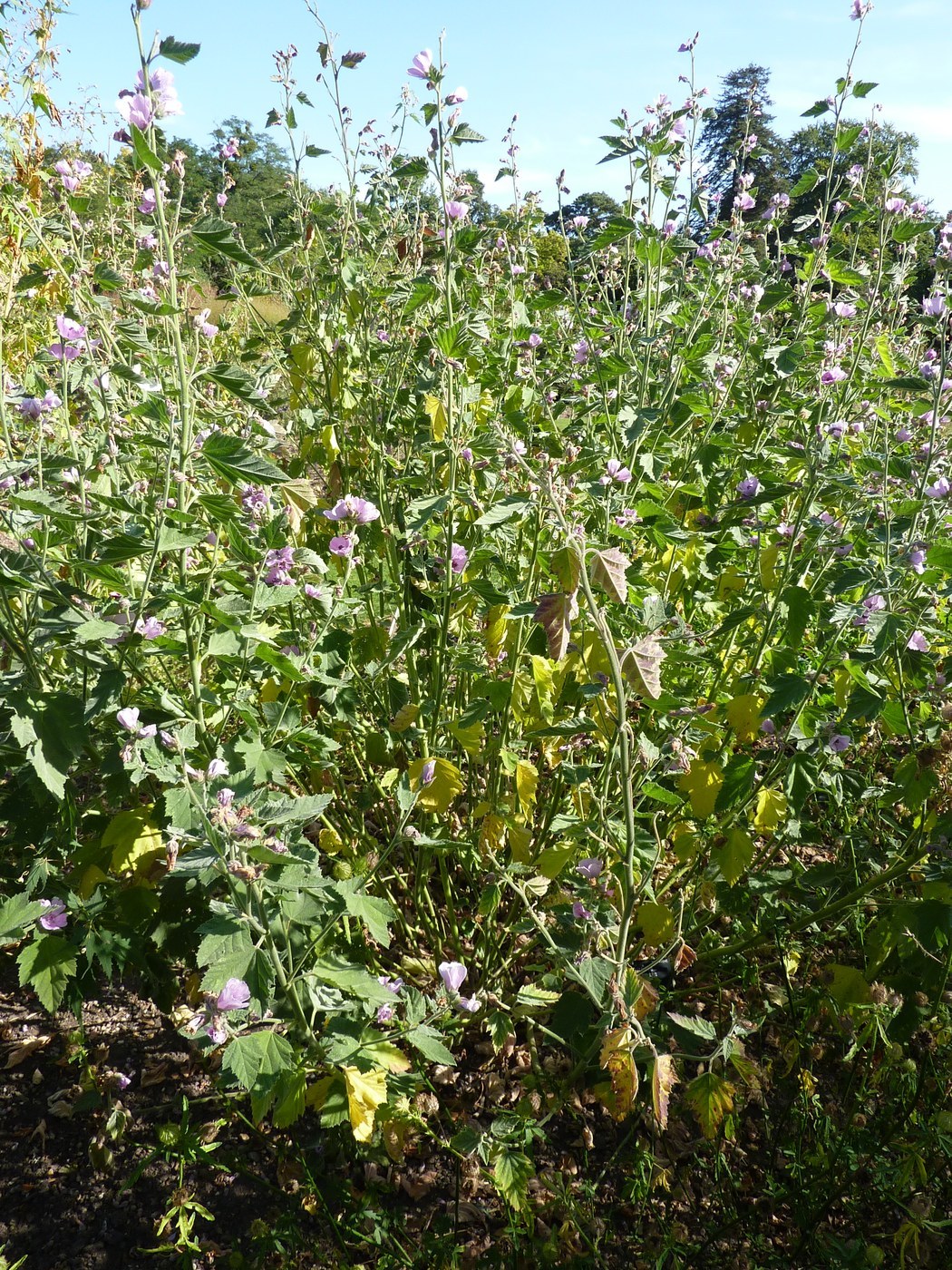
Key Identifying Features
Marshmallow (Althaea officinalis) is a tall perennial of the mallow family (Malvaceae) found in damp, often brackish places. Its key marks:
- Soft, velvety, grey-green leaves densely covered in fine star-shaped hairs that make the whole plant feel like felt.
- Pale pink, five-petalled, shallowly cup-shaped flowers with a central column of fused stamens.
- A robust, upright, downy stem usually growing in wet or salt-influenced ground.
The soft velvety texture sets it apart from the rougher common mallows.
Leaves & Stems
Leaves are alternate, broadly oval to triangular, 3-5 cm long, often with 3-5 shallow lobes and toothed margins. They are thick, soft, and densely velvety on both sides, appearing greyish from the dense hairs. Stems are erect, 1-2 m tall, simple or branched above, and equally downy. The fleshy taproot is whitish and mucilaginous, the historic source of marshmallow confection.
Flowers & Fruit
Flowers form in late summer, growing in small clusters from the leaf axils and stem tips. Each is 2.5-4 cm across with 5 pale pink (to almost white) notched petals and a prominent central staminal column topped with purplish anthers, typical of mallows. The fruit is the classic mallow "cheese" — a flat disc of wedge-shaped segments arranged in a ring, downy and ripening brown.
How to Tell It Apart from Look-Alikes
- Common mallow (Malva sylvestris) has deeper rose-purple flowers with darker veins, greener and rougher (less velvety) leaves, and a more sprawling habit.
- Musk mallow (Malva moschata) has deeply cut, almost feathery leaves and larger bright pink flowers.
- Hollyhock (Alcea) is a tall relative but with much larger flowers and broad rounded leaves; it is a garden plant of dry ground.
The soft, felted grey-green foliage, pale pink flowers, ring-shaped "cheese" fruit, and damp/brackish habitat together confirm marshmallow.
Where You'll Find It
Marshmallow grows in damp, often salty places: the upper edges of salt marshes, brackish ditches, tidal riverbanks, and moist meadows near the coast across Europe and naturalized in North America. It is also grown in herb gardens.
Quick ID Checklist
- Velvety, soft, grey-green lobed leaves
- Pale pink five-petalled mallow flowers with a stamen column
- Tall (1-2 m), downy upright stem
- Ring-shaped "cheese" fruit
- Damp, often brackish/coastal habitat
Frequently asked questions
How is marshmallow different from common mallow?
Marshmallow has soft, densely velvety grey-green leaves and pale pink flowers, and grows in damp or brackish ground. Common mallow has greener, rougher leaves, deeper rose-purple flowers with dark veins, and a more sprawling habit on drier disturbed ground.
Why does the plant feel velvety?
The leaves and stems are covered in a dense layer of fine star-shaped hairs, giving the whole plant a soft, felt-like, greyish appearance that is one of its best field marks.
What is the fruit like?
Like other mallows it forms a flat, disc-shaped fruit known as a 'cheese,' made of wedge-shaped segments arranged in a ring, which ripens brown and is covered in fine hairs.
Where does marshmallow grow naturally?
It favors damp, often salty ground such as the upper edges of salt marshes, brackish ditches, tidal riverbanks, and moist coastal meadows, and is also cultivated in herb gardens.