
Masterwort Identification Guide
Identify Astrantia by its intricate pincushion flowers framed by a papery, star-like collar of bracts.
Read the full Masterwort encyclopedia entry →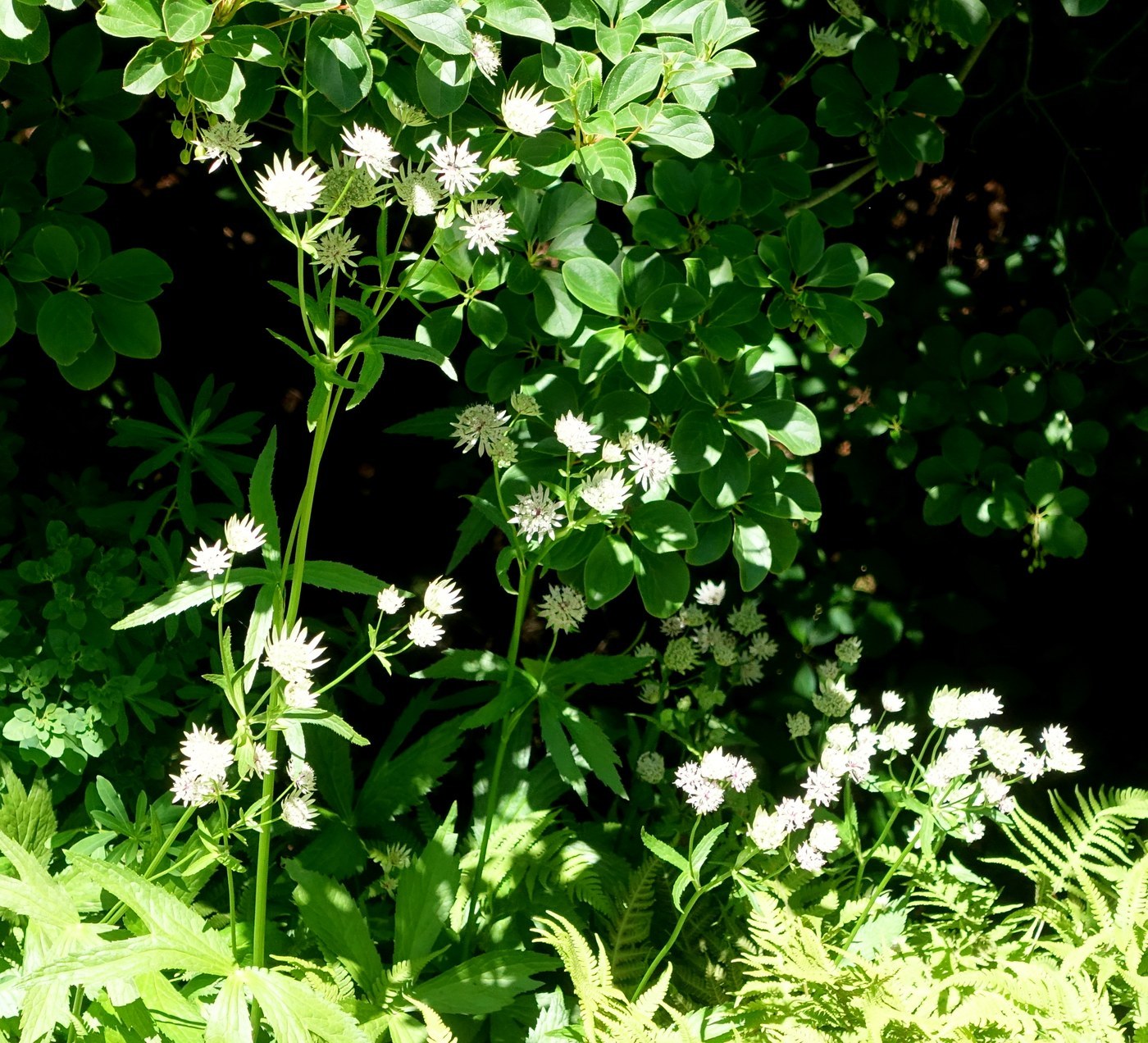
Key Identifying Features
Masterwort (Astrantia major and relatives) is a clump-forming woodland perennial with jewel-like, intricate flowers. Its defining traits:
- Pincushion-like flower heads surrounded by a ruff of papery, pointed bracts that form a star or collar
- Palmately lobed, hand-shaped leaves
- Subtle colors — white, green-tipped, pink, or deep wine-red
- A delicate, papery, almost everlasting texture to the blooms
Leaves & Stems
Leaves are basal, deeply palmately divided into 3-7 toothed lobes, resembling a maple leaf or a hand, on long stalks. Foliage forms a neat mound 1-2 ft tall. Flower stems are slender, branching, and rise above the leaves, often a bit taller than the foliage clump. The plant is hairless to slightly hairy and lacks any spines.
Flowers & Fruit
The flower is the star attraction. Each tiny dome-shaped umbel of minute florets (the 'pincushion') is encircled by a collar of stiff, papery bracts that are pointed and often veined or tipped in green, pink, or red. The effect is a small star or Elizabethan ruff about 1 in across. Blooming early to midsummer (often reblooming), colors range from silvery-white with green tips to dusky rose and ruby. Up close the structure is intricate and long-lasting; the bracts persist as the seeds (small ribbed fruits) develop, making them excellent dried flowers.
How to Tell It Apart from Look-Alikes
- Scabious / pincushion flower (Scabiosa) — also pincushion-like, but lacks the papery bract collar and has different (often pinnate) leaves.
- Cow parsley / Queen Anne's lace (other Apiaceae) — flat umbels of tiny white flowers, but no stiff papery bract ruff and ferny leaves.
- Sea holly (Eryngium) — spiky bract collar, but the bracts are spiny, the flowers cone-like, and foliage is blue and rigid.
- Sanicle — related and similar leaves, but flowers are far less showy without the conspicuous ruff.
The papery starry bract collar around a pincushion of florets is unique to masterwort.
Where You'll Find It
Native to moist mountain meadows and open woodlands of central and eastern Europe. It prefers part shade and moist, fertile soil, and is a cottage-garden and woodland-border favorite. Look for it blooming in dappled shade in June and July.
Quick ID Checklist
- Pincushion flower head ringed by a papery, pointed bract collar
- Hand-shaped (palmately lobed) basal leaves
- White, green-tipped, pink, or wine-red flowers ~1 in across
- Slender branching stems above a leafy mound
- Moist, part-shade woodland or meadow habitat
A dainty flower that looks like a pincushion set in a papery star is masterwort.
Frequently asked questions
What makes masterwort flowers look so intricate?
Each tiny dome of florets is surrounded by a collar of stiff, papery, pointed bracts that form a star or ruff, giving the bloom a jewel-like, almost everlasting appearance.
How is masterwort different from scabious?
Both have pincushion-like centers, but masterwort has the distinctive papery bract collar and hand-shaped lobed leaves, while scabious lacks the ruff.
What colors do masterwort flowers come in?
From silvery-white with green-tipped bracts to soft pink and deep wine-red, depending on the species and cultivar.
Where does masterwort grow best?
In moist, fertile soil in part shade, mimicking its native mountain meadows and open woodlands of Europe.