Masterwort
Astrantia major
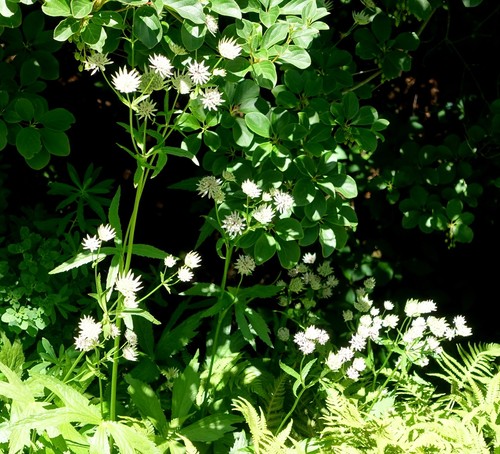
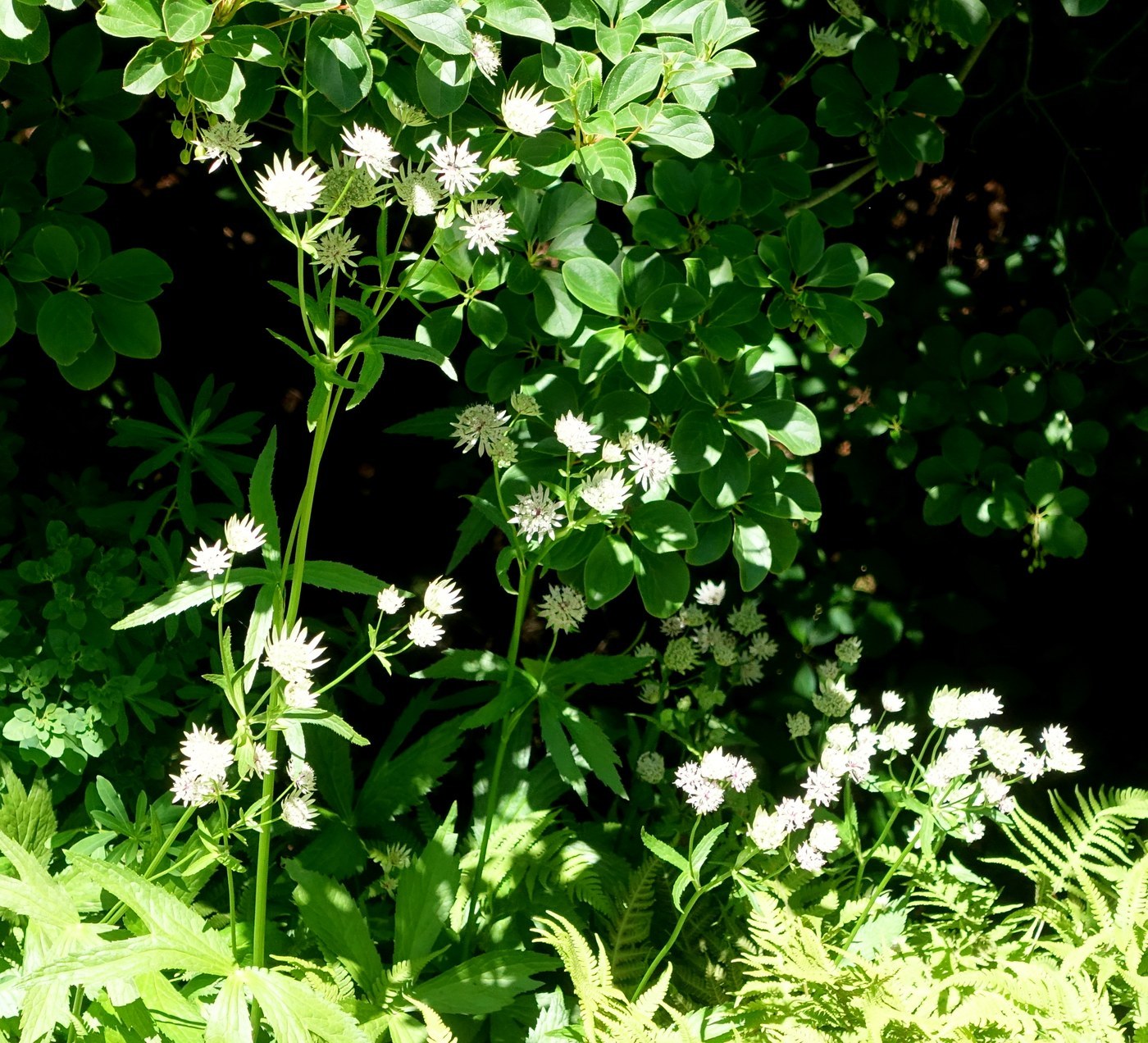
Masterwort is a clump-forming perennial with intricate, pincushion-like flower heads surrounded by a papery collar of petal-like bracts. It brings cottage-garden charm to moist, partly shaded borders.
- Light
- Part shade
- Water
- Keep consistently moist
- Difficulty
- Easy
Got a plant like this?
Identify any plant from a photo, free.
Overview
Masterwort (Astrantia major) is a graceful perennial in the carrot family (Apiaceae). Its flowers are deceptively complex: tiny true blooms cluster in a domed center, ringed by a starry ruff of papery bracts in shades of white, pink, green, or deep ruby.
The overall effect is delicate and old-fashioned, making masterwort a staple of cottage and woodland gardens. It forms tidy mounds of lobed green foliage and flowers over a long season from early to late summer.
Long-lived and easy in moist soil, it is also a superb cut flower.
How to identify it
Recognize masterwort by its star-like, bract-ringed flower heads.
- Flowers: Domed clusters of tiny florets surrounded by a collar of pointed, papery, petal-like bracts, white to pink or deep red
- Leaves: Palmate, deeply lobed, and toothed, forming a basal mound
- Size: Typically 1.5 to 3 feet tall
- Habit: Neat, clumping perennial with branching, wiry flower stems
- Bloom time: Early summer to early autumn with deadheading
Care & growing
Easy and rewarding given steady moisture.
- Light: Part shade is ideal; tolerates full sun where soil stays moist
- Water: Keep soil consistently moist; dislikes drying out
- Soil: Rich, humus-rich, moisture-retentive soil
- Temperature: Hardy in USDA zones 4 to 7
- Feeding: Compost or balanced feed in spring
- Propagation: Division in spring or autumn; deadheading encourages reblooming and limits self-seeding
Habitat & origin
Native to moist mountain meadows, woodland clearings, and stream sides across central and eastern Europe.
It thrives in dappled woodland gardens, the front to middle of cottage borders, and near water. It is widely cultivated in temperate gardens, with many named cultivars in white, pink, and ruby tones.
Frequently asked questions
Are the petals on masterwort real flowers?
No. The colorful pointed 'petals' are bracts; the true flowers are the tiny florets clustered in the center.
Does masterwort rebloom?
Yes. Deadheading spent flowers encourages a fresh flush of bloom later in the season.
Will masterwort grow in shade?
Yes, it prefers part shade and moist soil, making it excellent for woodland-edge plantings.
Is masterwort good for cutting?
Excellent. The flowers are long-lasting in the vase and also dry well for everlasting arrangements.
Masterwort guides
In-depth guides for identifying, growing, and caring for Masterwort.