
How to Care for Meadowsweet
Grow Meadowsweet (Filipendula ulmaria) for frothy creamy-white flower plumes and handsome foliage in moist, sunny borders and pond edges.
Read the full Meadowsweet encyclopedia entry →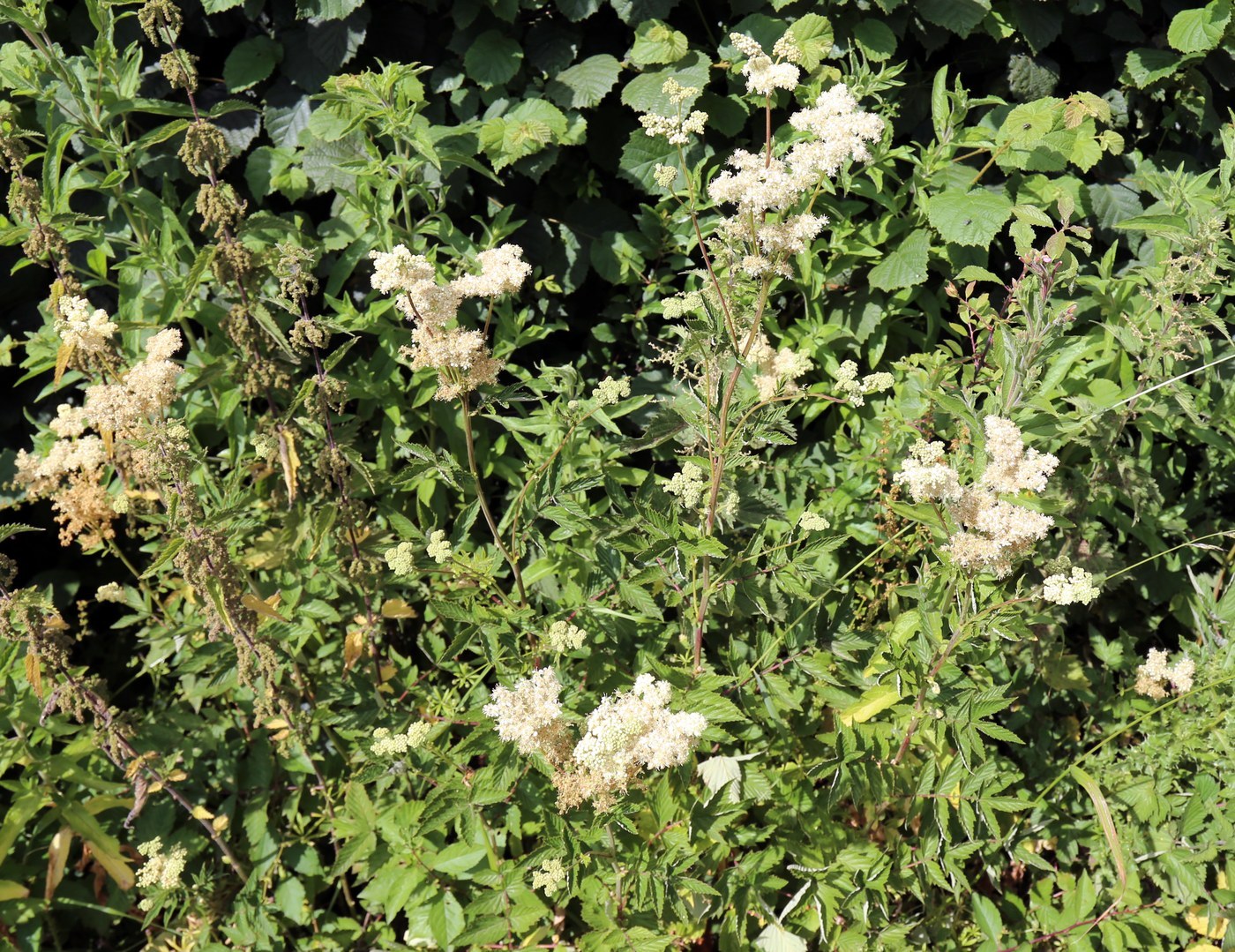
Meadowsweet (Filipendula ulmaria) is an easy, moisture-loving perennial grown for its frothy plumes of creamy-white summer flowers held above handsome, deeply divided foliage. It excels in damp borders, bog gardens, and along pond and stream margins where its love of wet soil is an asset.
Light
Meadowsweet grows well in full sun to part shade. In consistently moist soil it thrives in full sun, producing the fullest flower plumes; where soil dries more readily, a position with part shade helps prevent stress and leaf scorch. Dappled shade at a woodland or waterside edge suits it well.
Water
This is a thirsty plant that loves moist to wet soil and does not tolerate drought. Keep the ground reliably damp throughout the growing season; the plant is happiest where its roots never fully dry out, such as beside water. In drier borders, water generously and mulch heavily, as dry conditions cause the foliage to brown and scorch at the edges.
Soil & Potting
Grow in humus-rich, moisture-retentive soil. Meadowsweet tolerates heavy clay and even boggy ground that would drown many perennials, and it prefers a neutral to slightly alkaline pH. Enrich the planting site with organic matter to boost water retention, and mulch each spring to keep the root zone cool and damp.
Humidity & Temperature
A hardy perennial of cool, temperate regions, meadowsweet is reliable through roughly USDA zones 3 to 8. It prefers cool to moderate summers and copes with cold winters easily. It struggles in hot, dry climates unless kept constantly moist and given afternoon shade.
Feeding
Meadowsweet is not a heavy feeder. A spring topdressing of compost or well-rotted organic matter, which also helps retain moisture, is usually sufficient. On poor soils a light application of balanced fertilizer in spring supports strong growth and full flowering.
Propagation
The easiest method is division of established clumps in spring or autumn, which also rejuvenates older plants. Seed can be sown in autumn or spring and benefits from a period of cold to break dormancy. Divisions establish quickly given adequate moisture.
Repotting / Pruning
Deadhead spent flower plumes if you wish to tidy the plant and prevent excessive self-seeding. Cut the whole plant back after flowering or in late autumn as the foliage dies down; fresh growth returns in spring. Divide congested clumps every few years in spring or autumn to maintain vigor and keep flowering strong.
Common Problems & Pests
Meadowsweet is generally trouble-free in the moist conditions it prefers. Powdery mildew can appear if the soil dries out or airflow is poor, and rust may occasionally affect the foliage. The most common issue is drought stress, showing as browned, crisped leaf margins; keeping the soil consistently moist prevents it.
Seasonal Care Tips
Keep the soil moist through spring and summer, feeding lightly and mulching to conserve water. Enjoy the creamy flower plumes in midsummer, deadheading to limit self-seeding if desired. Cut back the faded foliage in autumn, and divide crowded clumps in spring or fall to keep plants healthy and vigorous.
Frequently asked questions
Why are my meadowsweet leaves browning at the edges?
Crisped, browned leaf margins are the classic sign of drought stress. Meadowsweet needs consistently moist to wet soil; water generously, mulch heavily, and consider moving it to a damper, partly shaded spot.
Where is the best place to plant meadowsweet?
It thrives in damp borders, bog gardens, and along pond or stream margins where the soil stays reliably moist. Full sun works in wet ground, while part shade suits spots that dry out more quickly.
How do I keep meadowsweet from spreading too much?
Deadhead the spent flower plumes before they set seed to limit self-sowing, and divide clumps every few years. Cutting the plant back after flowering also keeps it tidy and in bounds.
Is meadowsweet hardy?
Yes, it is a hardy perennial reliable through roughly USDA zones 3 to 8. It copes with cold winters easily but prefers cool to moderate summers and constant soil moisture to perform at its best.