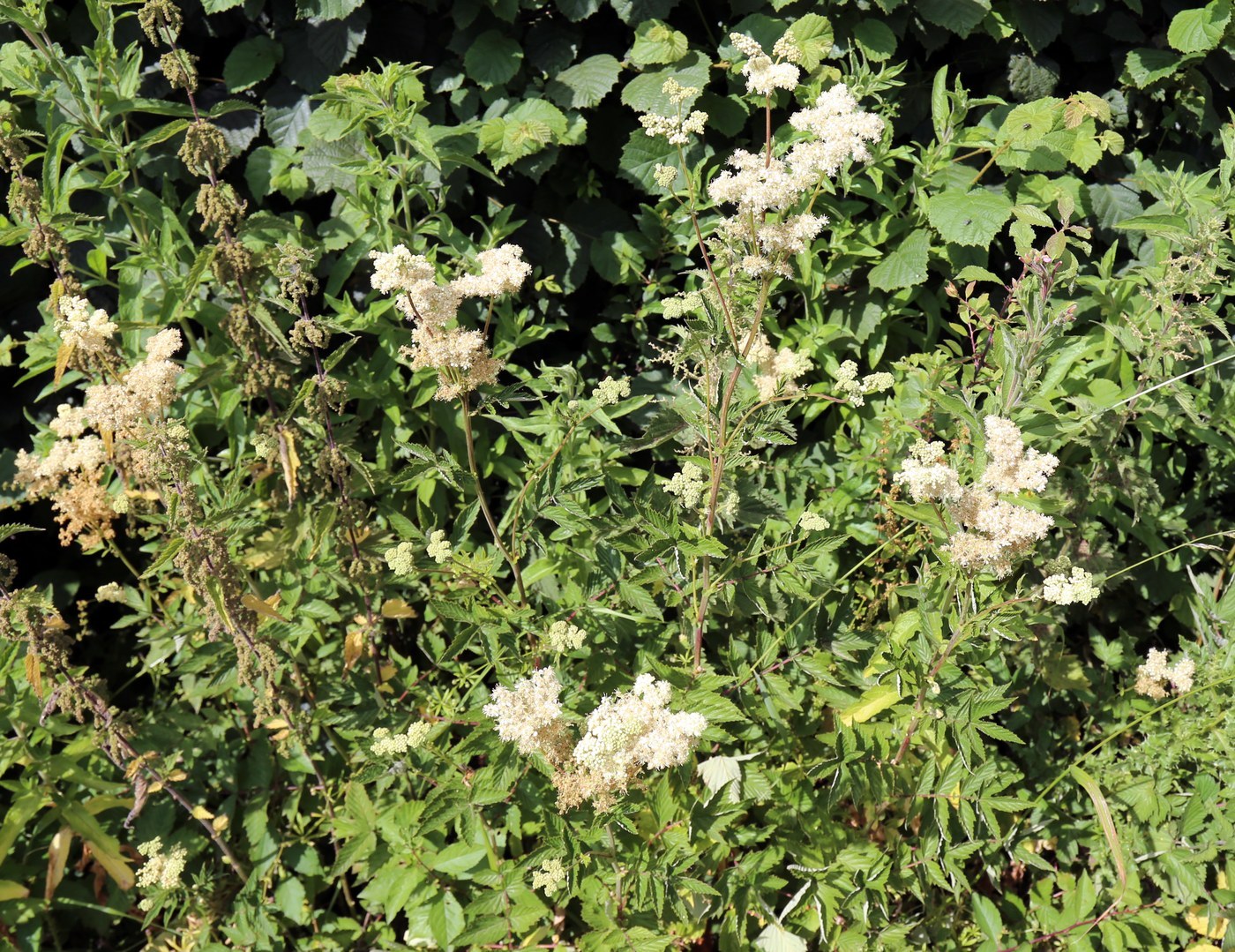
Meadowsweet
Filipendula ulmaria
Meadowsweet is a graceful wetland perennial topped with frothy, almond-scented cream flowers carried in branched plumes above pinnate foliage.
- Light
- Full sun to part shade
- Water
- High; loves moist to wet soil
- Difficulty
- Easy
Got a plant like this?
Identify any plant from a photo, free.
Overview
Meadowsweet (Filipendula ulmaria) is a tall perennial herb in the rose family (Rosaceae), native to the damp meadows and ditches of Europe and western Asia.
Its plumes of tiny creamy-white flowers carry an almond-honey fragrance that made it a favorite medieval "strewing herb" scattered on floors to scent rooms.
It forms upright clumps with reddish, ridged stems and is valued as an airy, fragrant plant for damp gardens.
How to identify it
- Flowers: dense, frothy clusters of tiny five-petaled creamy-white blooms in branched plumes, strongly almond/honey-scented, in summer
- Leaves: pinnate, dark green above and often whitish-downy beneath, with toothed leaflets and a large terminal lobe
- Stems: reddish, ridged, upright, 1-1.5 m tall
- Habit: clumping wetland perennial
- Scent: almond-like fragrance from crushed leaves and flowers
Care & growing
Light: Full sun to partial shade.
Water: Loves consistently moist to wet soil; ideal for pond margins, bog gardens and damp borders.
Soil: Rich, moisture-retentive soil; tolerates heavy and waterlogged ground.
Temperature: Very hardy, through about USDA zones 3-9.
Feeding: Minimal; thrives in fertile, damp soil with little intervention.
Propagation: Divide clumps in spring or autumn, or sow seed; spreads slowly to form attractive stands.
Habitat & origin
Meadowsweet is native across Europe and western Asia and naturalized in parts of North America. In the wild it grows in wet meadows, marshes, fens, riverbanks, ditches and damp woodland edges.
In gardens it is grown in bog gardens, beside ponds and streams, and in moist borders where its airy flowers and fragrance are valued.
Frequently asked questions
Where does meadowsweet grow best?
It thrives in consistently moist to wet soil, making it ideal for bog gardens, pond margins and damp borders in sun or part shade.
Why does meadowsweet smell of almonds?
Its flowers and crushed foliage release aromatic compounds that give an almond-and-honey scent, which made it a popular medieval strewing herb for scenting rooms.
How tall does meadowsweet grow?
Its upright, ridged reddish stems reach about 1 to 1.5 m, forming clumps topped with branched plumes of creamy-white flowers.
How can I identify meadowsweet?
Look for frothy clusters of tiny five-petaled creamy-white flowers, pinnate dark green leaves that are often whitish-downy beneath, and ridged reddish stems in damp ground.
Meadowsweet guides
In-depth guides for identifying, growing, and caring for Meadowsweet.
How to Care for Meadowsweet
Grow Meadowsweet (Filipendula ulmaria) for frothy creamy-white flower plumes and handsome foliage in moist, sunny borders and pond edges.
Meadowsweet Identification Guide
Identify meadowsweet (Filipendula ulmaria) by its frothy creamy-white flower clusters, dark divided leaves with whitish undersides, and reddish stems in damp ground.