
Meadowsweet Identification Guide
Identify meadowsweet (Filipendula ulmaria) by its frothy creamy-white flower clusters, dark divided leaves with whitish undersides, and reddish stems in damp ground.
Read the full Meadowsweet encyclopedia entry →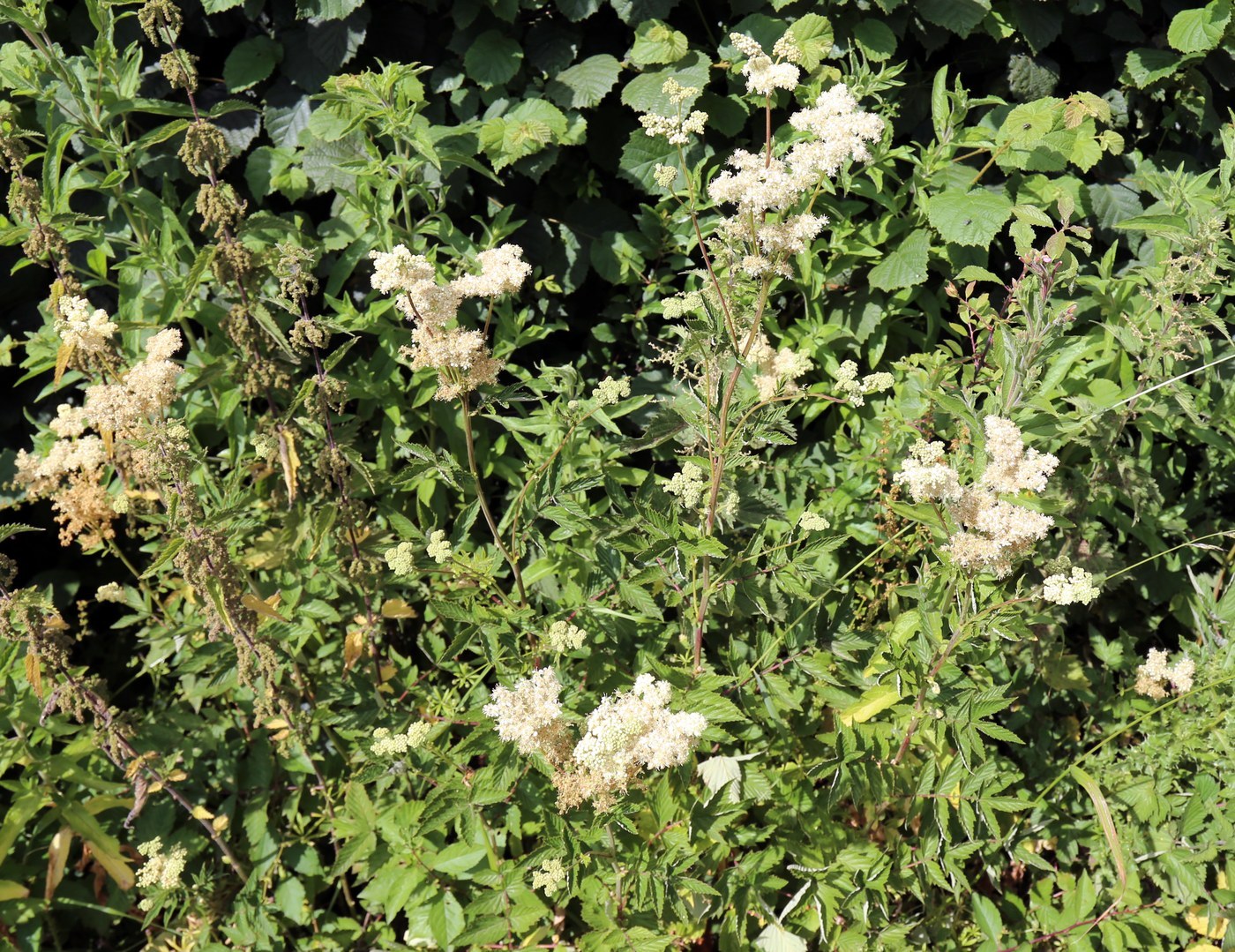
Key Identifying Features
Meadowsweet (Filipendula ulmaria) is a tall perennial of the rose family (Rosaceae) found in wet places. Its quick marks:
- Frothy, dense clusters of tiny creamy-white flowers with a sweet, almond-like fragrance.
- Pinnate (feather-divided) leaves that are dark green above and paler, whitish-downy beneath.
- A tall, often reddish-tinged stem, usually in damp habitat.
The combination of foamy cream flower heads and divided, white-backed leaves in wet ground is distinctive.
Leaves & Stems
Leaves are alternate and pinnate, with 2-5 pairs of large, sharply toothed leaflets along the stalk and smaller leaflets in between, plus a larger three-to-five-lobed terminal leaflet. The upper surface is dark green and slightly wrinkled; the underside is distinctly pale, whitish, and downy. Stems are erect, 60-120 cm tall, somewhat angular, and often flushed reddish-purple. Crushed leaves smell faintly of antiseptic (a wintergreen/salicylate note).
Flowers & Fruit
Flowers bloom mid to late summer in branched, billowing clusters (cymes) of many tiny flowers, each with 5 small creamy petals and a tuft of protruding stamens that gives the head its fluffy look. The scent is sweet and heady. The fruit are small, spirally twisted seedheads that turn brown — the twisting follicles are a useful confirming detail (the genus name refers to threaded structures).
How to Tell It Apart from Look-Alikes
- Elderflower (Sambucus) also has flat creamy flower clusters but is a woody shrub with flat-topped umbel-like heads, not a soft-stemmed herb with twisted seeds.
- Dropwort (Filipendula vulgaris) is a close relative but grows in dry grassland, is shorter, has many narrow leaflets, and larger flowers often pink-tinged in bud.
- Hemp agrimony (Eupatorium) has dull pink flat heads and undivided leaves.
The frothy cream heads, white-backed pinnate leaves, twisted seedheads, and wet habitat confirm meadowsweet.
Where You'll Find It
Meadowsweet loves damp ground: wet meadows, marshes, ditches, riverbanks, fens, and roadside verges across Europe and Asia, and naturalized in North America. It often grows in large colonies, scenting the air on warm summer days.
Quick ID Checklist
- Frothy creamy-white flower clusters, sweetly scented
- Pinnate leaves with toothed leaflets, white-downy beneath
- Tall stem, often reddish-tinged
- Spirally twisted brown seedheads
- Grows in wet meadows, ditches, riverbanks
Frequently asked questions
How do I tell meadowsweet from elderflower?
Both have creamy flower clusters, but meadowsweet is a soft-stemmed herb of wet ground with feather-divided, white-backed leaves and twisted seedheads, while elder is a woody shrub with flat-topped umbel-like heads and red or black berries.
What does meadowsweet smell like?
The flowers give off a sweet, heady, almond-like fragrance, while the crushed leaves have a faint antiseptic or wintergreen note from salicylate compounds.
Why are the seedheads useful for identification?
After flowering, meadowsweet forms small follicles that twist together in a spiral, an unusual feature that helps confirm the genus Filipendula even after the petals have gone.
Where should I look for meadowsweet?
Search damp habitats such as wet meadows, marshes, ditches, fens, and riverbanks, where it often forms large fragrant colonies in mid to late summer.