
Medlar Tree Identification Guide
Identifying the medlar by its large solitary white flowers, long downy leaves, and distinctive open-ended brown fruit ringed by persistent sepals.
Read the full Medlar Tree encyclopedia entry →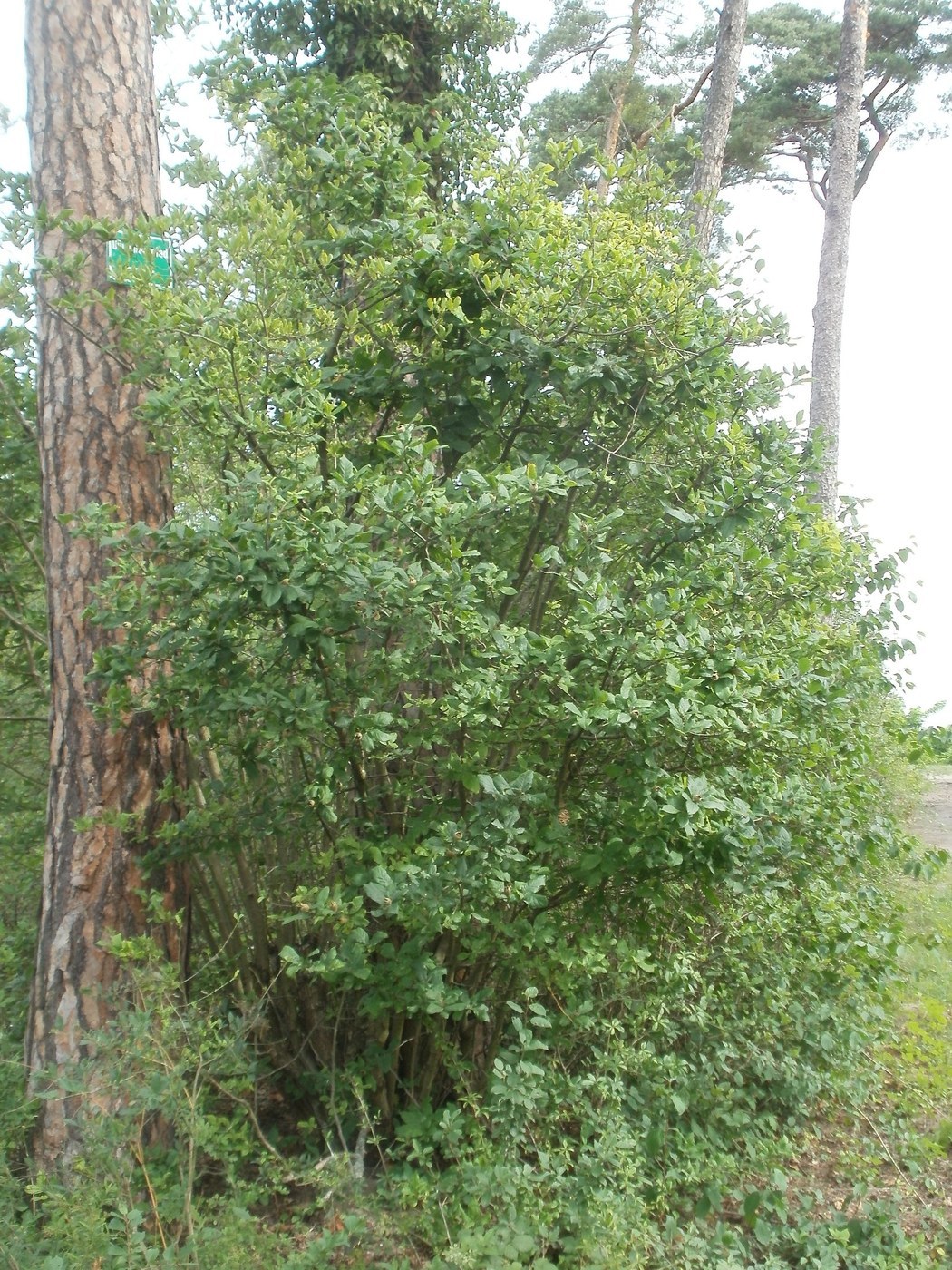
Key Identifying Features
The medlar (Mespilus germanica) is a small, gnarled deciduous tree in the rose family, grown since antiquity for its peculiar fruit. Identify it by large, solitary white flowers, long, downy, dull-green leaves, and especially the russet-brown fruit with a wide-open, flared end ringed by persistent sepals — looking like a small rosehip or "open-bottomed" apple.
- Small, often crooked tree, 3–6 m, with a broad spreading crown
- Large single white flowers (unusual — most relatives flower in clusters)
- Brown apple-like fruit with a gaping calyx end
Leaves & Stems
Leaves are alternate, oblong to lance-shaped, large (8–15 cm), dull dark green and slightly hairy above, downy beneath, with finely toothed margins, turning warm yellow-red in autumn. The branches are crooked and spreading, and wild/old trees may bear short spines, while cultivated forms are usually thornless. The bark is gray-brown and fissured.
Flowers & Fruit
Flowers are a strong ID trait: solitary (borne one per shoot tip), large (3–5 cm), white to pale pink, with five rounded petals and conspicuous reddish anthers, appearing in late spring after the leaves. The fruit is unmistakable: a dull russet-brown, rounded to top-shaped pome, 2–5 cm across, with a broad, open hollow at the end surrounded by five large, persistent, leafy sepals — giving it a distinctive "open-arsed" look (its old folk name). The fruit stays hard and firm until bletted (softened by frost or storage, when the flesh turns soft and brown).
How to Tell It Apart from Look-Alikes
- Hawthorn (Crataegus): clustered small flowers and small red haws; medlar has solitary large flowers and big brown open-ended fruit.
- Quince (Cydonia): fragrant yellow pear-shaped fruit, not the open-ended brown medlar fruit.
- Loquat / apple / pear: lack the flared, sepal-ringed open calyx of the medlar fruit.
- The single large white flower + downy oblong leaf + open-ended russet fruit combination is conclusive.
Where You'll Find It
Native to southwest Asia and southeastern Europe, long cultivated across Europe in orchards, old gardens, and hedgerows, and occasionally naturalized. It is hardy in cool-temperate climates (USDA zones 5–8) and is grown more as a heritage/ornamental fruit tree than commercially.
Quick ID Checklist
- Small, crooked, spreading deciduous tree
- Large, downy, dull-green oblong leaves
- Solitary large white flowers in late spring
- Russet-brown fruit with a wide open, sepal-ringed end
- Fruit softens only once bletted (turning soft and brown)
- Cool-temperate orchards, gardens, hedgerows
Frequently asked questions
What does a medlar fruit look like?
It's a dull russet-brown, rounded fruit a few centimeters across with a distinctive wide-open hollow at the end ringed by five large leafy sepals, often likened to a small open-bottomed apple or rosehip.
How is a medlar flower different from hawthorn?
Medlar bears large solitary white flowers one per shoot tip, while hawthorn produces many small flowers in dense clusters — an easy way to tell the related trees apart.
Do medlar trees have thorns?
Wild and old trees can bear short spines, but most cultivated medlar varieties are thornless and have a characteristically crooked, spreading branch structure.