
How to Care for Mexican Sunflower
Grow the fast, heat-loving Mexican sunflower for masses of vivid orange blooms all summer in full sun and lean, dry soil.
Read the full Mexican Sunflower encyclopedia entry →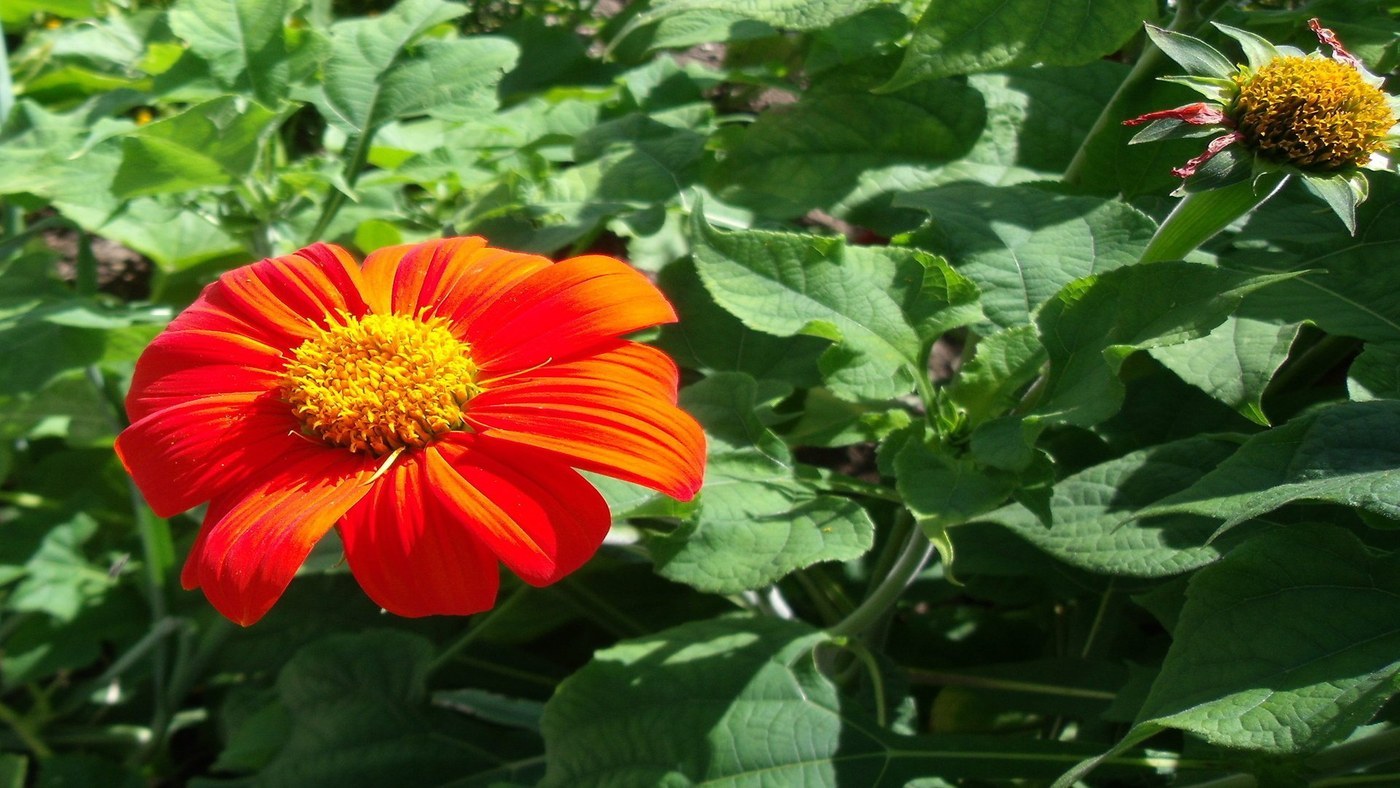
Mexican Sunflower (Tithonia rotundifolia) is a bold, fast-growing annual that produces masses of vivid orange to red-orange daisy-like flowers on tall, branching stems all through summer and into fall. Loving heat and thriving on neglect, it is an easy plant that rewards a sunny, warm spot with a nonstop show.
Light
Mexican sunflower needs full sun, the more the better. At least six to eight hours of direct sunlight daily produces the strongest stems and heaviest flowering. In shade the plants stretch, flop, and bloom poorly. This is a plant for the hottest, sunniest part of the garden.
Water
Once established, Mexican sunflower is notably drought tolerant and prefers to stay on the dry side. Water young seedlings and new transplants to establish them, then water only during extended dry spells. Overwatering and rich, damp conditions cause weak, leggy growth and fewer flowers, so let the soil dry between waterings. Its toughness in heat and drought is part of its easy reputation.
Soil & Potting
This annual actually performs best in lean, average, well-drained soil. Overly rich or heavily fertilized soil produces tall, floppy plants with lots of foliage and fewer blooms. It tolerates poor and dry soils that challenge other plants. Ensure good drainage; the main requirement beyond sun is that the soil not stay soggy. In containers use a free-draining mix and expect a large plant.
Humidity & Temperature
A true heat lover native to Mexico and Central America, it thrives in hot summers and warm nights and is completely frost-tender, dying back at the first freeze. Sow or plant out only after all danger of frost has passed and the soil has warmed. It shrugs off high heat and humidity that stall other annuals.
Feeding
Mexican sunflower needs little to no fertilizer and generally blooms best in unamended soil. Feeding, especially with nitrogen, encourages leafy, floppy growth at the expense of flowers. If your soil is extremely poor, a single light application of a balanced fertilizer early in the season is plenty. Otherwise, skip feeding entirely.
Propagation
Propagation is easy from seed. Sow seeds directly in the garden after the last frost once soil is warm, barely covering them, or start indoors a few weeks before the last frost for an earlier display. Seeds germinate quickly in warm soil. It readily self-sows, so volunteers often appear the following season where plants were allowed to set seed.
Repotting / Pruning
As a fast annual, it needs no repotting during its single season. Pinching the growing tips of young plants when they are about a foot tall encourages bushier, sturdier, better-branched growth and more flowers. Deadhead spent blooms regularly to keep the flush of flowers coming through the season. Tall plants in windy or rich sites may need staking, though pinching and lean soil reduce the need.
Common Problems & Pests
Mexican sunflower is robust and largely pest-free. In rich soil or wind it can grow leggy and flop, solved by lean soil, full sun, pinching, and staking. Occasional pests include aphids, whiteflies, and slugs or snails on young growth. Powdery mildew and leaf spots can appear in damp, crowded, poorly ventilated plantings, so space plants for good air flow and avoid overhead watering. Its hollow stems can snap in storms, another reason to keep plants compact.
Seasonal Care Tips
Sow after the last frost once soil is warm. Pinch young plants for bushiness and deadhead through summer to prolong the display. Enjoy the peak bloom in the heat of mid to late summer. Let a few late flowers set seed if you want volunteers or seed to save. The plants die with the first hard frost, at which point pull and compost the spent stems.
Frequently asked questions
Does Mexican sunflower need fertilizer?
Very little. It blooms best in lean, average soil and often needs no feeding at all. Rich soil and nitrogen fertilizer produce tall, floppy, leafy plants with fewer flowers, so hold back on feeding unless the soil is extremely poor.
Why is my Mexican sunflower flopping over?
Flopping usually comes from too-rich soil, too much water, insufficient sun, or wind on tall hollow stems. Grow it in lean soil and full sun, water sparingly, pinch young plants to encourage sturdy branching, and stake tall plants in exposed sites.
How do I grow Mexican sunflower from seed?
Sow seeds directly in the garden after all frost has passed and the soil is warm, barely covering them, or start indoors a few weeks before the last frost. They germinate quickly in warm soil and the plants often self-sow for the next season.
How much water does Mexican sunflower need?
Once established it is drought tolerant and prefers dry conditions. Water new seedlings and transplants to get them going, then water only during extended dry spells. Overwatering leads to weak, leggy growth and fewer flowers.