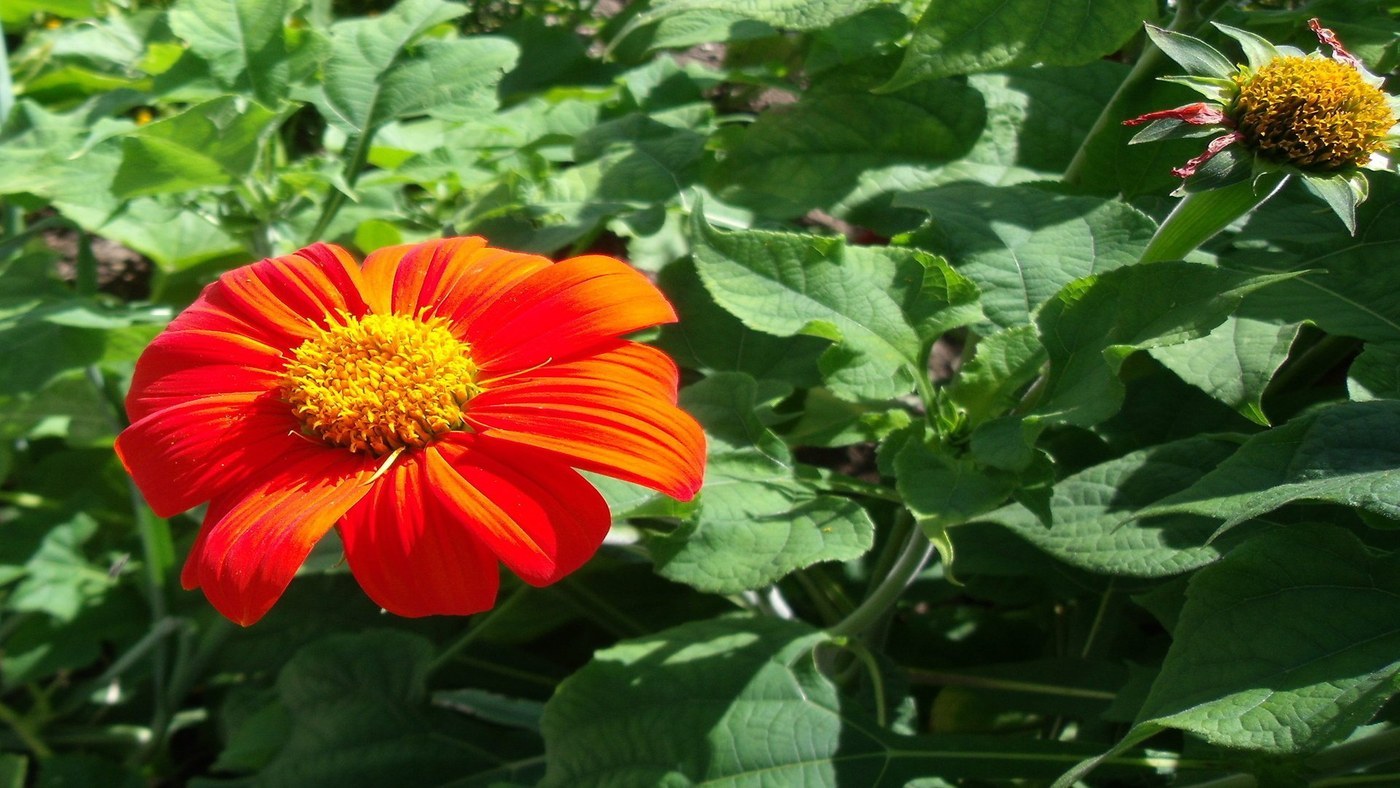
Mexican Sunflower
Tithonia rotundifolia
A tall, fast-growing annual prized for its vivid orange-red daisy flowers that are magnets for butterflies and bees. It thrives in heat and poor soil where many other plants struggle.
- Light
- Full sun
- Water
- Drought tolerant once established
- Difficulty
- Easy
Got a plant like this?
Identify any plant from a photo, free.
Overview
Mexican sunflower is a bold, sun-loving annual native to Mexico and Central America. In a single season it rockets to 4-6 feet tall, producing a continuous show of brilliant orange to scarlet blooms from midsummer until frost.
Despite its common name it is not a true sunflower (Helianthus) but belongs to the same Asteraceae family. Its tolerance of heat, drought, and lean soil makes it a favorite for low-maintenance pollinator gardens.
Monarch butterflies, swallowtails, and bumblebees flock to the nectar-rich flowers, making it one of the most reliable butterfly plants for warm climates.
How to identify it
- Height & habit: Robust, branching annual reaching 4-6 ft (occasionally taller), with a coarse, bushy form.
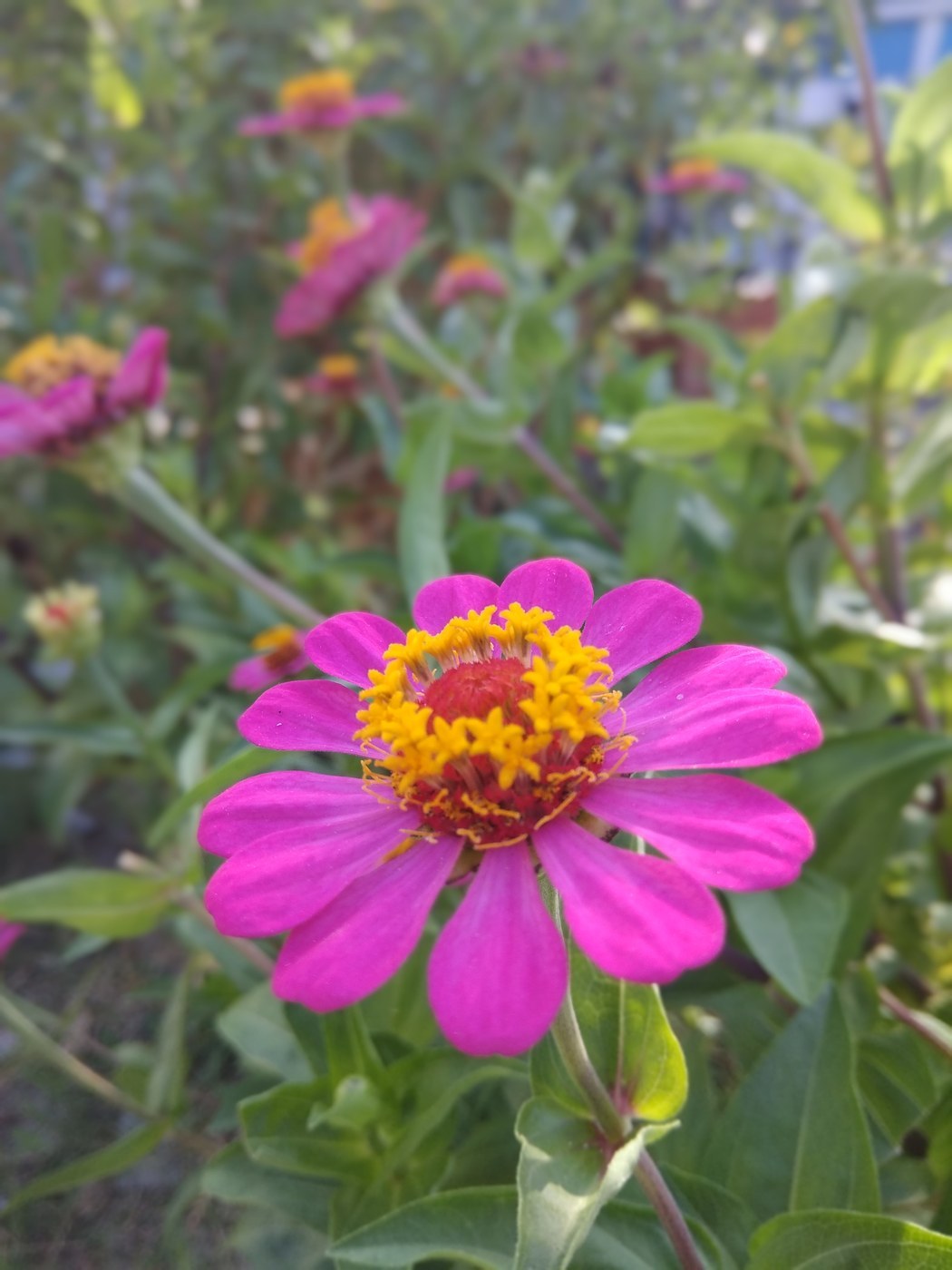
- Flowers: 2-3 in daisy-like blooms with orange to red-orange ray petals surrounding a golden-orange central disk.
- Leaves: Large, rough-textured, broadly oval to three-lobed, dark green and slightly hairy.
- Stems: Thick, somewhat hollow, and velvety; can be brittle in wind.
- Bloom time: Midsummer through first frost.
Care & growing
Light: Needs full sun for best flowering and sturdy growth.
Water: Water young plants regularly; established plants are quite drought tolerant. Avoid soggy soil.
Soil: Tolerates poor, dry, or rocky soil. Rich soil produces lush foliage but fewer flowers.
Temperature: Loves heat; sow after all danger of frost has passed.
Feeding: Little to no fertilizer needed; excess nitrogen reduces blooms.
Propagation: Grown easily from seed sown directly outdoors or started indoors 4-6 weeks before the last frost. Deadhead to prolong blooming, and consider staking taller plants.
Habitat & origin
Native to Mexico and Central America, where it grows in open, sunny areas, roadsides, and disturbed ground. It is naturalized in parts of the southern United States, Africa, and Asia.
As a warm-season annual it is grown worldwide in summer gardens, performing especially well in hot, dry regions where many ornamentals falter.
Frequently asked questions
Is Mexican sunflower a perennial?
No, it is grown as a warm-season annual, completing its life cycle in one growing season. It readily self-seeds in mild climates.
How tall does it get?
Most plants reach 4-6 feet tall, and some varieties can exceed 6 feet, so allow plenty of space and consider staking.
Does it attract butterflies?
Yes, it is one of the best butterfly magnets available, drawing monarchs, swallowtails, bees, and other pollinators.
Why isn't my plant flowering well?
Too much shade or overly rich, nitrogen-heavy soil promotes leaves over blooms. Give it full sun and lean soil.
Mexican Sunflower guides
In-depth guides for identifying, growing, and caring for Mexican Sunflower.
How to Care for Mexican Sunflower
Grow the fast, heat-loving Mexican sunflower for masses of vivid orange blooms all summer in full sun and lean, dry soil.
Mexican Sunflower Identification Guide
How to recognize Mexican sunflower (Tithonia rotundifolia) by its tall coarse growth, velvety leaves, and brilliant red-orange daisy flowers.