
Meyer Lemon Identification Guide
Identify the Meyer lemon (Citrus x meyeri) by its compact form, dark glossy leaves, purple-tinged fragrant blossoms, and round, thin-skinned deep-yellow-orange fruit.
Read the full Meyer Lemon encyclopedia entry →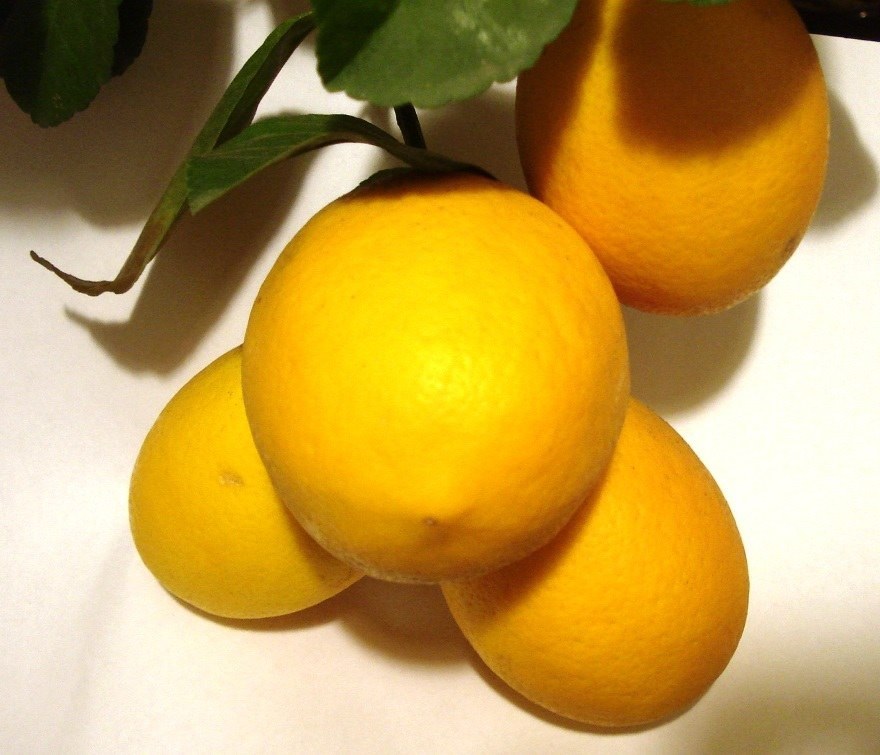
Key Identifying Features
The Meyer lemon (Citrus x meyeri) is a hybrid of a lemon and a mandarin/sweet orange, forming a compact, nearly thornless evergreen shrub or small tree usually 2-3 m (6-10 ft) tall. It is distinguished from a true lemon by its rounder, smoother, deep yellow-to-orange fruit, thin skin, and sweeter, less acidic flavor, plus purple-tinted flower buds.
Leaves & Stems
- Leaves are broadly elliptical, glossy dark green, 7-10 cm long, with a slightly winged petiole (faint, smaller than an orange's).
- Crushed leaves are aromatic with a lemon scent.
- Branches are mostly thornless or with few short spines, dense and bushy.
Flowers & Fruit
- Flowers are white with a distinct purple/pink tinge on the buds and petal backs, very fragrant, borne singly or in small clusters.
- It is everbearing, flowering and fruiting nearly year-round in mild climates.
- Fruit is round to slightly oval, smaller than a true lemon, with smooth, thin skin ripening deep yellow with an orange blush.
- Pulp is pale orange-yellow, juicy, low in acid and faintly sweet, with few seeds.
How to Tell It Apart from Look-Alikes
- True lemon (Citrus limon): has larger, oblong fruit with a pronounced nipple, thick bumpy bright-yellow rind, and white (not purple-tinged) flowers; the tree is thornier.
- Orange (Citrus sinensis): orange fruit is rounder but deep orange with thicker pith and sweet pulp, and the leaf has a broader winged petiole.
- Lime: smaller and green.
- The round thin-skinned orange-yellow fruit + purple-tinged fragrant blooms + compact thornless habit flags a Meyer.
Where You'll Find It
Originally from China, the Meyer lemon is hugely popular as a container and patio plant because of its small size and cold tolerance (to about -3 to -4 C), and it is grown outdoors in USDA zones 8-11 and indoors elsewhere. Look for it in home gardens, patios, greenhouses, and sunny windows, often in pots. It prefers full sun and well-drained soil.
Quick ID Checklist
- Compact, mostly thornless evergreen shrub/small tree
- Glossy dark green elliptical leaves with a faint winged stalk
- Fragrant white blossoms with purple-tinged buds
- Round, thin-skinned, deep yellow-orange fruit
- Sweeter, low-acid juicy pulp; near year-round fruiting
Frequently asked questions
How is a Meyer lemon different from a regular lemon?
Meyer lemons are rounder, smaller, and deep yellow-orange with thin smooth skin, and the pulp is sweeter and less acidic. True lemons are larger, oblong with a pointed end, thick bumpy bright-yellow rind, and sharper flavor.
Why do Meyer lemon flowers look purple?
Meyer lemon flower buds and the backs of the petals are tinged with purple or pink, a helpful identifier; true lemons typically have purplish buds too but Meyer's blooms are notably fragrant on a compact thornless plant.
Can I grow a Meyer lemon indoors?
Yes. Its compact size and relative cold tolerance make it one of the best citrus for containers, patios, and sunny windowsills, which is partly why it is so commonly seen as a houseplant.
When does a Meyer lemon produce fruit?
It is everbearing, flowering and fruiting nearly year-round in mild climates, with main flushes typically in spring and fall, so you may see flowers and fruit on the plant at the same time.