
How to Care for Milk Thistle
Grow bold, marble-veined milk thistle for dramatic foliage and purple blooms. An easy, sun-loving, drought-tolerant plant for lean soils.
Read the full Milk Thistle encyclopedia entry →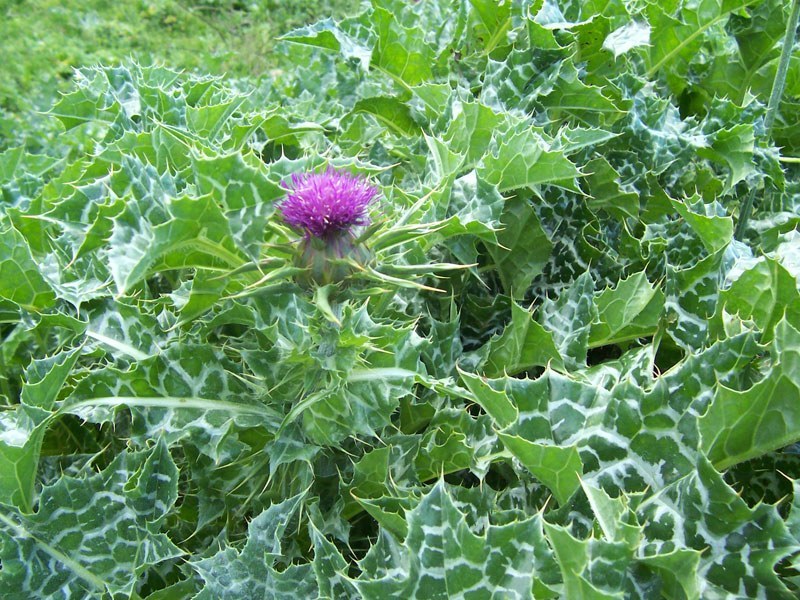
Milk Thistle (Silybum marianum) is a bold, architectural annual or biennial grown for its large rosettes of spiny, glossy leaves dramatically marbled with white veining and its thistle-like purple flower heads. It is an easy, undemanding plant that thrives in sun and poor, dry soils, making a striking statement in gravel gardens and naturalistic borders.
Light
Milk thistle wants full sun. Give it the brightest, most open position you have; strong light produces the sturdiest rosettes, the most vivid white leaf marbling, and the best flowering. In shade it grows lax and leggy and blooms poorly.
Water
Water needs are low, and the plant is notably drought-tolerant once its deep taproot establishes. Provide occasional water while young to get it going, then let it fend largely for itself; established plants rarely need irrigation except in prolonged drought. Overly wet soil causes rot, so always let the ground dry between any watering.
Soil & Potting
Milk thistle is adaptable and unfussy, tolerating poor, stony, and dry soils, but it must have good drainage. Lean, gritty, neutral to alkaline ground suits it best; rich soils produce softer, floppier growth. Because it forms a long taproot, it prefers to be sown where it will grow and does not transplant readily once established.
Humidity & Temperature
This is a warm-season, Mediterranean-climate plant that enjoys dry air and warm, sunny conditions. It tolerates heat well and dislikes cold, damp, humid situations that encourage rot and mildew. In mild climates it overwinters as a rosette and flowers the following year.
Feeding
Little to no feeding is needed. Milk thistle is adapted to lean soils and grows well without fertilizer; excess nutrients simply produce weak, oversized foliage prone to flopping. Skip feeding in ordinary garden soil.
Propagation
Grow milk thistle from seed. Sow directly where it is to grow in spring, or in fall in mild climates, since the taproot resents disturbance. Barely cover the seed and keep it lightly moist until it germinates, which happens quickly in warm soil. The plant self-sows freely, so remove faded heads if you want to prevent it spreading.
Repotting / Pruning
As a direct-sown taprooted plant, milk thistle is not typically potted on. Thin seedlings to give each rosette room to develop its full spiny spread. Deadhead spent flower heads before they set seed to control vigorous self-seeding, and pull the whole plant once it finishes its life cycle, as it is monocarpic and dies after flowering.
Common Problems & Pests
Milk thistle is robust and largely pest-free. The chief risks are root rot and crown rot in wet, heavy soils, so ensure sharp drainage. Powdery mildew and rust can appear in damp, crowded conditions, and aphids sometimes cluster on flower stems; good airflow and spacing prevent most trouble. Its greatest fault is self-seeding too enthusiastically, easily managed by deadheading.
Seasonal Care Tips
Sow in spring, or in fall in mild regions, directly into a sunny, well-drained spot. Through spring and summer, enjoy the bold rosettes and blooms with minimal watering and no feeding, deadheading to limit seeding. After flowering the plant declines and can be removed; leave a few seed heads only if you want it to return the following season.
Frequently asked questions
Is milk thistle easy to grow?
Yes, it is very easy. Given full sun and well-drained soil it practically takes care of itself, tolerating heat, drought, and poor ground with no feeding required.
Why is my milk thistle floppy and leggy?
This is usually caused by too much shade or overly rich soil. Grow it in full sun in lean, well-drained ground and avoid fertilizing to get compact, sturdy, well-marbled rosettes.
Should I start milk thistle from seed in pots or in the ground?
Sow directly in the ground where it is to grow. It develops a long taproot that resents disturbance, so it establishes far better from direct sowing than from transplants.
How do I stop milk thistle from spreading everywhere?
Deadhead the flower heads before they set seed. The plant self-sows freely, so removing spent blooms promptly keeps volunteer seedlings under control.
Does milk thistle come back every year?
It is an annual or biennial that dies after flowering and setting seed, but it self-sows readily, so a planting often reappears year after year from its own seed unless you deadhead it.