Million Bells Identification Guide
Recognize Million Bells (Calibrachoa) by its trailing stems smothered in small petunia-like trumpet flowers and tiny sticky leaves.
Read the full Million Bells encyclopedia entry →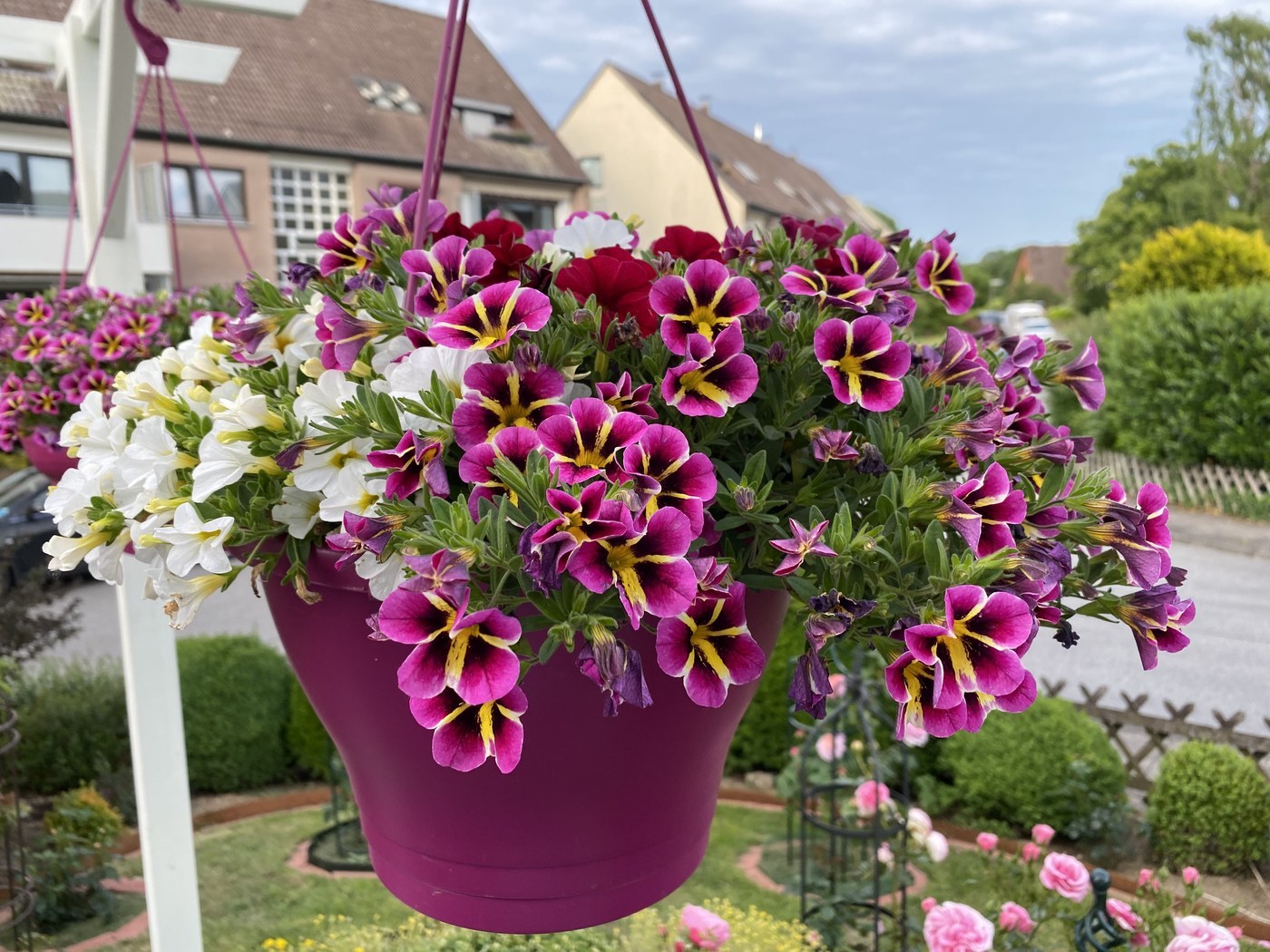
Key Identifying Features
Million Bells (Calibrachoa) is a trailing, mounding tender perennial usually grown as an annual, beloved for covering itself in dozens of small, petunia-like flowers. Its name comes from the sheer abundance of tiny bell-shaped blooms.
- Cascading, mounding habit ideal for baskets and containers
- Flowers small, about 1 in (2.5 cm) across — roughly half the size of a petunia
- Five-lobed trumpet/funnel-shaped flowers, often with a contrasting throat or yellow eye
- Enormous color range: red, orange, yellow, pink, purple, blue, bronze, and bicolors
- Blooms continuously without needing deadheading
Leaves & Stems
Leaves are small, oval to spoon-shaped, 0.5-1.5 in (1-4 cm) long, with smooth edges and a slightly sticky, hairy texture that can leave a faint residue on fingers. They are densely arranged along slender, branching, trailing stems that drape downward 6-12 in (15-30 cm) or more. The overall plant is finer-textured than a petunia.
Flowers & Fruit
Each flower is a shallow five-lobed funnel with petals fused into a tube, frequently displaying a darker throat, veining, or a bright yellow center. Flowers are far smaller and more numerous than petunia blooms. Million bells is largely sterile or low-seeding, so it rarely sets noticeable fruit and is propagated by cuttings rather than seed.
How to Tell It Apart from Look-Alikes
- Petunia: the closest look-alike and a close relative. Petunia flowers are larger (2-4 in), leaves are bigger and very sticky, and many petunias have a strong fragrance. Million bells flowers are smaller, denser, and usually unscented.
- Bacopa (Sutera): also a trailing basket plant but has small five-petaled star flowers (white or lavender) that are flat, not trumpet-shaped.
- Verbena: trailing too, but flowers form rounded clusters of tiny five-lobed florets rather than individual trumpets.
The key is many small petunia-shaped trumpets on fine trailing stems with little to no fragrance.
Where You'll Find It
Million bells is almost exclusively a cultivated container and hanging-basket plant, popular on patios, balconies, and window boxes in full sun. It prefers consistent moisture and feeding, and unlike many annuals it self-cleans, dropping spent flowers on its own.
Quick ID Checklist
- Trailing/cascading stems from a basket or pot
- Many small (~1 in) petunia-like trumpet flowers
- Five fused lobes, often with contrasting throat or yellow eye
- Small spoon-shaped slightly sticky leaves
- Little or no fragrance; no deadheading needed
Frequently asked questions
What's the difference between Million Bells and petunias?
Million Bells (Calibrachoa) has much smaller flowers (about 1 inch) and finer foliage, blooms in greater numbers, is usually unscented, and self-cleans. Petunias have larger flowers, coarser sticky leaves, and often a strong fragrance.
Why won't my Million Bells grow from collected seed?
Most Calibrachoa are hybrids that produce little or no viable seed. They are propagated from cuttings, which is why named varieties are sold as plants, not seed packets.
Do I need to deadhead Million Bells?
No. One of its identifying behaviors is that it self-cleans — spent blooms drop off on their own and it keeps flowering continuously through the season.
Why are the leaves sticky?
Like its petunia relatives, Calibrachoa has fine glandular hairs on leaves and stems that feel slightly sticky — a helpful clue that you're looking at a member of the nightshade family.
Million Bells identified by the community
Recent Million Bells specimens identified with Plant Identifier.