How to Care for Mimosa Tree
Grow the Mimosa Tree (Albizia julibrissin): a fast, drought-tough small tree with feathery leaves and silky pink summer blooms.
Read the full Mimosa Tree encyclopedia entry →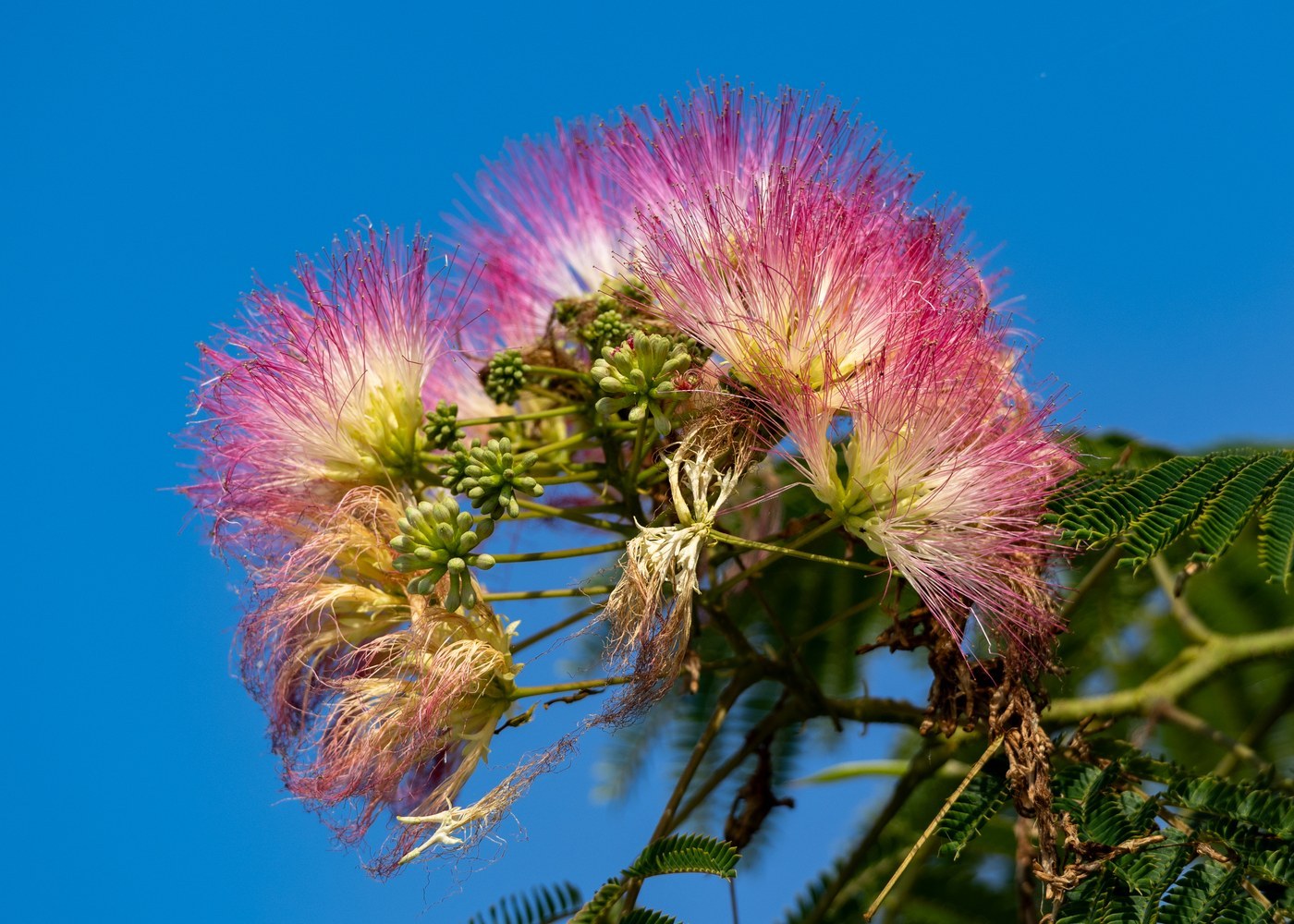
The Mimosa Tree (Albizia julibrissin), also called silk tree, is a fast-growing ornamental prized for its fern-like, doubly compound leaves and fluffy, silky pink flowers that appear through summer. It is easy to grow, drought-tolerant once established, and thrives in full sun with minimal fuss.
Light
Give Mimosa full sun for the heaviest flowering and the most graceful, spreading form. At least six hours of direct sun is ideal. In shade it grows sparse and blooms poorly. Its open, umbrella-like canopy casts light dappled shade beneath.
Water
Water regularly during the first year or two to establish deep roots, then the tree becomes notably drought-tolerant. Mature Mimosas need little supplemental water and dislike constantly soggy ground. Allow the soil to dry between waterings and provide occasional deep soakings during extended dry spells rather than frequent shallow watering.
Soil & Potting
Highly adaptable, Mimosa grows in poor, sandy, or clay soils and tolerates a wide pH range, including alkaline conditions. Good drainage is the main requirement. It is a nitrogen-fixing legume, so it performs well even in lean soils. Grow it as a landscape tree; it is far too large and fast for long-term container culture.
Humidity & Temperature
Hardy in USDA zones 6 through 9, Mimosa loves heat and tolerates humidity well. It handles hot summers effortlessly and shrugs off dry air. Hard freezes can damage young growth, so protect saplings in colder zones during their first winters.
Feeding
Because it fixes its own nitrogen, Mimosa rarely needs fertilizer and over-feeding can produce weak, floppy growth at the expense of flowers. In very poor soil, a light application of balanced fertilizer in early spring is enough. A ring of mulch conserves moisture and suppresses weeds around young trees.
Propagation
Mimosa grows readily from seed, which germinates best after scarification or a hot-water soak to soften the hard seed coat. It also self-sows freely and can spread beyond where it is planted. Softwood cuttings and root cuttings can be used but seed is by far the easiest method.
Repotting / Pruning
Prune in late winter or early spring to shape the canopy, remove weak or crossing branches, and raise the crown for a tidy small tree. Mimosa wood is somewhat brittle, so training a strong branch structure while young reduces storm breakage. Deadheading is unnecessary, though removing spent seed pods limits volunteer seedlings.
Common Problems & Pests
The most serious problem is Mimosa vascular wilt (Fusarium), a soil fungus that can kill trees; wilt-resistant selections such as 'Charlotte' and 'Tryon' are available. Webworms and cottony scale can appear but are usually cosmetic. The tree is short-lived, brittle, and seeds prolifically, so it can become weedy and is considered invasive in some regions; site it accordingly.
Seasonal Care Tips
In spring, prune for structure and watch new growth emerge late, as Mimosa leafs out after most other trees. Summer brings the signature pink blooms; water deeply only during drought. In fall, clean up dropped leaves and seed pods to reduce self-seeding. In winter, the bare, layered branch structure is fully hardy in its zones but young trees benefit from mulch over the roots.
Frequently asked questions
Why is my Mimosa Tree slow to leaf out in spring?
This is normal. Mimosa is one of the last trees to break dormancy, often leafing out well into mid or late spring after warm weather arrives.
Does a Mimosa Tree need much watering?
Only while young. Once established, it is quite drought-tolerant and prefers soil that dries between waterings rather than staying wet.
Why won't my Mimosa flower well?
Insufficient sun is the usual cause. Mimosa needs full, direct sunlight to bloom heavily; too much shade or excess nitrogen fertilizer reduces flowering.
Is the Mimosa Tree invasive?
It can be. Mimosa self-seeds aggressively and has naturalized widely, so remove seed pods and check local guidance before planting in sensitive areas.
Mimosa Tree identified by the community
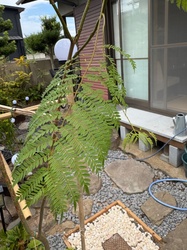
Recent Mimosa Tree specimens identified with Plant Identifier.