Mimosa Tree Identification Guide
Identify the mimosa (silk tree) by its pink powderpuff flowers, ferny bipinnate leaves that fold at night, and flat bean pods. Covers flowers, leaves, pods, look-alikes, and habitat.
Read the full Mimosa Tree encyclopedia entry →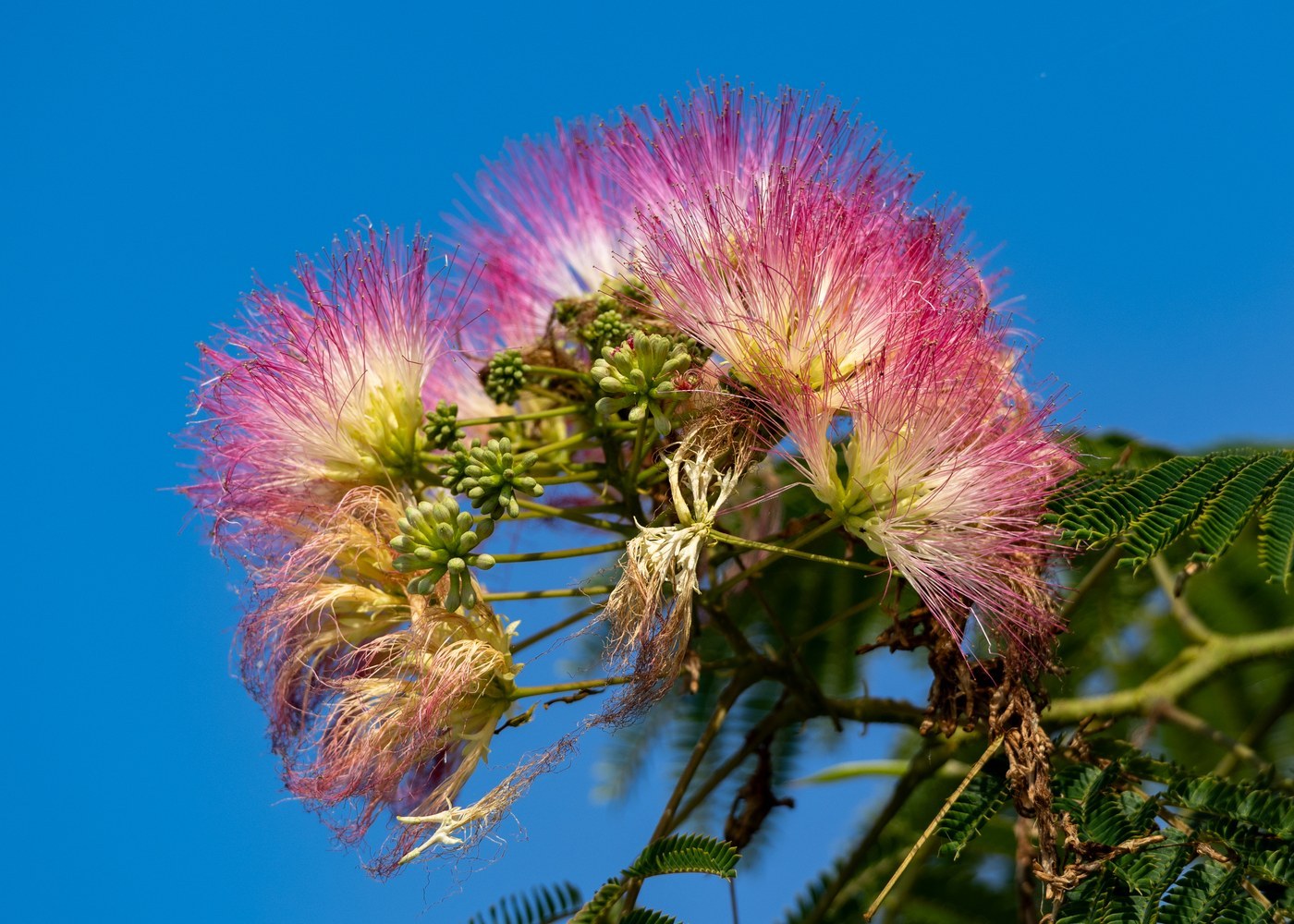
Key Identifying Features
Mimosa, or silk tree (Albizia julibrissin), is a fast-growing ornamental legume from Asia, now naturalized and invasive across the warmer United States. It is instantly known by its fluffy pink, powderpuff flowers and lacy, fern-like, twice-divided leaves. It grows 20-40 feet with a low, wide, vase-to-umbrella-shaped spreading crown.
Flowers
- Flowers are showy, pink, silky pom-poms (powderpuffs) about 1-2 inches across, made of long thread-like stamens, often pinker at the tips and paler at the base.
- They bloom in flat-topped clusters in summer and are sweetly fragrant, attracting hummingbirds and butterflies.
Leaves & Stems
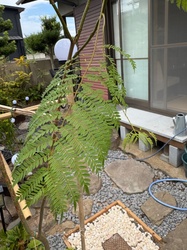
- Leaves are alternate, large (up to 20 inches), and bipinnately compound, divided into many side branches each lined with tiny, oblong leaflets — giving a soft, ferny texture.
- Leaflets are asymmetrical at the base and number in the dozens per leaf.
- A diagnostic behavior: leaflets fold up (close) at night and in rain, a nyctinastic ('sleep') movement.
- The crown is flat-topped and wider than tall.
Fruit & Bark
- Fruits are flat, papery, tan bean-like pods 4-8 inches long, constricted between the seeds, dangling in clusters and persisting through winter.
- Bark is smooth, light gray-brown, with horizontal lenticel markings.
How to Tell It Apart from Look-Alikes
- Jacaranda has similar ferny leaves but bears blue trumpet flowers and round woody disc pods, and its leaves are opposite.
- Honeylocust (Gleditsia) has compound leaves and flat pods but bears greenish flowers and often thorns, with a tall (not flat) crown.
- Royal poinciana has bigger fern leaves and flaming red flowers, in tropical climates.
- The combination of pink powderpuff flowers + folding ferny leaves + flat bean pods is unique to mimosa.
Where You'll Find It
Mimosa is planted as an ornamental and has escaped widely along roadsides, fencerows, stream banks, and disturbed clearings across the southeastern, mid-Atlantic, and lower Midwest US, plus warm parts of the West. It seeds prolifically and resprouts vigorously, making it a noted invasive. Look for its pink-topped, flat crowns in summer.
Quick ID Checklist
- Pink silky powderpuff flowers in summer
- Fern-like bipinnate leaves that fold up at night
- Flat tan bean pods persisting into winter
- Low, wide, flat-topped spreading crown
- Common along roadsides and disturbed ground in warm regions
Pink powderpuffs over folding ferny foliage with dangling flat pods confirm the mimosa silk tree.
Frequently asked questions
Why do mimosa leaves fold up at night?
The tiny leaflets perform a nyctinastic 'sleep' movement, closing in darkness and during rain due to changes in cell turgor at the leaf base, then reopening by day.
How do I tell mimosa from jacaranda?
Both have lacy fern-like leaves, but mimosa has pink powderpuff flowers, flat bean pods, and alternate leaves, while jacaranda has blue trumpet flowers, round woody pods, and opposite leaves.
Is the mimosa tree invasive?
Yes, in the warmer United States it seeds prolifically, sprouts from cut stumps and roots, and spreads along roadsides and waterways, displacing native plants.
What do mimosa flowers look like up close?
Each 'flower' is a cluster of long, silky, thread-like pink stamens forming a fluffy powderpuff, typically deeper pink at the tips and whitish toward the base.
Mimosa Tree identified by the community
Recent Mimosa Tree specimens identified with Plant Identifier.