
Miracle Fruit Identification Guide
Identify the miracle fruit shrub (Synsepalum dulcificum) by its slow-growing bushy form, clustered dark glossy leaves, tiny white flowers, and small bright-red berries.
Read the full Miracle Fruit encyclopedia entry →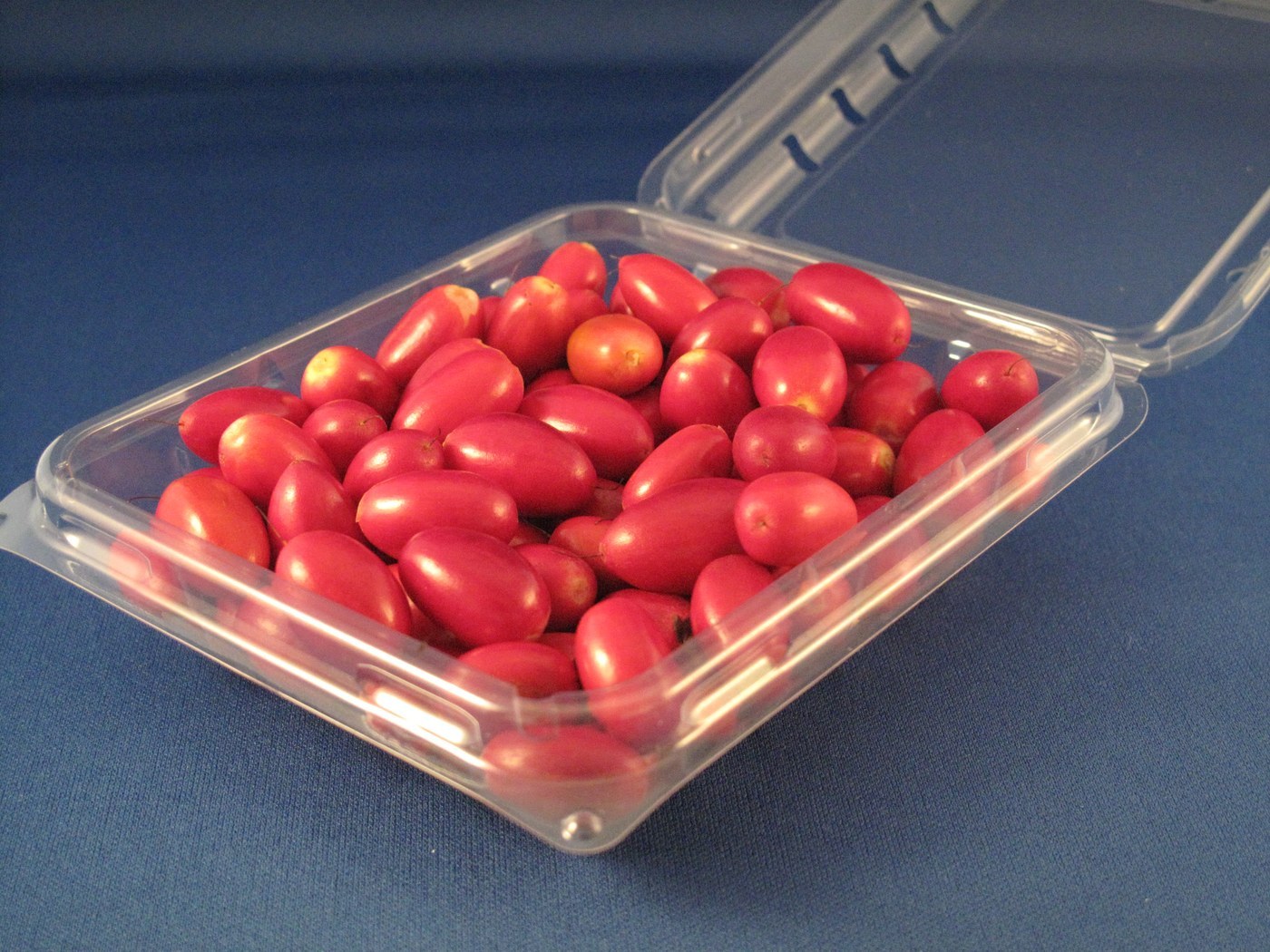
Key Identifying Features
Miracle fruit (Synsepalum dulcificum) is a slow-growing evergreen shrub or small tree in the sapote family (Sapotaceae), usually 5–10 feet tall (occasionally up to 18 feet in ideal conditions) with a dense, upright, bushy habit. The main visual clues are elongated dark leaves clustered at branch tips, tiny white flowers along the stems, and small oval red berries.
- Compact, woody, slow-growing bush
- Glossy dark green leaves bunched at the ends of twigs
- Bright red, olive-sized berries with a single seed
Leaves & Stems
Leaves are simple and alternate but crowded into rosette-like whorls at the branch tips, giving a tufted look. Each leaf is 2–4 inches long, spatulate to oblong (widest toward the tip), leathery, dark green and glossy above, paler beneath, with a slightly wavy margin and tapering base. New leaves emerge a lighter green. Stems are slender, woody, and reddish-brown when young, branching densely. The plant grows very slowly, often only a few inches per year.
Flowers & Fruit
Flowers are small (about 1/4 inch), white to creamy-brown, with a fused tubular calyx, borne in small clusters along the older woody stems and leaf axils, not just the tips. They can appear in several flushes per year. The fruit is the diagnostic feature: a bright red, ellipsoid berry roughly 1 inch long, resembling a small olive or coffee cherry, with thin shiny skin, a thin layer of whitish pulp, and a single large seed.
How to Tell It Apart from Look-Alikes
- Coffee plants (Coffea) also bear small red berries, but coffee has larger, opposite, distinctly veined leaves and berries with two seeds; miracle fruit has alternate clustered leaves and one seed.
- Barbados cherry / acerola has red fruit too but produces showy pink flowers and lobed, soft fruit, unlike the firm single-seeded miracle berry.
- Other Synsepalum species are similar, but S. dulcificum is the small bushy one with the bright red one-seeded berry.
The tuft of glossy spatulate leaves plus small red one-seeded berries on a slow, compact shrub is the giveaway.
Where You'll Find It
Native to tropical West Africa, miracle fruit needs acidic soil, warmth, and humidity and cannot tolerate frost. It is grown by hobbyists in containers and tropical gardens worldwide, including Florida, Hawaii, Southeast Asia, and greenhouses in cooler regions. Look for it as a potted patio specimen or understory shrub in humid, frost-free settings.
Quick ID Checklist
- Slow-growing, compact evergreen shrub
- Glossy dark spatulate leaves clustered at branch tips
- Tiny white-to-cream flowers along the stems
- Bright red oval berries, about 1 inch, single seed
- Acidic, warm, humid, frost-free conditions
Frequently asked questions
How can I be sure a red-berried shrub is miracle fruit?
Check for glossy spatulate leaves clustered at the branch tips, tiny white flowers along the stems, and bright red single-seeded oval berries on a slow-growing compact bush.
Could I confuse miracle fruit with a coffee plant?
They look superficially alike with small red berries, but coffee has larger opposite leaves and two-seeded berries, while miracle fruit has alternate tip-clustered leaves and a single seed.
What growing conditions does miracle fruit need?
It needs acidic soil, warmth, and high humidity and cannot tolerate frost, so it is usually grown as a potted shrub in tropical gardens or greenhouses in cooler regions.