
How to Care for Mock Orange
Grow Mock Orange (Philadelphus coronarius), a hardy deciduous shrub famous for its fragrant white late-spring blooms.
Read the full Mock Orange encyclopedia entry →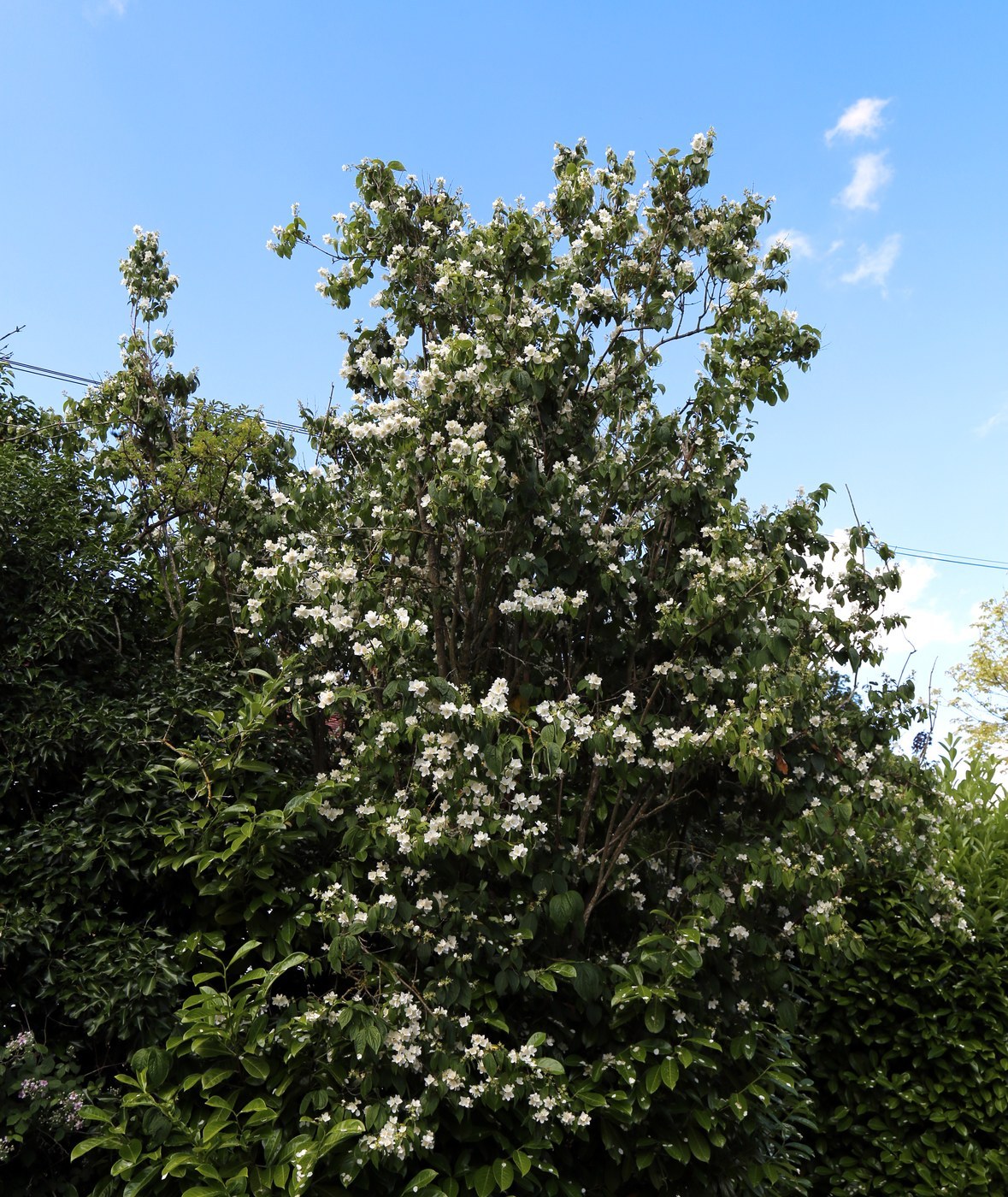
Mock Orange (Philadelphus coronarius) is a hardy, easygoing deciduous shrub beloved for its clouds of fragrant white flowers in late spring to early summer. Its citrus-scented blooms give it its name, and it makes a reliable backdrop or informal hedge.
Light
Grows best in full sun to part shade. Full sun produces the most abundant, fragrant blooms, while some afternoon shade is tolerated in hot climates. In too much shade, flowering thins out and the shrub becomes leggy. Aim for at least six hours of direct sun for the best floral display.
Water
Provide medium, even moisture, keeping the soil consistently moist but never waterlogged. Water deeply once or twice a week during the first year to establish the roots. Established shrubs are moderately drought-tolerant but flower and grow best with regular watering during dry spells. A layer of mulch helps retain even soil moisture.
Soil & Potting
Mock Orange is adaptable to most soils but prefers a well-drained, fertile loam with a neutral to slightly alkaline pH. It tolerates clay and sandy soils as long as drainage is adequate. Amend poor soils with compost at planting to improve structure and fertility.
Humidity & Temperature
A cold-hardy temperate shrub, typically thriving in USDA zones 4-8. It withstands harsh winters and handles a wide range of ambient humidity. No special humidity care is needed. Established plants are quite tolerant of both cold and summer heat.
Feeding
Feed once in early spring with a balanced granular fertilizer or a top-dressing of compost. Mock Orange is not a heavy feeder, and excess nitrogen encourages leafy growth at the expense of flowers. A single spring feeding is usually enough for good blooming.
Propagation
Easily propagated from softwood cuttings taken in early summer or hardwood cuttings in late fall. Root cuttings in moist, well-draining medium. It can also be layered by pinning a low branch to the soil until it roots, or grown from seed, though cuttings preserve the parent's flowering quality.
Repotting / Pruning
Prune right after flowering, since Mock Orange blooms on old wood (the previous year's growth). Remove spent flowering stems and thin out the oldest canes at the base to renew the shrub and improve air flow. Pruning in late winter or early spring will remove that season's flower buds, so always prune immediately after the bloom finishes.
Common Problems & Pests
Generally trouble-free. Watch for aphids on new growth, which can be rinsed off or treated with insecticidal soap, and occasional spider mites in hot dry weather. Powdery mildew and leaf spot may appear in humid conditions or crowded plantings; improve air circulation through thinning. Poor flowering usually traces to too much shade or ill-timed pruning.
Seasonal Care Tips
- Spring: Feed in early spring and enjoy the late-spring bloom; water during dry spells.
- Summer: Prune promptly after flowering and take softwood cuttings.
- Fall: Reduce watering; take hardwood cuttings; add mulch before winter.
- Winter: Fully hardy and dormant; avoid pruning now to preserve flower buds.
Frequently asked questions
When should I prune Mock Orange?
Prune right after it finishes flowering. Mock Orange blooms on old wood, so pruning in winter or early spring removes that year's flower buds and reduces blooming.
Why isn't my Mock Orange flowering?
The usual causes are too much shade, pruning at the wrong time (which removes flower buds), or excess nitrogen fertilizer. Give it full sun, feed lightly, and prune only just after flowering.
How much sun does Mock Orange need?
It flowers best in full sun with at least six hours of direct light, though it tolerates part shade. Deep shade leads to sparse blooms and leggy growth.
How do I propagate Mock Orange?
Take softwood cuttings in early summer or hardwood cuttings in fall and root them in moist, well-draining medium. Layering low branches also works well.