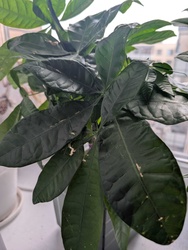
Money Tree Identification Guide
Identify the Money Tree (Pachira aquatica) by its hand-shaped clusters of five glossy leaflets and its signature braided green trunk.
Read the full Money Tree encyclopedia entry →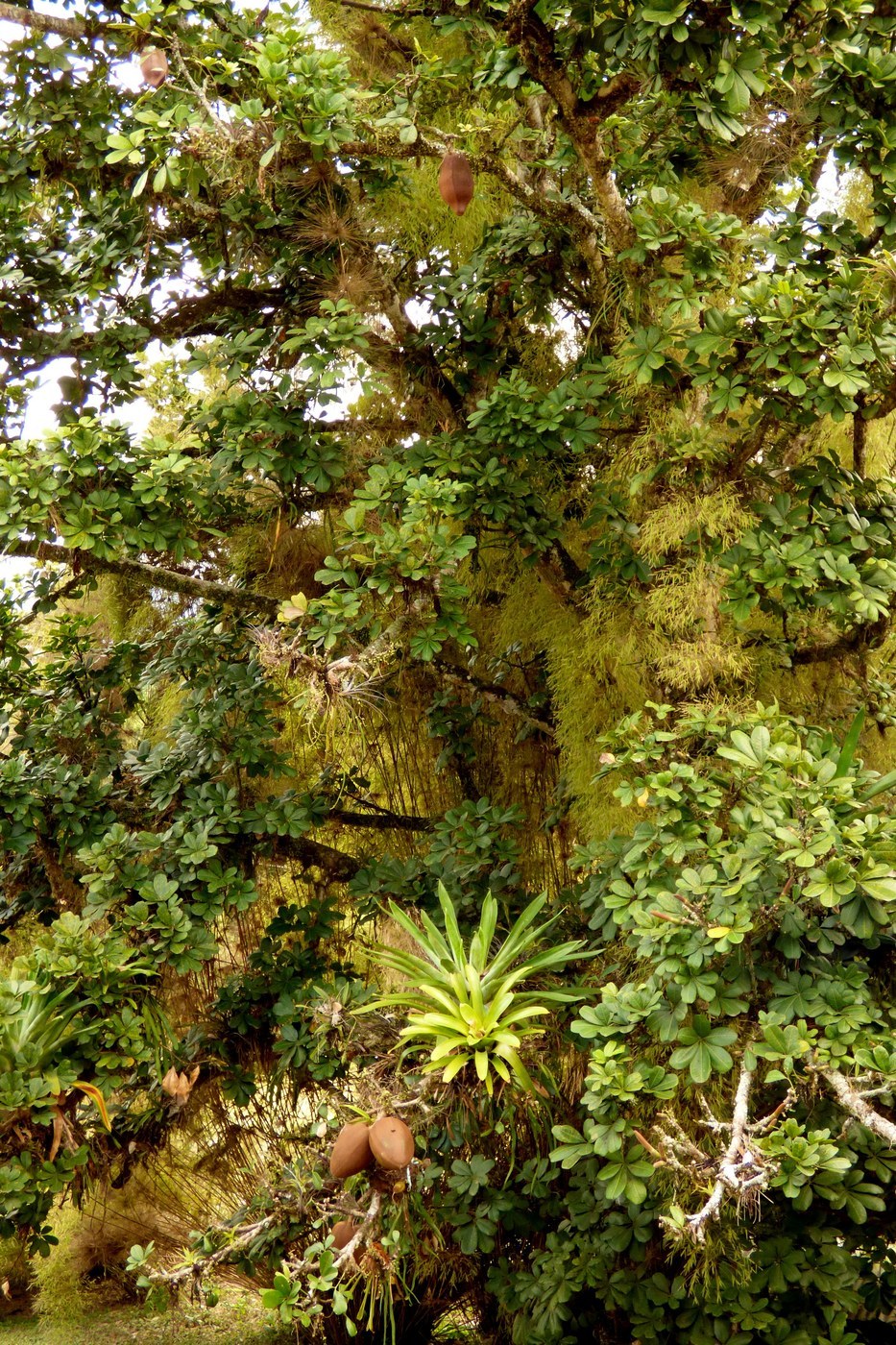
Key Identifying Features
The Money Tree (Pachira aquatica) is a popular good-luck houseplant easily identified by two features: palmate leaves with five (sometimes six or seven) leaflets radiating like fingers, and a braided trunk of several intertwined young stems.
- Palmate compound leaves — typically 5 glossy leaflets per leaf, like a hand
- A braided or twisted trunk of multiple green stems
- Smooth green-to-brown bark on young plants
- Bushy crown of foliage atop the braid
Leaves & Stems
Each leaf is palmately compound: leaflets spread from a single point at the tip of a long petiole, like the fingers of a hand or the spokes of an umbrella. Leaflets are lance- to oval-shaped, pointed, glossy green, and 5–7 in number. The trunk is the other giveaway — nurseries braid 3–7 supple young stems together while they are green and flexible, and the braid becomes fixed as they thicken. Single-trunk specimens also exist. Stems are green when young, turning grayish-brown with age.
Flowers & Fruit
In the wild, Money Trees produce dramatic flowers with long, showy creamy stamens that open like a fireworks burst, followed by large woody seed pods containing chestnut-like seeds (the species is also called Malabar chestnut or Guiana chestnut). Indoor braided plants almost never flower, so identify by leaves and trunk.
How to Tell It Apart from Look-Alikes
- Umbrella Tree (Schefflera): also has leaflets radiating from a point, but Schefflera leaflets are usually rounder, more numerous (often 7–16), and it does not have a braided trunk.
- Pachira glabra: a near-identical relative often sold as Money Tree; distinguished mainly by smaller flowers and smoother seed pods — the foliage is the same.
- The combination of five-fingered palmate leaves plus a braided green trunk is the classic Money Tree signature.
Where You'll Find It
Native to the swamps and wetlands of Central and South America, where it grows as a tall tree with water-tolerant roots. As a houseplant it is marketed worldwide as a feng-shui symbol of prosperity. It likes bright indirect light and consistent (not waterlogged) moisture; leaflets droop when thirsty and yellow when overwatered.
Quick ID Checklist
- Palmate leaves with ~5 glossy finger-like leaflets
- Braided or twisted trunk of several stems
- Green young bark turning brown with age
- Bushy foliage crown on a slim braid
- Rarely flowers indoors
Frequently asked questions
Why is the Money Tree's trunk braided?
Growers braid several young, flexible Pachira stems together while green; as they mature and thicken, the braid sets permanently. It is decorative and tied to the plant's good-luck symbolism.
How many leaflets should a Money Tree leaf have?
Most leaves have five glossy leaflets radiating from a single point, though six or seven can occur. A leaf with five 'fingers' is the classic identifying feature.
How is a Money Tree different from a Schefflera?
Both have leaflets radiating from a point, but Schefflera usually has more, rounder leaflets and no braided trunk, while the Money Tree has about five pointed leaflets and a braided stem.
Will my indoor Money Tree flower or fruit?
Rarely. Braided indoor specimens almost never bloom, but in the wild Pachira aquatica produces showy stamen flowers and woody pods with chestnut-like seeds.
Money Tree identified by the community
Recent Money Tree specimens identified with Plant Identifier.