
How to Care for Monstera Obliqua
A rare, delicate tropical climber with paper-thin, hole-riddled leaves that needs high humidity and gentle care.
Read the full Monstera Obliqua encyclopedia entry →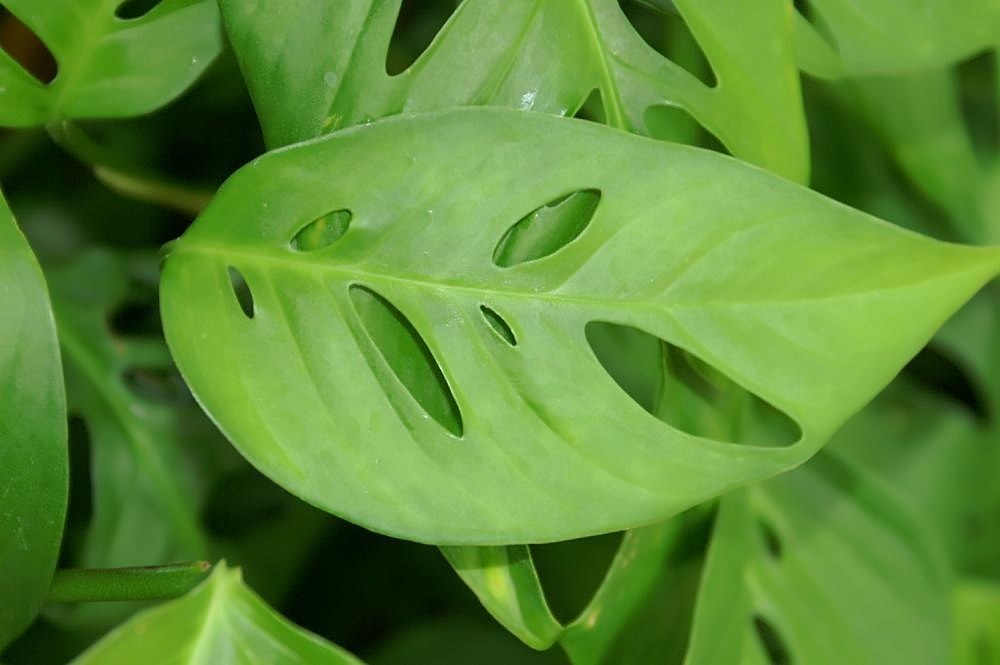
Monstera obliqua is a rare, delicate tropical aroid famous for its impossibly thin leaves that are often more hole than leaf. Wispy and slow, it is far more demanding than the common Swiss cheese plant it is confused with, and its need for constant high humidity makes it a challenging houseplant.
Light
Provide bright, indirect light. As a forest understory climber it never sees harsh direct sun, which scorches its paper-thin leaves. An east-facing window or a spot a few feet back from a brighter window is ideal. Too little light produces weak, sparse growth and fewer of the signature fenestrations.
Water
Keep the mix lightly and evenly moist, never soggy and never bone dry. The thin leaves have little reserve, so the plant sulks quickly if it dries out, yet its fine roots rot in waterlogged soil. Water when the top of the mix just begins to dry, using the finger test, and always let excess drain away freely.
Soil & Potting
Use a very airy, chunky aroid mix: orchid bark, perlite, coco coir, and a little sphagnum give the fine roots the oxygen and moisture balance they need. The mix should hold humidity yet drain fast. Always plant in a pot with drainage holes, and keep the plant in a modest-sized container since it resents sitting in too much wet soil.
Humidity & Temperature
High humidity is essential; this plant genuinely struggles below about 60 to 70 percent and is happiest in an enclosed case, terrarium, or greenhouse cabinet. Keep temperatures warm and steady, roughly 65 to 85F, and away from cold drafts, heating vents, and sudden swings. Dry household air is the most common cause of failure.
Feeding
Feed lightly during the active growing season, spring through summer, with a dilute, balanced liquid fertilizer at roughly quarter to half strength every few weeks. Its delicate roots are easily burned by strong fertilizer, so err on the weak side. Stop or reduce feeding in the low light of winter.
Propagation
Propagate from stem cuttings that include a node, or by separating the trailing stolons that root at their nodes. Root cuttings in damp sphagnum moss or water inside a humid, enclosed environment where the fragile new roots stay moist. Patience is essential, as this species is slow and cuttings can be temperamental.
Repotting / Pruning
Repot infrequently, only when the plant has clearly outgrown its pot, and disturb the fine roots as little as possible. Refresh the airy mix and move up just one pot size. Pruning is mostly limited to removing damaged leaves and trimming leggy stolons to encourage branching. Provide a moss pole or support for the climbing stems.
Common Problems & Pests
Crispy, browning leaf edges and stalled growth almost always signal humidity that is too low. Yellowing and mushy stems point to overwatering and root rot in a mix that stays too wet. Watch for spider mites, which thrive in dry air, along with thrips and mealybugs; inspect the delicate foliage often and treat promptly and gently.
Seasonal Care Tips
Growth is fastest in the warm, brighter months, when steady humidity, gentle feeding, and even moisture matter most. In winter, growth slows dramatically; ease off feeding, water a bit less, and guard against dry, heated indoor air and cold windowsills that can quickly damage the thin leaves. Consistency year-round is the key to keeping this finicky plant alive.
Frequently asked questions
Why are my Monstera obliqua leaves turning crispy?
Crispy, browning edges almost always mean the air is too dry. This species needs consistently high humidity, ideally 60 to 70 percent or more. An enclosed case, terrarium, or humid cabinet usually solves the problem where open room air cannot.
How is Monstera obliqua different from Monstera adansonii?
Obliqua has extremely thin, papery leaves that are often mostly holes, grows slowly, and is far more demanding of humidity. The much more common adansonii has thicker, sturdier leaves with smaller holes and is far easier to grow indoors.
Why is my Monstera obliqua so slow?
Slow growth is normal for this species, especially if light is only moderate or the season is cool. Provide bright indirect light, warmth, steady high humidity, and gentle feeding in the growing season to encourage the best growth it can manage.
What kind of soil does Monstera obliqua need?
Use a very airy, chunky aroid mix of orchid bark, perlite, coco coir, and a little sphagnum in a pot with drainage. The mix must hold some moisture for the fine roots while draining fast enough to prevent the rot that soggy soil causes.