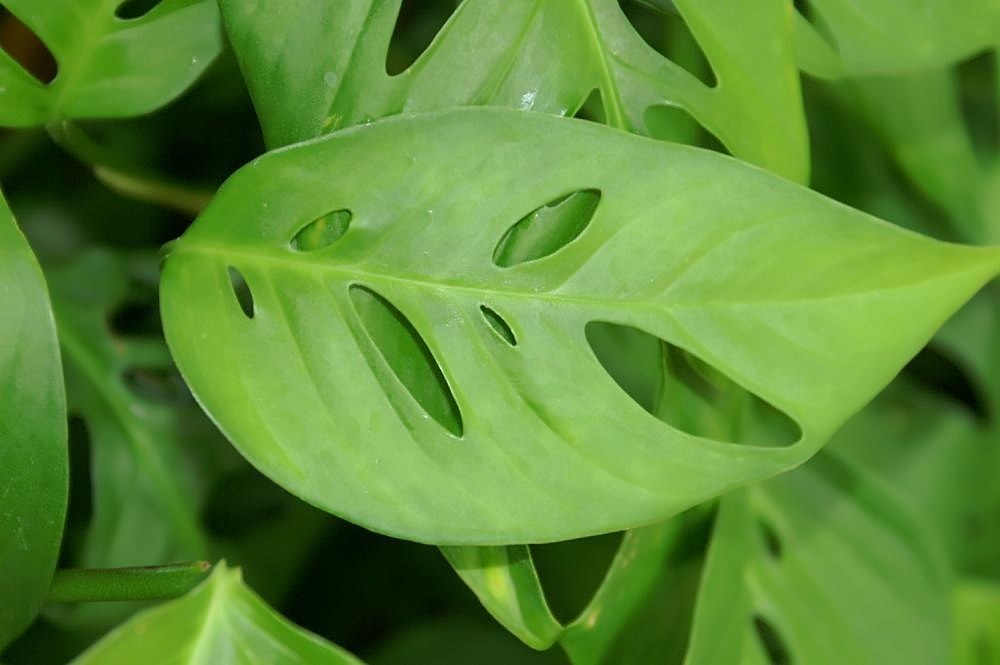
Monstera Obliqua
Monstera obliqua
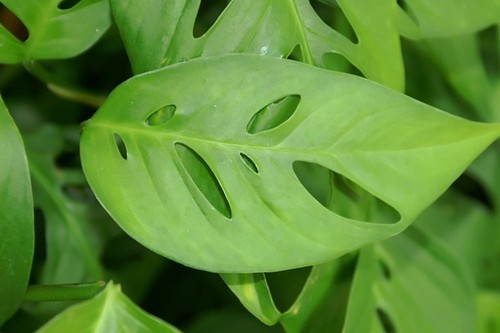
A rare, almost mythical Monstera whose paper-thin leaves are more hole than leaf, with fenestrations covering up to 90% of the blade. Often confused with the common adansonii, true obliqua is extremely rare.
- Light
- Bright indirect light
- Water
- Keep lightly moist
- Difficulty
- Hard
Got a plant like this?
Identify any plant from a photo, free.
Overview
Monstera obliqua is the legendary 'holy grail' Monstera, famous for leaves so heavily fenestrated they can be up to 90% holes — wafer-thin blades reduced to delicate green lace.
Most plants sold as 'obliqua' are actually the far more common and robust Monstera adansonii. True obliqua is rare in cultivation, slow-growing, delicate, and demands near-greenhouse humidity, making it a challenge reserved for serious collectors.
How to identify it
- Leaves: Extremely thin, papery, with massive fenestrations covering most of the blade
- Texture: Tissue-thin and fragile (adansonii leaves are thicker and leathery)
- Habit: Slender, slow-growing trailing/climbing vine with stolons (runners)
- Size: Small leaves on thin, delicate stems
- Tip: If the leaf is thick and sturdy, it is almost certainly adansonii, not obliqua
Care & growing
Light: Bright, indirect light; never direct sun.
Water: Keep lightly and consistently moist — its thin leaves dry out fast — but with excellent drainage.
Soil: Airy, moisture-retentive aroid mix; often grown in sphagnum.
Humidity & temp: Demands very high humidity (80%+), best in a terrarium or grow cabinet, with steady warmth.
Feeding: Very dilute, light feeding in the growing season.
Propagation: Via stolons/runners or stem cuttings; slow and delicate.
Habitat & origin
Native to Central and South American rainforests, ranging from Panama into the Amazon basin, where it grows as a delicate climbing and creeping vine in deep shade and very high humidity.
In cultivation true obliqua is rare and typically grown in terrariums or grow cabinets that replicate its humid forest-floor habitat.
Frequently asked questions
Do I really have a Monstera obliqua?
Probably not — most plants sold as obliqua are Monstera adansonii. True obliqua has paper-thin leaves that are mostly holes and is very rare and expensive.
Why is it so hard to grow?
Its tissue-thin leaves need extremely high humidity and constant gentle moisture, so it usually requires a terrarium or grow cabinet.
How fast does it grow?
Very slowly, often spreading by thin runners. Patience is essential with this species.
How can I tell it apart from adansonii?
Obliqua leaves are tissue-thin and mostly holes, while adansonii leaves are thicker, leathery, and more sturdy.
Monstera Obliqua guides
In-depth guides for identifying, growing, and caring for Monstera Obliqua.