
Monstera Obliqua Identification Guide
Identify the rare Monstera obliqua by its paper-thin leaves that are more hole than leaf, on a delicate trailing vine.
Read the full Monstera Obliqua encyclopedia entry →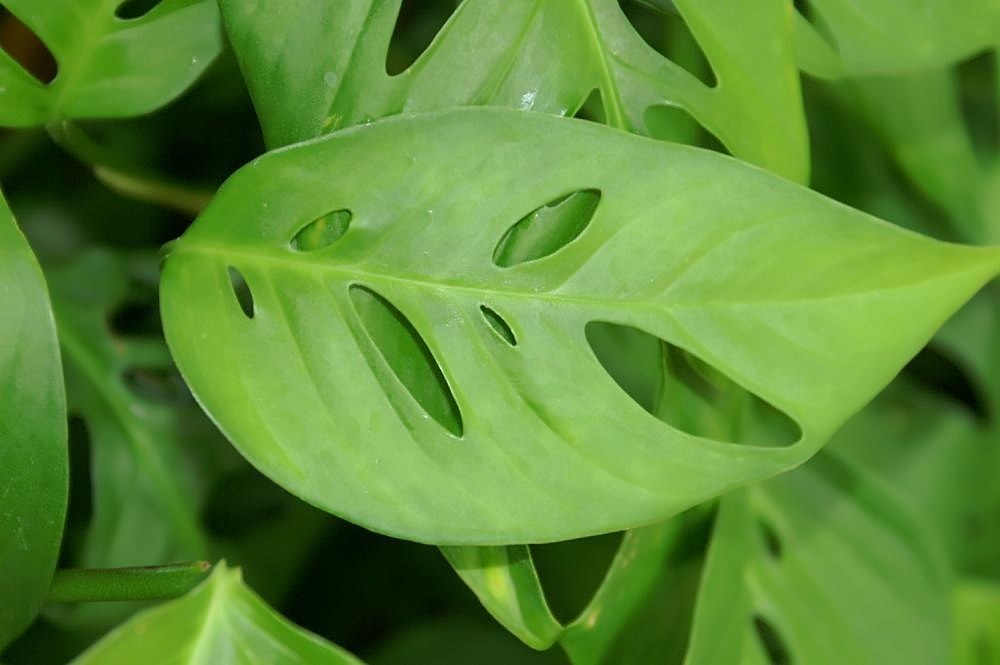
Key Identifying Features
Monstera obliqua (especially the famous 'Peru' form) is a rare, delicate aroid often confused with adansonii. Identify it by:
- Extremely thin, papery, fragile leaves
- Fenestrations so large the leaf is mostly hole (sometimes 90% open space)
- Small leaf size on a wispy, runner-like vine
- Long stolons (leafless runners) between leaves
Leaves & Stems
The hallmark is leaves that are more hole than tissue: the fenestrations are enormous relative to the remaining thin strips of green, and the blade is tissue-paper thin and easily torn. Leaves are small (often just a few inches) and asymmetric ('obliqua' means oblique/lopsided base). The plant produces long, thin stolons (creeping runners) with widely spaced leaves, giving a sparse, spidery look. Growth is slow and dainty, very different from robust Monstera. True obliqua is uncommon and almost always the 'Peru' clone in cultivation.
Flowers & Fruit
As an aroid it can theoretically produce a spathe-and-spadix, but flowering is essentially never seen in houseplant cultivation. Grown purely as a rare collector foliage plant.
How to Tell It Apart from Look-Alikes
- Monstera adansonii (the usual impostor): leaves are thicker, larger, and have proportionally more green tissue between holes; adansonii is vigorous and common. Obliqua is thin, lacy, slow, and rare.
- Rule of thumb: if it is robust, cheap, and easy to grow, it is almost certainly adansonii, not obliqua.
- Monstera esqueleto: large, thin, holey leaves but much bigger than obliqua.
The paper-thin, mostly-hole, tiny leaves on thin runners confirm true obliqua.
Where You'll Find It
Native across Central and South America, growing as a climbing/creeping hemiepiphyte in humid forest. In cultivation it is a rare, pricey collector plant demanding high humidity (often a terrarium) and gentle care due to fragile foliage. You will rarely find it in general retail; most plants sold as 'obliqua' are actually adansonii.
Quick ID Checklist
- Paper-thin, fragile leaves
- Leaves more hole than green
- Small leaf size
- Long thin stolons between leaves
- Slow, dainty growth
- Asymmetric (oblique) leaf base
Frequently asked questions
How do I know if I really have obliqua and not adansonii?
True obliqua has paper-thin leaves that are mostly hole, small in size, on thin runners, and grows slowly. If your plant is thick-leaved, vigorous, and inexpensive, it is almost certainly Monstera adansonii.
Why is Monstera obliqua so expensive and rare?
It is genuinely uncommon in the trade, grows slowly, and is difficult to propagate, so authentic plants (usually the 'Peru' form) command high prices.
What does 'obliqua' refer to?
The name refers to the lopsided, asymmetric (oblique) base of the leaf.
Does obliqua need special care?
Yes. Its delicate, paper-thin foliage needs consistently high humidity, often a terrarium or enclosed environment, and gentle handling.