
How to Care for Monstera Thai Constellation
Care tips for the prized creamy-variegated Monstera Thai Constellation: bright indirect light, careful watering, and support.
Read the full Monstera Thai Constellation encyclopedia entry →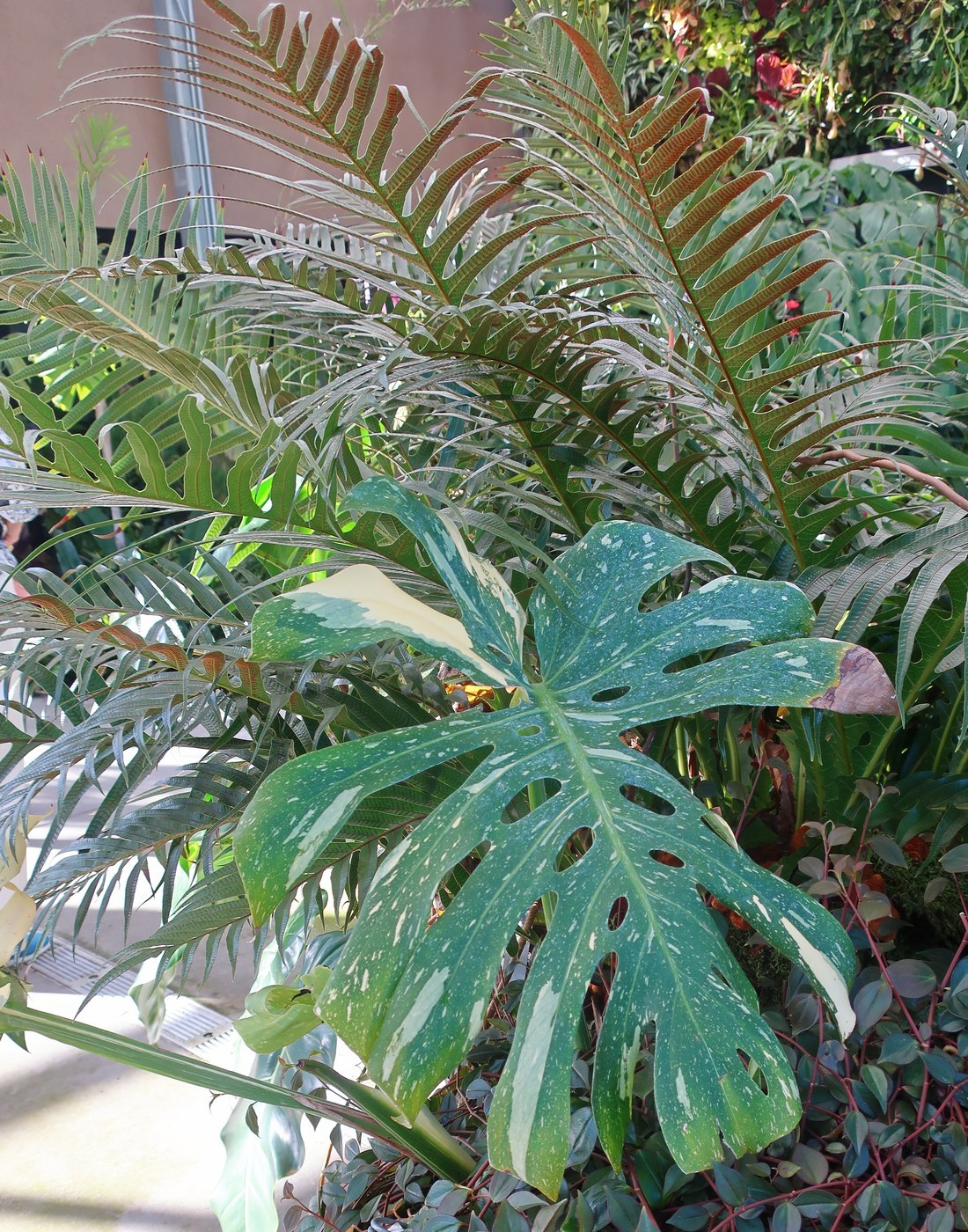
Monstera Thai Constellation (Monstera deliciosa 'Thai Constellation') is a coveted, stable variegated cultivar splashed with creamy-yellow and speckled 'galaxy' markings. Because that pale tissue contains little chlorophyll, this plant grows more slowly and demands a bit more attention than the plain green Monstera, making it a moderate-difficulty houseplant.
Light
Give Thai Constellation bright, indirect light, which is essential for both healthy growth and preserving crisp variegation. The green portions of the leaves do all the photosynthesis, so more light than a standard Monstera is beneficial, but the creamy sections scorch easily. Keep it near a bright window with sheer-filtered sun, and avoid harsh direct rays that can brown the pale patches.
Water
Water when the top 2-3 cm of soil feels dry, keeping the mix lightly moist but never soggy. The reduced chlorophyll means the plant uses water more slowly, so overwatering is a real risk, especially in lower light. Let excess drain away fully and never leave the pot standing in water. Reduce frequency in winter.
Soil & Potting
Use a chunky, airy aroid mix: potting soil combined with orchid bark, perlite, and coconut coir or charcoal to create plenty of air pockets around the roots. Good drainage is critical to prevent root rot. Choose a pot with drainage holes, sized only slightly larger than the root ball.
Humidity & Temperature
Thai Constellation thrives in moderate to high humidity, ideally 60% or more, which supports lush leaves and reduces browning of the variegated edges. Keep temperatures between roughly 18-27 C (65-80 F) and protect it from cold drafts and sudden temperature swings. A pebble tray, room humidifier, or grouping with other plants helps in dry indoor air.
Feeding
Feed with a balanced, diluted liquid fertilizer roughly every 2-4 weeks during spring and summer. Because growth is slower, avoid over-feeding, which causes salt buildup and can brown the delicate cream tissue. Pause feeding in fall and winter when the plant rests.
Propagation
Propagate from stem cuttings that include at least one node and, ideally, some existing variegation. Root cuttings in water, damp sphagnum moss, or perlite with warmth and humidity. Because this is a stable, tissue-cultured cultivar, offspring reliably retain the variegated trait, unlike unstable variegated Monsteras. Rooting can be slow, so keep conditions warm and bright.
Repotting / Pruning
Repot every 1-2 years or when roots outgrow the container, moving up just one size. Provide a moss pole or trellis to support the climbing habit and encourage larger, more fenestrated leaves. Prune to remove any fully cream leaves that lack chlorophyll and cannot sustain themselves, and to shape or control size. Always use clean, sharp tools.
Common Problems & Pests
Brown, crispy patches on the variegated areas usually stem from too much direct sun, low humidity, or inconsistent watering. Yellowing leaves often signal overwatering. Fully white leaves may brown and die back because they cannot photosynthesize. Watch for spider mites, thrips, mealybugs, and scale, especially in dry conditions, and treat promptly at the first sign.
Seasonal Care Tips
In spring and summer, provide steady bright light, consistent watering, regular feeding, and support to fuel active growth and the best new variegation. In fall and winter, ease off water and stop feeding as growth slows, and keep the plant away from cold windows and heating vents. Maintain humidity year-round for the healthiest foliage.
Frequently asked questions
Why does Thai Constellation grow so slowly?
Its creamy variegated tissue contains little chlorophyll, so the plant photosynthesizes less than an all-green Monstera. Bright indirect light helps the green portions work efficiently and speeds growth as much as possible.
Will Thai Constellation lose its variegation?
No. It is a stable, tissue-cultured cultivar, so the galaxy-like variegation is reliably inherited by cuttings and new growth, unlike unstable variegated Monsteras that can revert.
Why are the cream patches turning brown and crispy?
The pale tissue is delicate and scorches easily from direct sun, low humidity, or erratic watering. Provide filtered bright light, raise humidity, and keep soil moisture consistent.
Should I cut off an all-white leaf?
Yes. A fully cream leaf has no chlorophyll, cannot sustain itself, and will eventually brown and die. Removing it lets the plant direct energy to leaves that can photosynthesize.