How to Care for Monterey Cypress
Grow Monterey Cypress, a fast, salt-tolerant coastal conifer that thrives in full sun and shrugs off drought once its roots settle in.
Read the full Monterey Cypress encyclopedia entry →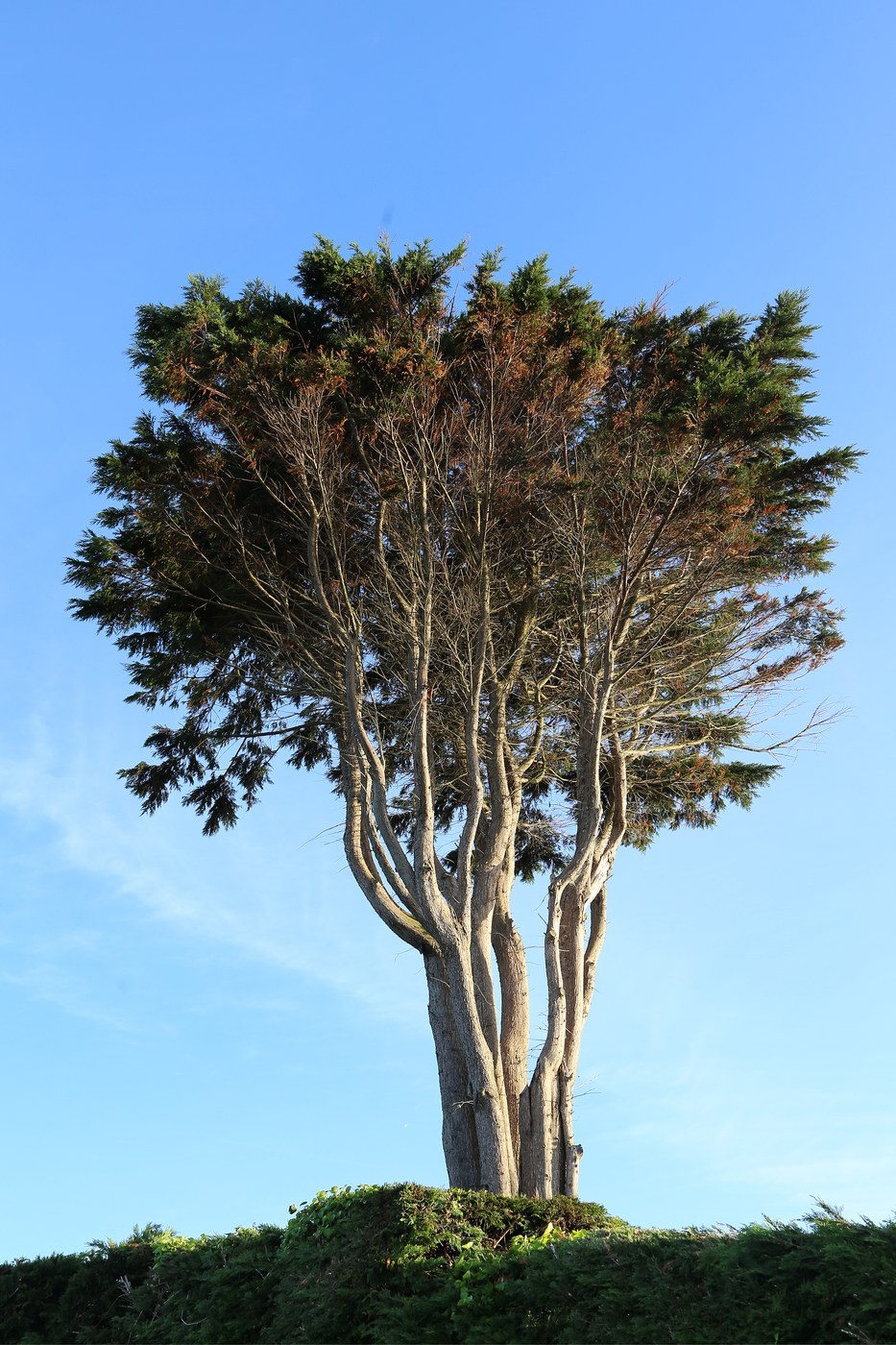
Monterey Cypress (Hesperocyparis macrocarpa) is a fast-growing coastal conifer prized for its dense, wind-sculpted form and rich green to golden foliage. It is an easy, resilient tree once established, well suited to seaside gardens, screens, and specimen planting in mild climates.
Light
Give Monterey Cypress full sun for the densest growth and best form. It tolerates a bit of light shade but becomes open and leggy without strong light. Coastal exposure with plenty of direct sun and moving air suits it perfectly.
Water
Water young trees regularly through their first one to two seasons to build a deep root system. Once established, this cypress is markedly drought tolerant and needs little to no supplemental irrigation in temperate coastal conditions. In hot inland sites, deep occasional soaks during prolonged dry spells keep it looking fresh. Avoid chronically soggy soil, which invites root problems.
Soil & Potting
Plant in well-drained soil; sandy and gravelly coastal soils are ideal. It tolerates a wide pH range and poor, lean ground. The key requirement is drainage - heavy, waterlogged clay is the main cause of decline. In containers (for young or bonsai specimens) use a gritty, free-draining conifer mix.
Humidity & Temperature
This is a mild-climate, maritime tree happiest in cool, moist coastal air with moderate temperatures. It handles wind, salt spray, and fog exceptionally well. It is not deeply frost-hardy and prefers regions without severe, prolonged freezes. Hot, dry inland heat is tolerated only with some irrigation.
Feeding
Monterey Cypress needs little feeding. On very poor soils, a single light application of a slow-release, balanced or conifer-formulated fertilizer in early spring supports young trees. Mature specimens generally need none - overfeeding produces weak, floppy growth.
Propagation
Propagate from seed collected from mature cones; seed germinates readily after a short cold-moist period. Semi-hardwood cuttings can be rooted under mist, though success is more variable than with seed. Named golden cultivars are usually grown from cuttings or grafts to keep their color true.
Repotting / Pruning
In the ground it needs little pruning beyond removing dead, damaged, or crossing branches. It responds well to shearing and is often clipped as a hedge or screen; prune in late winter to early spring before the main flush. Container and bonsai specimens can be repotted every two to three years in early spring, refreshing the gritty mix and trimming circling roots.
Common Problems & Pests
The most serious issue is coryneum (cypress) canker, a fungal disease causing branch dieback and resinous, sunken lesions, especially on stressed trees in hot, dry inland settings. Prune out and dispose of affected wood and keep trees vigorous. Spider mites and cypress aphids can cause browning, particularly on sheared hedges; rinse foliage and improve airflow. Root rot follows poor drainage. Choosing a cool, breezy, well-drained site prevents most trouble.
Seasonal Care Tips
Plant in autumn or early spring so roots establish before summer heat. Water new plantings through the first dry season. Do formative pruning and hedge shearing in late winter to early spring. Inspect for canker and aphids during warm, dry weather and act promptly on any dieback.
Frequently asked questions
How fast does Monterey Cypress grow?
It is a vigorous, fast grower, often adding two to three feet or more per year when young in a favorable coastal site with full sun and adequate early watering.
Can Monterey Cypress handle salty coastal wind?
Yes. It is one of the most salt- and wind-tolerant conifers, naturally growing on exposed coastal headlands and shrugging off salt spray and fog.
Why is my Monterey Cypress turning brown?
Browning is usually from cypress canker (branch dieback with resinous lesions), aphid or mite feeding, or drought stress inland. Prune out dead wood, boost airflow, and water during dry spells.
Does Monterey Cypress make a good hedge?
It responds well to shearing and is widely used for tall screens and hedges in mild coastal climates. Shear in late winter to early spring and keep plants vigorous to limit canker.
Monterey Cypress identified by the community
Recent Monterey Cypress specimens identified with Plant Identifier.