Monterey Cypress
Hesperocyparis macrocarpa
Monterey Cypress is a wind-sculpted evergreen conifer native to a tiny stretch of the California coast, famous for the gnarled trees of the Monterey Peninsula. It is widely planted for hedging and shelter in mild climates.
- Light
- Full sun
- Water
- Low to moderate; drought tolerant once established
- Difficulty
- Easy
Got a plant like this?
Identify any plant from a photo, free.
Overview
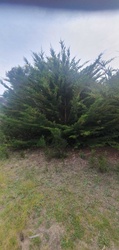
Monterey Cypress (Hesperocyparis macrocarpa, long known as Cupressus macrocarpa) is an evergreen conifer naturally restricted to two small groves on the central California coast, including the iconic windswept trees of Cypress Point and the Monterey Peninsula.
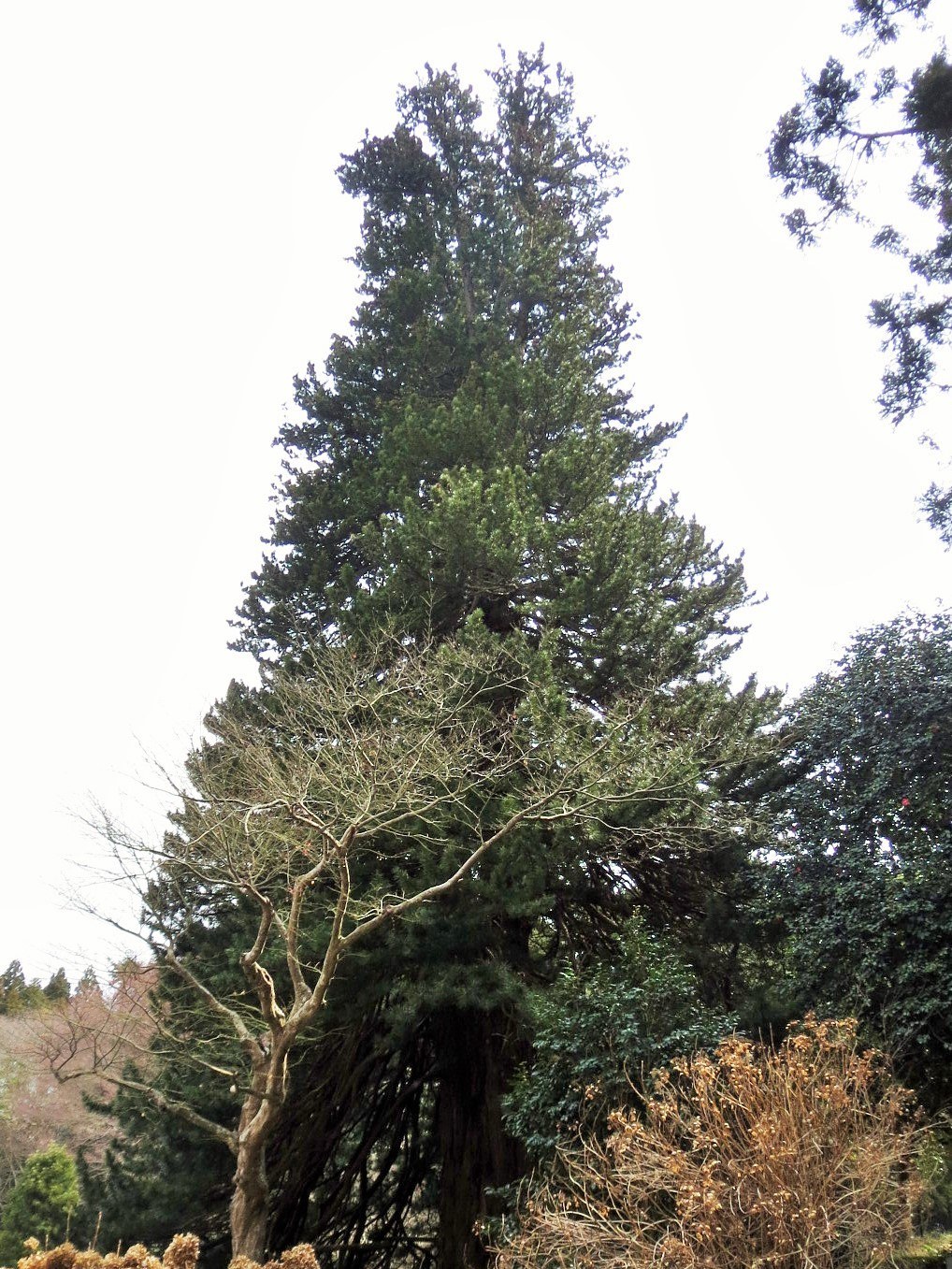
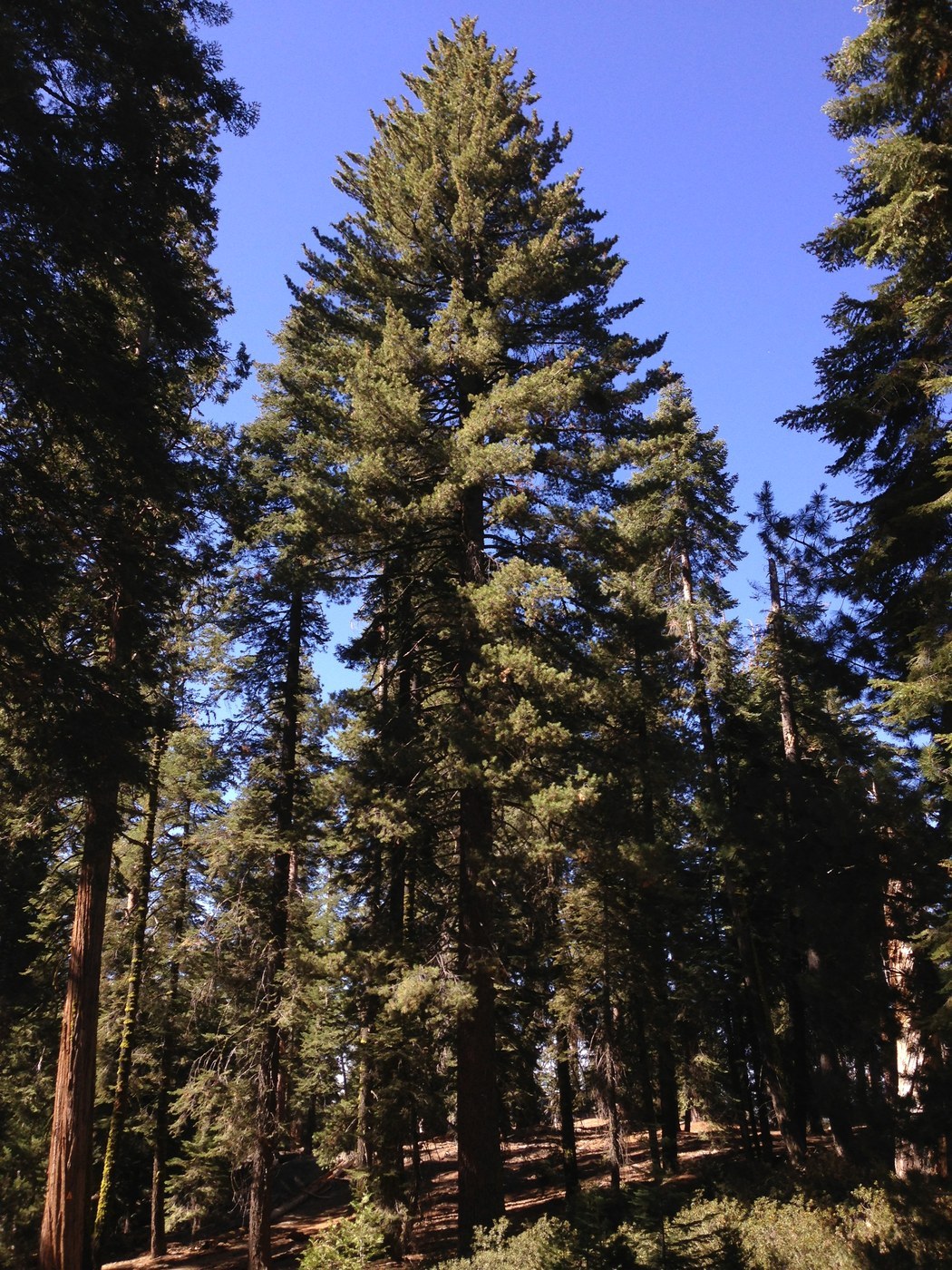
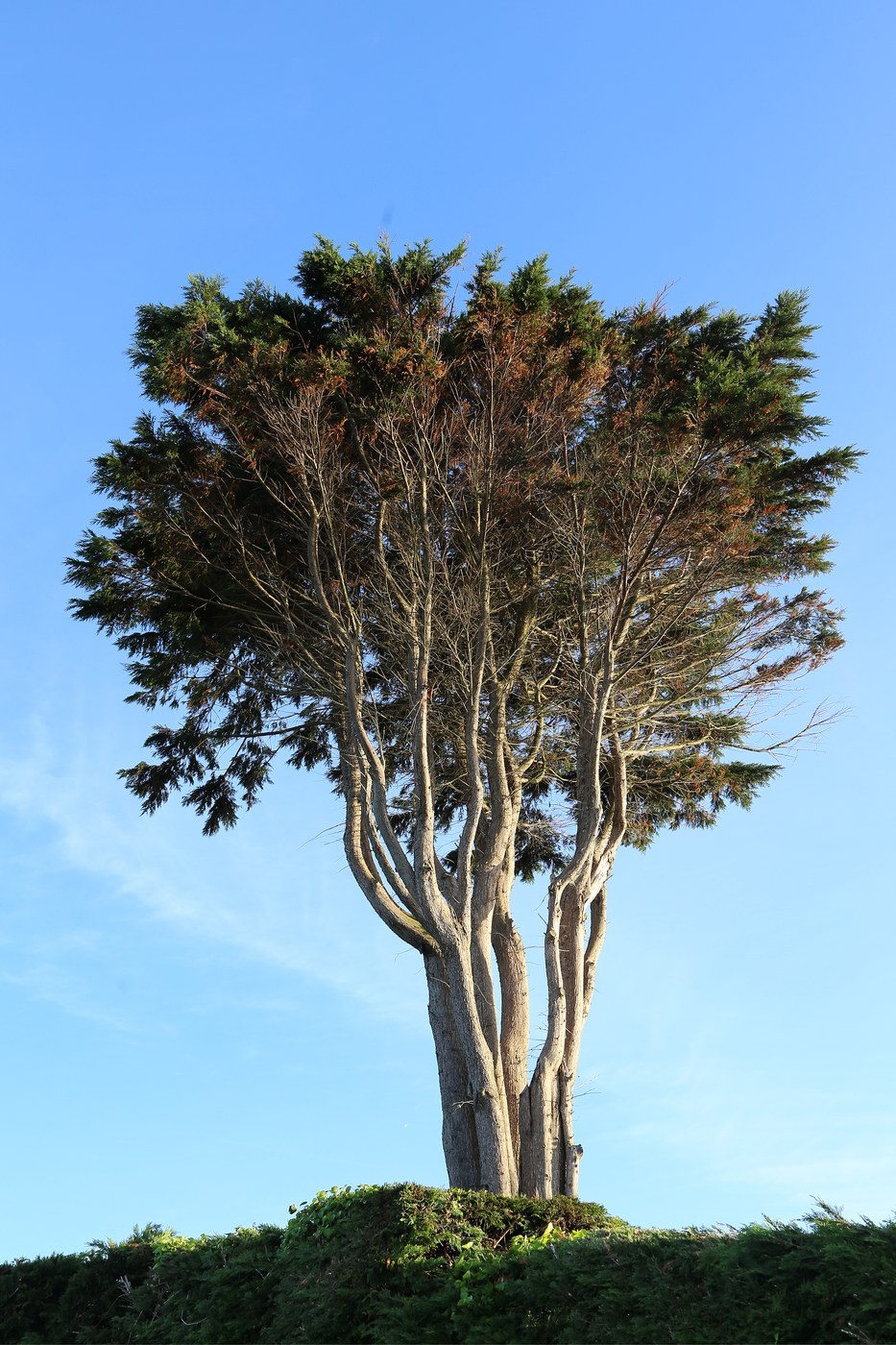
In shelter it grows tall and conical to 70 feet or more, but exposed coastal specimens become broad, flat-topped, and dramatically wind-sculpted.
Despite its tiny native range it is widely cultivated as a fast hedge, shelterbelt, and ornamental, and gold cultivars such as 'Goldcrest' are sold as Lemon Cypress.
How to identify it
- Foliage: Dense sprays of tiny, scale-like, bright to deep green leaves with a faint lemony scent when crushed
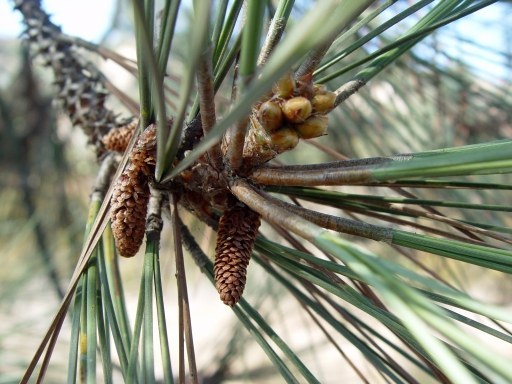
- Cones: Round, woody, gray-brown cones about 1 to 1.5 inches across with knobby scales, remaining on the tree for years
- Bark: Gray-brown, ridged and fibrous, becoming rugged with age
- Habit: Tall and conical when sheltered; broad, spreading, and flat-topped when exposed to coastal wind
- Cultivars: Golden forms ('Goldcrest', 'Wilma') are the familiar Lemon Cypress
Care & growing
Easy and fast in mild, especially coastal, climates.
- Light: Full sun
- Water: Moderate when establishing; drought and salt tolerant once rooted in
- Soil: Tolerates a wide range with good drainage; handles sandy coastal soils
- Temperature: Best in mild maritime climates, roughly USDA zones 7 to 10; dislikes harsh cold and hot humid interiors
- Feeding: Rarely needed
- Propagation: From seed or cuttings (cultivars from cuttings)
It is excellent for fast coastal hedges and windbreaks but can be susceptible to coryneum canker in hot, dry inland sites.
Habitat & origin
Native only to two small natural groves on the central California coast near Monterey, where it endures salt spray, fog, and strong wind on rocky headlands.
It is now widely planted in mild coastal and Mediterranean climates worldwide, including New Zealand, Australia, and the British Isles, for shelterbelts and hedging.
Frequently asked questions
Is Lemon Cypress the same as Monterey Cypress?
Yes. Lemon Cypress is a golden cultivar ('Goldcrest') of Monterey Cypress, selected for bright yellow, lemon-scented foliage.
Why are wild Monterey Cypress trees so twisted?
Trees on exposed coastal headlands are sculpted by constant salt-laden wind, which gives them broad, flat-topped, gnarled forms; sheltered trees grow tall and conical.
Is Monterey Cypress good for hedging?
Yes. It grows fast and tolerates wind and salt, making it a popular coastal hedge and shelterbelt, though it needs a mild climate and good drainage.
How big does Monterey Cypress get?
In shelter it can reach 70 feet or more, while exposed coastal trees stay broader and lower; cultivars and hedges are kept much smaller.
Monterey Cypress guides
In-depth guides for identifying, growing, and caring for Monterey Cypress.
How to Care for Monterey Cypress
Grow Monterey Cypress, a fast, salt-tolerant coastal conifer that thrives in full sun and shrugs off drought once its roots settle in.
Monterey Cypress Identification Guide
Identify Monterey Cypress (Cupressus macrocarpa) by its dense green scale foliage, large round woody cones, and wind-sculpted coastal form.
Monterey Cypress identified by the community
Real specimens identified with Plant Identifier.