
Monterey Pine Identification Guide
Identify Monterey Pine (Pinus radiata) by its bright green needles in bundles of three, large lopsided cones that stay closed for years, and dark furrowed bark.
Read the full Monterey Pine encyclopedia entry →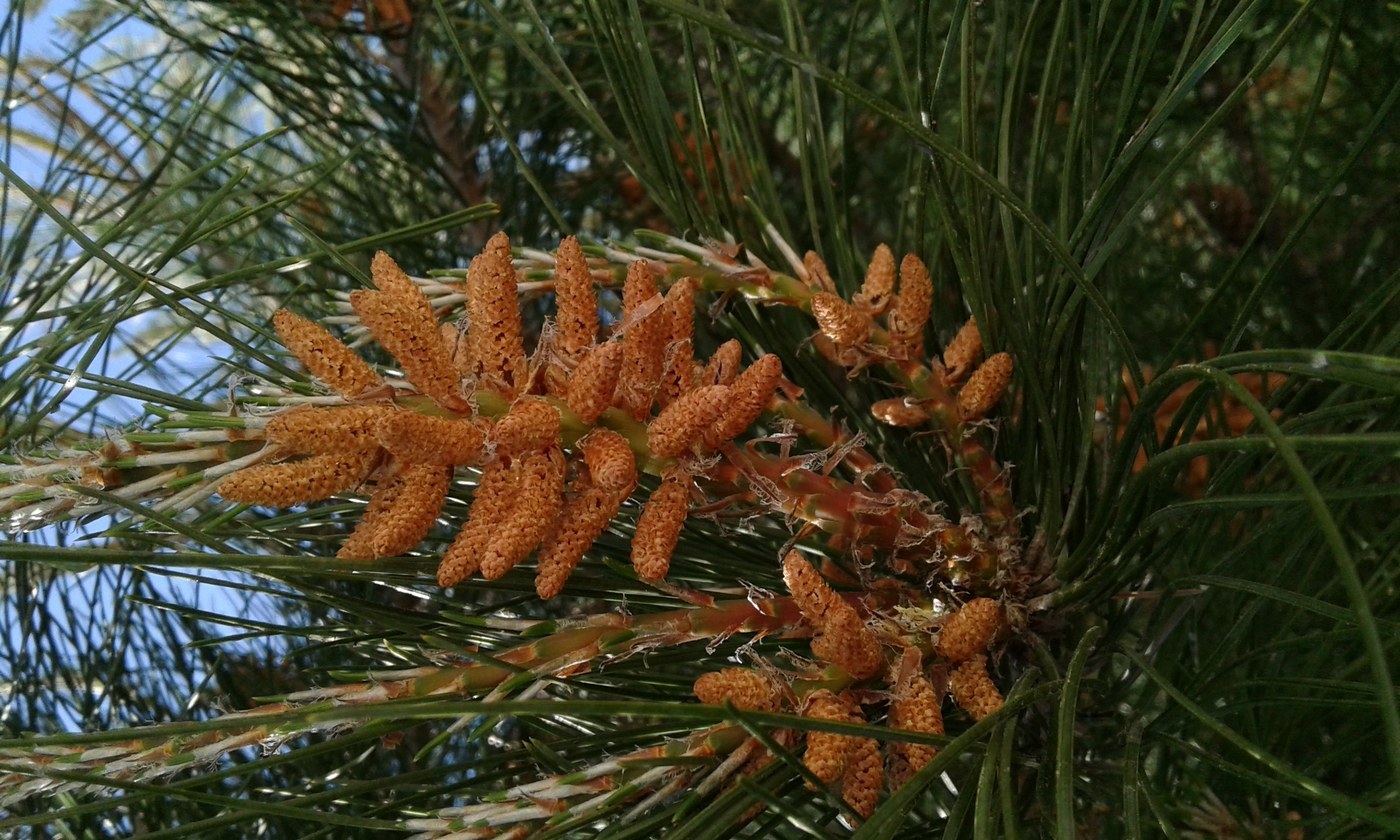
Key Identifying Features
Monterey Pine (Pinus radiata) is a fast-growing pine with a tiny native range in coastal California but planted enormously worldwide for timber. Identify it by bright grass-green needles in bundles of three, large, heavy, asymmetrical cones that cling to the branches and trunk for years, and dark gray-brown deeply furrowed bark.
- Needles in fascicles of three (occasionally two)
- Fresh, bright green slender needles
- Large lopsided cones held in whorls on branches and even the trunk
- Broad, often dome-shaped or irregular crown in maturity
Leaves & Stems
Needles are 3-6 inches long, slender, soft-ish, and bright green, grouped three per bundle in a persistent sheath. The lively green color and three-needle bundles are a good first cue. Twigs are orange-brown when young. Bark on mature trunks is thick, dark gray-brown to nearly black, and deeply furrowed into ridges.
Flowers & Fruit
Monterey Pine produces yellow pollen cones in spring. Its seed cones are large, 3-6 inches long, egg-shaped, and strongly asymmetrical (lopsided), with the scales on the outer side enlarged and rounded. Cones are serotinous — they stay closed and attached for many years, often in whorls clustered around branches and the trunk, opening gradually or after heat. This clustered, persistent cone habit is highly distinctive.
How to Tell It Apart from Look-Alikes
- Bishop Pine (Pinus muricata): needles in twos, cones with sharp spurs — Monterey has three needles.
- Knobcone Pine (Pinus attenuata): three needles but very tightly closed knob-like cones swept back along the branch.
- Ponderosa Pine: longer needles and much larger non-clustered cones with thick orange plated bark.
- Aleppo / Canary Island Pine (planted): differ in needle number/length and cone shape.
Bright three-needle bundles plus large lopsided cones clinging in clusters to the branches confirm Monterey Pine.
Where You'll Find It
Natively restricted to a few coastal California sites (Monterey/Año Nuevo, Cambria) and two Mexican islands, in the cool, foggy coastal zone. Outside its native range it is one of the most planted timber pines worldwide — especially New Zealand, Australia, Chile, and Spain — and is common in California parks and windbreaks.
Quick ID Checklist
- Bright green needles in bundles of three
- Large asymmetrical egg-shaped cones
- Cones closed and clustered on branches/trunk for years
- Dark, deeply furrowed bark
- Coastal California native; widely planted plantations
Bright three-needle foliage and big lopsided cones glued to the branches identify Monterey Pine.
Frequently asked questions
How many needles does Monterey Pine have per bundle?
Three. The bright green needles come in bundles of three, which helps separate it from the two-needled Bishop Pine that shares its coastal range.
Why do the cones stay on the tree so long?
Monterey Pine cones are serotinous, sealed with resin so they remain closed and attached for years, often in clusters around branches and the trunk, opening with heat or age.
Why is a California native so common overseas?
Despite its tiny natural range, Monterey Pine grows extremely fast and straight in mild climates, making it the backbone of plantation forestry in New Zealand, Chile, and Australia.
How do I tell it from Ponderosa Pine?
Monterey has shorter bright green three-needle bundles and large lopsided clustered cones, while Ponderosa has very long needles, larger isolated cones, and thick orange plated bark.