
How to Care for Moonflower
Grow Moonflower for its huge, fragrant white blooms that open at dusk. Care tips on sun, watering, support and propagation.
Read the full Moonflower encyclopedia entry →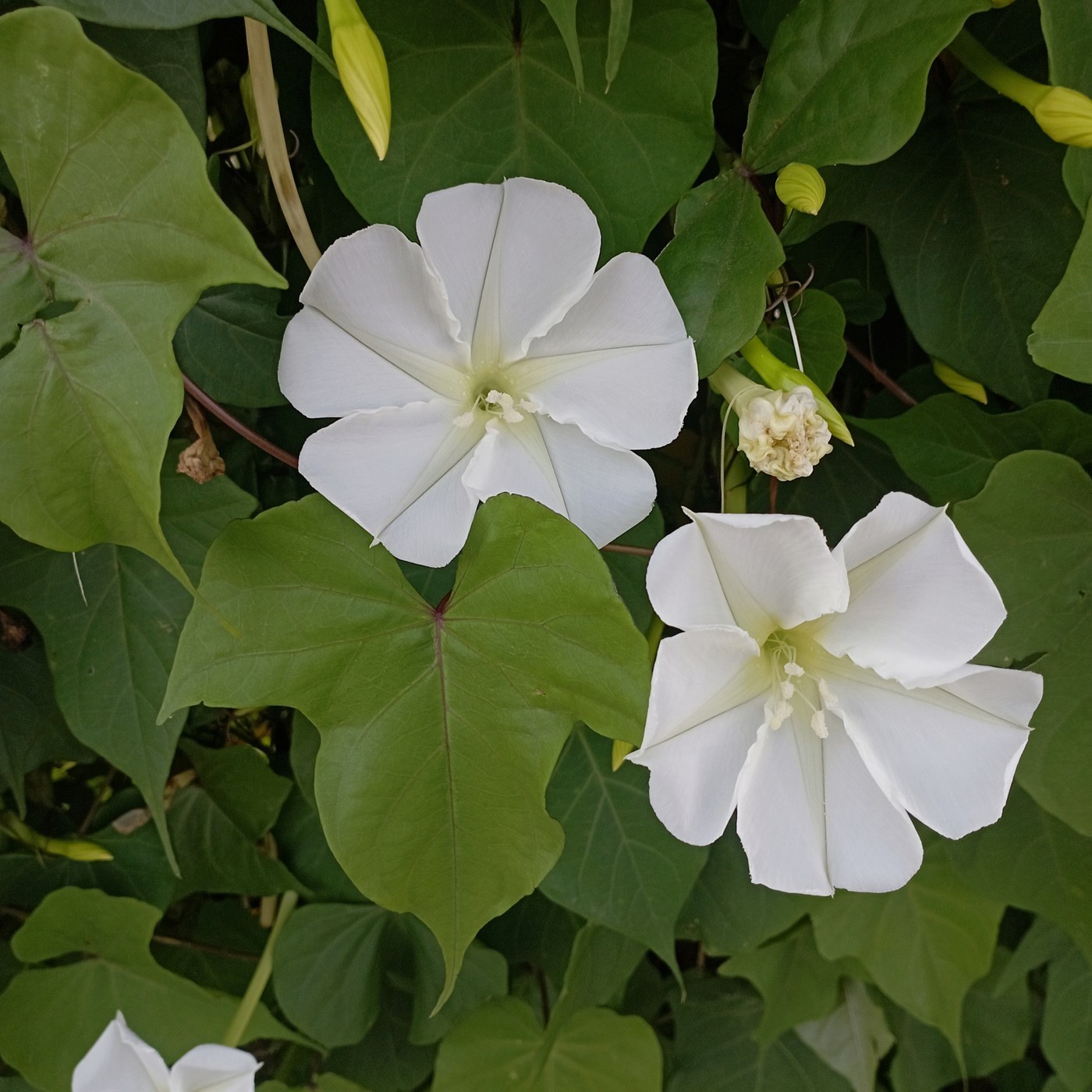
Moonflower (Ipomoea alba) is a fast-growing tropical vine famous for its large, fragrant white flowers that unfurl at dusk and glow through the evening. Grown as an annual in cooler climates, it rewards a warm, sunny spot with dramatic nighttime display.
Light
Give Moonflower full sun, at least six to eight hours daily. Abundant light drives strong growth and heavy flowering. In too much shade the vine grows leafy but produces few blooms. A warm, sheltered position near a wall or patio also enhances the evening fragrance.
Water
Keep the soil evenly moist with moderate, regular watering, especially during establishment and hot spells. Moonflower is a lush, thirsty grower, but avoid waterlogging. Once established it tolerates brief dry periods, though consistent moisture supports continuous flowering. Container plants need more frequent watering.
Soil & Potting
Plant in average to rich, well-drained soil. Moonflower is adaptable but flowers best in moderately fertile ground; overly rich soil can promote foliage over flowers. In containers use a quality potting mix with good drainage and provide a large pot, since this vigorous vine develops an extensive root system.
Humidity & Temperature
This is a heat-loving tropical vine that thrives in warm, humid conditions and is very frost-sensitive. Do not plant out until all danger of frost has passed and the soil is warm. It grows fastest in the heat of summer and will be killed by the first frost in cold-winter climates, where it is treated as an annual.
Feeding
Feed sparingly. A moderate, balanced fertilizer or an occasional diluted liquid feed supports growth, but too much nitrogen produces rampant vines with few flowers. If growth is lush but bloom is poor, ease off feeding and ensure the plant gets full sun.
Propagation
Moonflower is grown from seed. The hard seed coat benefits from nicking with a file and soaking overnight before sowing to speed germination. Start seeds indoors a few weeks before the last frost or sow directly once the soil is warm. It can also self-seed in warm climates.
Repotting / Pruning
Provide a sturdy trellis, arch, or fence at planting time, as the vine climbs quickly and can reach great lengths in a season. Pinch young tips to encourage branching. Prune to control size and direct growth. In containers, give ample root room and repot annually if grown as a tender perennial in frost-free areas.
Common Problems & Pests
Generally vigorous and trouble-free. Watch for aphids, spider mites, and caterpillars chewing the foliage; handpick or treat with insecticidal soap. Excess nitrogen or shade leads to few flowers. Fungal leaf spots can appear in crowded, damp conditions, so ensure good air flow and full sun.
Seasonal Care Tips
Start seeds in spring after nicking and soaking, and plant out only when frost is past and soil is warm. Through summer, water regularly, provide support, and enjoy the evening blooms. As fall approaches, flowering continues until the first frost ends the season in cold climates. Collect ripe seed for next year before frost arrives.
Frequently asked questions
Why won't my Moonflower bloom?
The usual causes are not enough sun or too much nitrogen fertilizer, which favors leaves over flowers. Give it full sun, ease off feeding, and be patient, as it often blooms heavily late in the warm season.
How do I get Moonflower seeds to germinate?
The seeds have a hard coat. Nick them lightly with a file and soak them in water overnight before sowing in warm soil to greatly improve and speed germination.
When do Moonflowers open?
The large white flowers open in the evening around dusk and stay open through the night, closing by morning. This is why they are best placed where you can enjoy them after dark.
Does Moonflower come back every year?
In frost-free tropical climates it can persist as a perennial, but in cold-winter regions it is grown as an annual and killed by frost. It often self-seeds or can be regrown from collected seed.