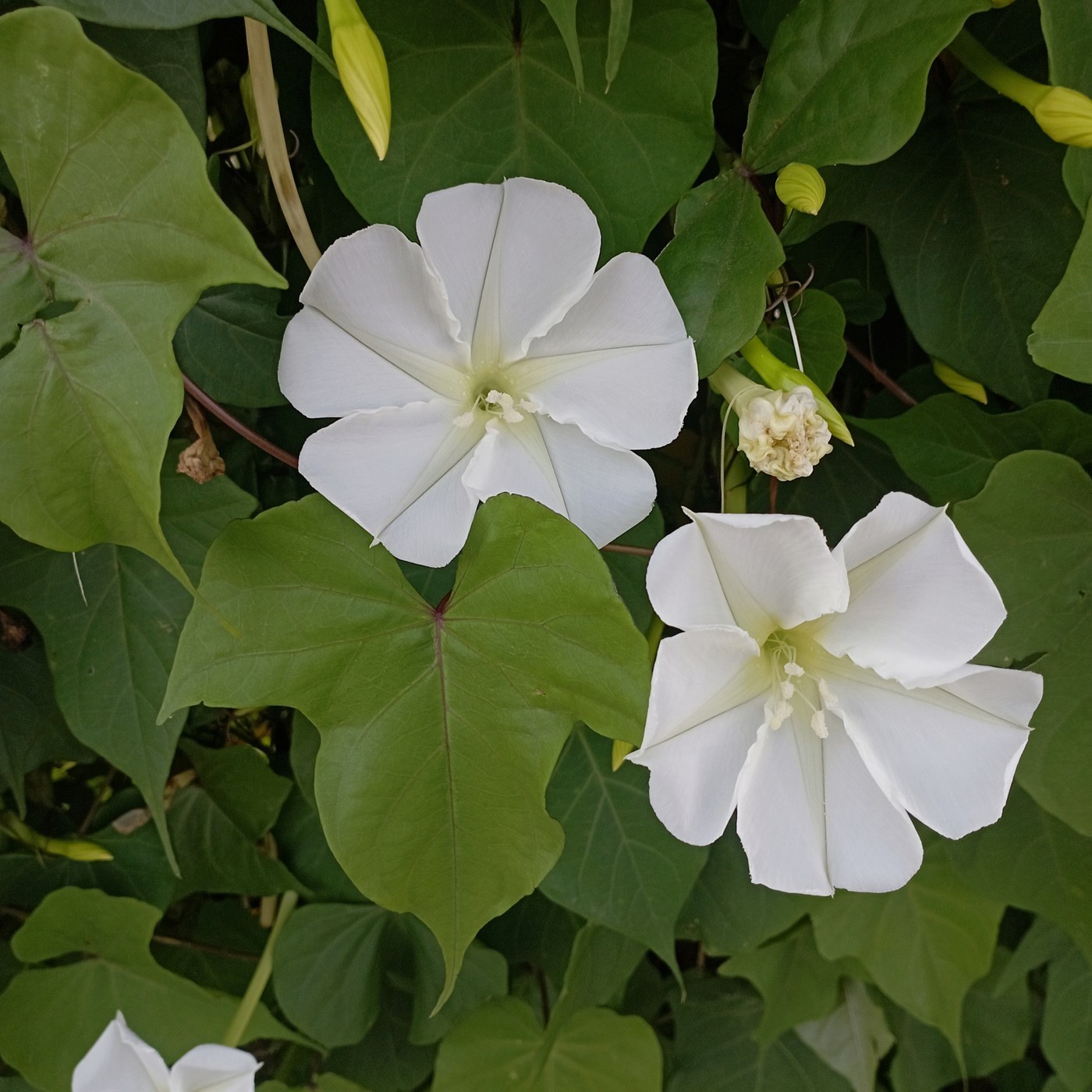
Moonflower
Ipomoea alba
A fast-growing tropical vine whose large, fragrant white flowers unfurl at dusk and bloom through the night, closing by morning. Related to morning glory, it is grown on trellises for evening fragrance and night-garden drama.
- Light
- Full sun
- Water
- Moderate; keep evenly moist
- Difficulty
- Moderate
Got a plant like this?
Identify any plant from a photo, free.
Overview
Moonflower is a vigorous twining vine in the morning glory family, grown for its huge, luminous white blooms that open in the evening. The flowers can span 5-6 inches and release a sweet fragrance that draws night-flying moths.
As a counterpart to the day-blooming morning glory, moonflower lights up the night garden, quickly covering trellises, arbors and fences in a single warm season.
How to identify it
- Twining vine that can climb 10-20 ft (3-6 m) in a season
- Leaves are large, heart-shaped and bright green
- Flowers are large, 5-6 in (12-15 cm) wide, pure white, trumpet-shaped and fragrant, opening at dusk and closing by mid-morning
- Buds are long, spiraled and pointed before they unfurl
- Distinguished from white morning glory by the much larger, night-opening, scented blooms
Care & growing
- Light: Full sun for the most flowers
- Water: Moderate; keep soil evenly moist in active growth
- Soil: Average, well-drained soil; avoid overly rich soil that favors foliage
- Temperature: Warmth-loving and frost-tender; needs a long, warm season
- Feeding: Light feeding; too much nitrogen reduces flowering
- Propagation: From seed; nick or soak the hard seed coat to speed germination, and provide a sturdy support to climb
Grow on a trellis, arbor or fence near patios where the evening fragrance can be enjoyed.
Habitat & origin
Native to tropical and subtropical the Americas, moonflower grows naturally in warm, frost-free regions and has naturalized in many tropical areas worldwide.
Grown as an ornamental annual vine in temperate gardens and as a perennial in frost-free climates, popular for night and fragrance gardens.
Frequently asked questions
When do moonflowers bloom?
The flowers open at dusk, stay open through the night, and close by the following morning, releasing fragrance to attract night moths.
Is moonflower the same as morning glory?
They are closely related vines in the genus Ipomoea, but moonflower has larger, fragrant white flowers that open at night rather than in the morning.
How do I get moonflower seeds to germinate?
The seeds have a hard coat, so nicking them with a file or soaking overnight before sowing speeds up germination.
How fast does moonflower grow?
Very fast in warm conditions, climbing 10-20 feet in a single season to cover trellises, arbors, and fences.
Moonflower guides
In-depth guides for identifying, growing, and caring for Moonflower.
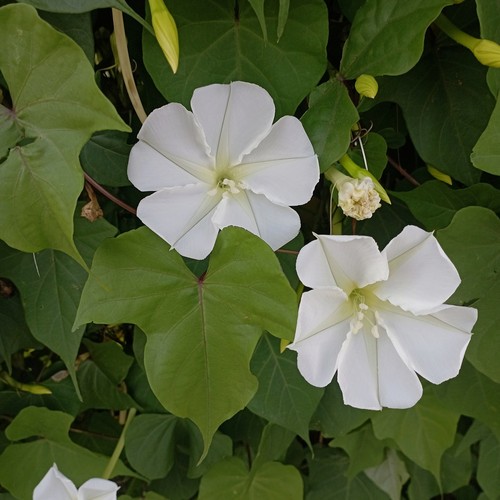
How to Care for Moonflower
Grow Moonflower for its huge, fragrant white blooms that open at dusk. Care tips on sun, watering, support and propagation.
Moonflower Identification Guide
Recognize the moonflower (Ipomoea alba) by its huge, fragrant white trumpet flowers that open at dusk on a vigorous twining vine with heart-shaped leaves.