
Moonflower Identification Guide
Recognize the moonflower (Ipomoea alba) by its huge, fragrant white trumpet flowers that open at dusk on a vigorous twining vine with heart-shaped leaves.
Read the full Moonflower encyclopedia entry →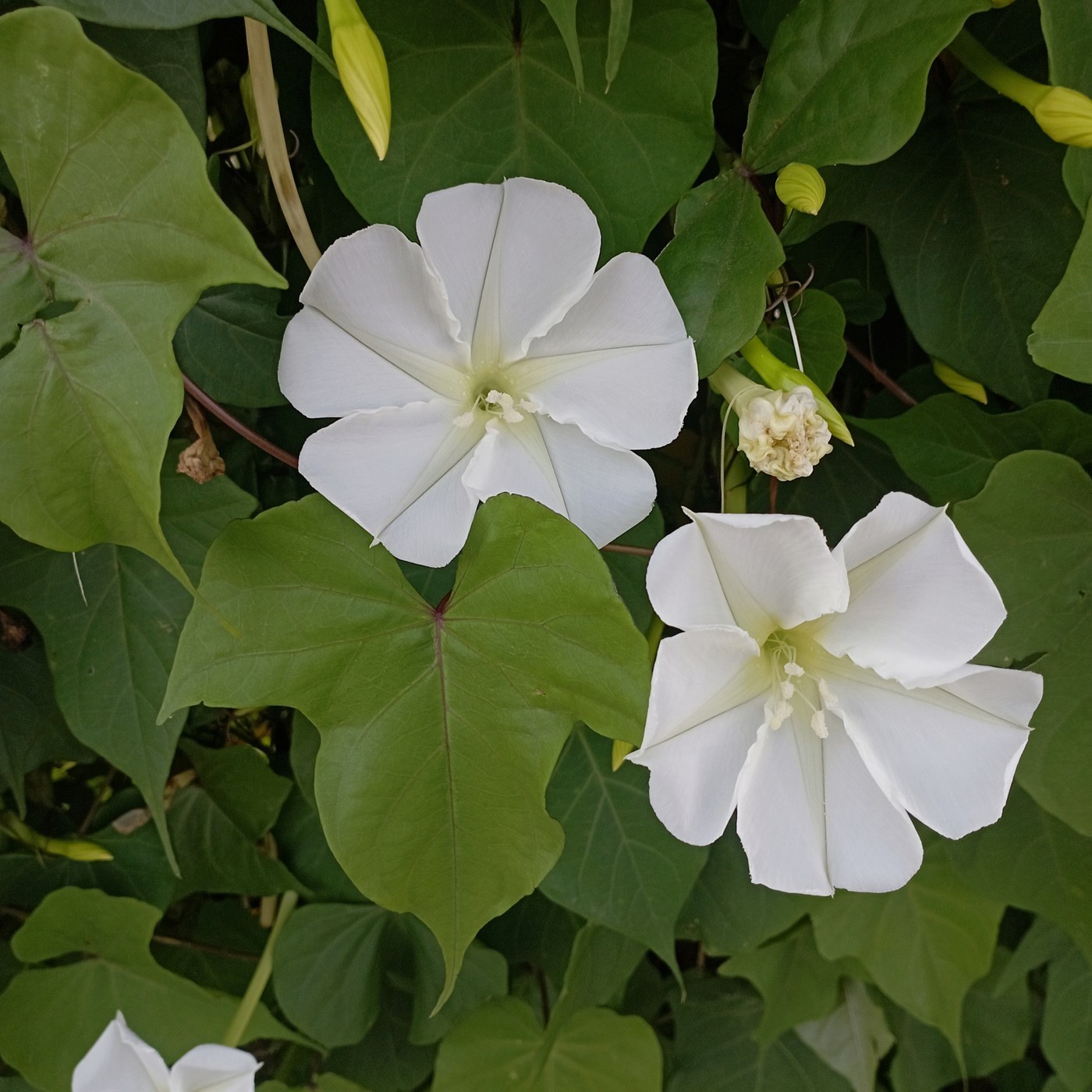
Key Identifying Features
The moonflower (Ipomoea alba) is a night-blooming relative of the morning glory, identified by its large, pure-white, trumpet-shaped flowers that open in the evening and release a strong sweet fragrance. It is a fast, twining vine with big heart-shaped leaves.
- Huge white flowers, 4–6 inches across
- Flowers open at dusk, close by morning
- Strong sweet night fragrance
- Vigorous twining vine, climbing 10–20 feet
Leaves & Stems
Leaves are large, heart-shaped (sometimes lobed), alternate, smooth, and deep green, on long stalks. Stems are slender, twining counterclockwise around supports, fast-growing, and may have a slightly milky sap when cut. The vine climbs by wrapping around trellises, strings, and fences and can cover a large area in one season.
Flowers & Fruit
The flowers are the star: a long tube flaring into a wide, flat, pure-white trumpet with faint star-shaped seams radiating from the center. Buds are long, twisted, and pointed, and they unfurl visibly at dusk, often within minutes, staying open through the night to attract night-flying moths. The fragrance is powerful and sweet. After bloom, a rounded seed capsule forms with a few large, hard seeds. Blooms summer to fall.
How to Tell It Apart from Look-Alikes
- Morning glory (Ipomoea): Close relative, but morning glories are smaller, often blue/purple/pink, and open in the morning rather than at night.
- Datura (jimsonweed): Also has large fragrant white trumpets at night, but Datura is an upright bushy plant with coarse toothed leaves and spiny pods — not a twining vine with heart-shaped leaves.
- The giant white night-opening trumpet on a heart-leaved twining vine identifies moonflower.
Where You'll Find It
Moonflower is grown on trellises, arbors, fences, and porches as a fast ornamental vine, especially in moon gardens and near patios where its evening scent and large white blooms can be enjoyed after dark. Native to tropical America, it loves full sun, heat, and moist soil, and is grown as an annual in cool climates. Its blooms glow in moonlight, hence the name.
Quick ID Checklist
- Large, pure-white trumpet flowers 4–6 in wide
- Flowers open at dusk, fragrant, close by morning
- Heart-shaped leaves on a twining vine
- Long twisted pointed buds that unfurl in the evening
- Hard seeds in a round capsule
Frequently asked questions
When does a moonflower bloom?
Its large white flowers open at dusk and stay open through the night, closing by the next morning. Watching the buds unfurl in the evening is a sure way to identify the plant.
How is moonflower different from morning glory?
They are close relatives and both are twining vines with heart-shaped leaves, but moonflower has much larger pure-white flowers that open at night, while morning glories are smaller, often colored, and open in the morning.
Why does moonflower smell so strong at night?
Its evening fragrance attracts night-flying moths for pollination. The powerful sweet scent combined with the glowing white trumpets makes it a favorite for moon gardens.